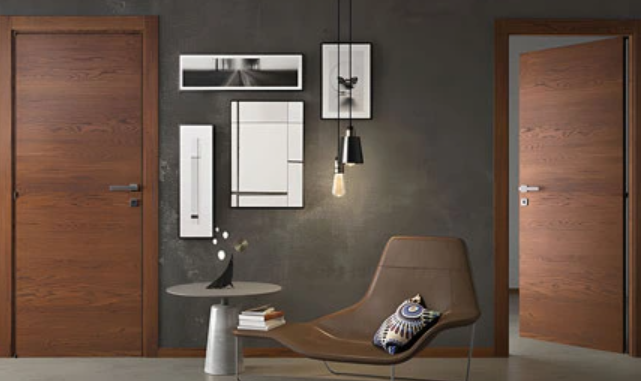
Flush door cores are composed of different materials which require consideration for several different aspects, including: strength, size, moisture resistance, appearance and maintenance. The type of core you select will be based on how it will be used and what elements it will be exposed to as well as your budget. Understanding the various core options enables homeowners and designers to make an informed choice when creating residential and commercial spaces.
Plywood Flush Door
Plywood is one of the most prevalent types of materials for core usage in flush doors. Its strength, its ability to maintain its dimensions under stress, and its ability to hold screws very well are the main reasons for this popularity. When flush doors use plywood cores, they provide superior service because of a very low likelihood of their becoming impaired through humidity or warping.
MDF Flush Door
Medium Density Fibreboard, or MDF, is a smooth, uniform surface and is a commonly chosen laminate and paint finish option. When used in flush doors, MDF offers a consistent appearance and value in comparison to plywood; thus, it is more suitable for usage in low-traffic areas such as living and bedroom areas due to its limited moisture resistance compared to plywood and need for conditions of low relative humidity.
WPC Flush Door
Wood Plastic Composite (WPC) flush doors provide excellent resistance to moisture, termites, and fungi, and are used in utility rooms, washrooms, and semi-outdoor locations. WPC doors maintain excellent dimensional stability, require minimal maintenance, but their initial costs may be higher than plywood doors (although they have slightly lower structural integrity than plywood).
Engineered Boards / Particleboards
Particle boards and engineered boards are more cost-effective choices for applications intended for lower levels of traffic and within interior areas that do not require moisture resistance. They are also lightweight, easily manufactured, and provide little moisture resistance and shorter life spans than both MDF and plywood.
Choosing the Right Core Material For Your Application
When selecting core materials, it is important to choose one that is well-suited for the location in which it will be used, the expected level of moisture exposure, amount of anticipated traffic on the door, desired surface finish, and the budget. Areas with significant moisture exposure should utilize either waterproof plywood or WPC doors, whereas locations with less moisture and anticipated traffic can be suitable for the use of both MDF and engineered boards.
See also: Soundbars: Transform Your Home Audio Experience
Manufacture Quality & Performance
The density of the core material, the strength of the bonding between products, and the way a flush door is cut, drilled, and shaped using computerized equipment are extremely important in terms of providing quality door performance and longevity. Reliable manufacturers like Royale Touche are committed to manufacturing with strict quality assurance procedures to provide their customers with consistency of performance, appearance, durability, safety and finish compatibility through the flush door product line.
Conclusion
The above core materials each have unique advantages. Flush doors made of plywood provide superior strength and versatility. Flush doors made of MDF are preferred when the desired finish requires smoothness. Flush doors made of WPC are excellent when the main consideration is moisture resistance. Engineered boards are a good choice when the purchase of a flush door must be economical.