Pregnancy changes your body quickly, and discomfort can build just as quickly. If you feel backache, hip tightness, leg cramps, or swelling, prenatal massage in Singapore can give you a soothing, non-medicated way to support day-to-day comfort when you choose the right timing and the right therapist.
At PNSG, we see a common pattern: many parents-to-be want relief, but they also worry about safety, pressure points, and whether a therapist understands pregnancy anatomy. You can feel confident when you follow clear guidelines and work with certified professionals.
Prenatal Massage in Singapore: techniques and tips from a PNSG professional therapist
Prenatal massage differs from a standard spa massage. Your body needs modified positioning, gentler pressure, and clear boundaries around sensitive areas.
Research links prenatal massage with lower stress hormone levels, improved circulation, better sleep quality, and reduced common pregnancy discomforts, such as lower back pain, pelvic tightness, sciatic-like pain, leg cramps, and water retention. These benefits rely on appropriate technique and proper screening, not intensity.
You also deserve practical convenience. When you search “massage near me for pregnancy”, consider a home-based option that avoids travel fatigue and reduces exposure to shared spaces.
When to start, how often to go, and when to pause
Timing matters because your body changes by trimester, and risk levels differ.
PNSG prenatal massage guidelines:
- Start only after 28 weeks of pregnancy
- Limit sessions to a maximum of 1 time per week
- Avoid sensitive areas such as the breast and tummy
- Pause sessions within 2 weeks of your estimated due date (EDD), unless your doctor specifically advises otherwise
If you have a high-risk pregnancy, unusual pain, bleeding, fluid leakage, fever, or new swelling that concerns you, speak with your obstetrician before you book. Massage supports comfort, but it does not replace medical care.
Prenatal massage vs regular massage: what changes and why
A therapist must adapt both technique and positioning for pregnancy.
| Area | Prenatal massage | Regular massage |
| Positioning | Side-lying with supportive pillows | Often face-down or face-up on a standard table |
| Pressure | Gentle to moderate, comfort-led | Can include deep pressure work |
| Focus | Lower back, hips, shoulders, legs, swelling support | General muscle tension relief |
| Areas avoided | Abdomen, breasts, labour-stimulating pressure points | Fewer restrictions |
| Therapist training | Pregnancy-specific knowledge and safety screening | General massage training |
When you choose prenatal-specific care, you reduce the chance of someone applying deep pressure in the wrong place or using reflexology-style techniques that do not suit pregnancy.
The pregnancy massage techniques we use and the areas we avoid
A certified prenatal therapist chooses techniques that support circulation and relaxation without triggering unnecessary stimulation.
Common pregnancy massage techniques that suit prenatal sessions:
- Swedish-style strokes to relax superficial muscle tension
- Gentle kneading on the shoulders, upper back, glutes, hips, and legs
- Light myofascial release around the lower back and hip areas (comfort-led, never forceful)
- Lymphatic-style strokes on legs to support fluid movement and reduce swelling discomfort
Areas and pressure points you should avoid in pregnancy:
- Tummy and breast area
- The webbing between thumb and index finger (often called the hegu area)
- The area about three fingers above the inner ankle bone (often linked with labour stimulation)
- Strong pressure on the sacrum or any “trigger point” style work
- Reflexology or acupressure techniques on feet and hands
Foot massage does not need a full ban. A therapist can use gentle kneading on the heel, ankle, sole, and toes while avoiding acupressure points and aggressive thumb work.
If you want a clearer overview of what a professional home session involves, you can read more details here.
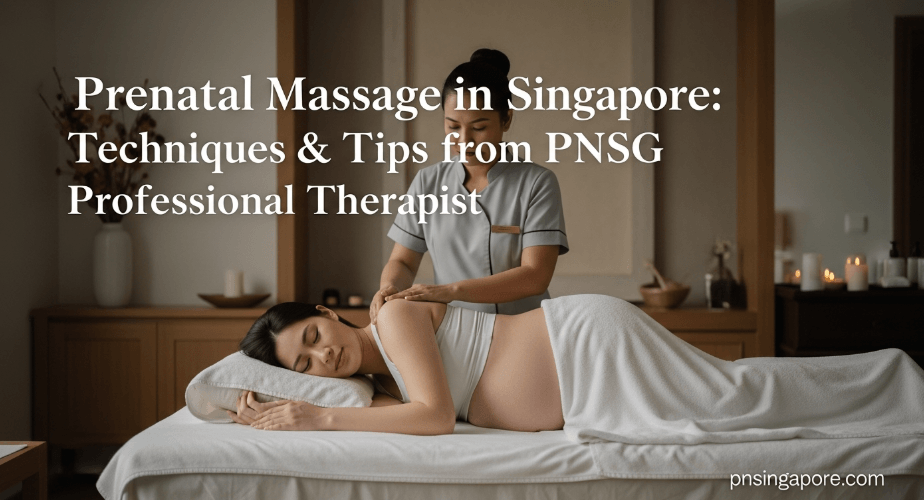
Positioning and comfort: what a safe session looks like at home
Your comfort and circulation guide the whole session. A trained therapist will position you side-lying, then use pillows to support:
- Your bump and waist
- Your top leg and knee alignment
- Your neck and shoulders
This setup matters because it helps you rest without compressing the abdomen or straining the lower back.
Home sessions also bring two practical benefits many Singapore parents appreciate:
- No travel needed, which reduces fatigue and swelling from moving around
- No sharing of space with other clients, which supports hygiene and peace of mind
What to expect from a PNSG prenatal therapist
You deserve professional screening before anyone starts hands-on work. A responsible therapist will ask about:
- Gestational week and EDD
- Any medical conditions (for example, hypertension, gestational diabetes, clotting history)
- Your main discomfort areas and daily routine
- Any doctor’s advice you received about massage
PNSG therapists come to your home, and our agency includes 70+ certified therapists across Singapore. We also use authentic products that suit mums and newborns, so you do not need to guess what goes on your skin.
Tips for partners: a simple, safe back routine you can do at home
A partner can help between professional sessions, as long as you keep it gentle and skip sensitive areas.
1) Set up side-lying support
Place pillows behind the back and between the knees. Keep the bump free of pressure.
2) Use open palms, not thumbs
Use the heel of the hand and palm. Avoid digging with thumbs.
3) Work from upper back to hips
Make slow, circular kneading motions across the upper back, then move down towards the hips.
4) Keep pressure mild to moderate
Aim for “comfortably firm”, not “deep”. Ask for feedback every minute.
5) Avoid the tummy, breasts, and sharp points
Do not press into the spine, sacrum, or any pinpoint areas that feel sensitive.
Stop immediately if your partner feels dizziness, nausea, cramping, or pain, and seek medical advice when symptoms persist.
Common myths about prenatal massage
Myth: Prenatal massage causes miscarriage
Massage does not cause miscarriage. Providers recommend waiting until later in pregnancy to reduce uncertainty during the first trimester, when miscarriage risk sits naturally higher.
Myth: Any massage therapist can do prenatal work
Pregnancy requires modified positioning and strict avoidance of certain points and areas. Choose a certified prenatal therapist who understands these boundaries.
Myth: Deep pressure works best for pregnancy pain
Technique matters more than intensity. Gentle, targeted work often eases tension while keeping safety front of mind.
See also: The Hidden Secrets of Financial Health
Choosing the right “massage near me for pregnancy” in Singapore
Before you commit, ask these practical questions:
- Do you start prenatal massage only after 28 weeks, with a max of weekly sessions?
- Do you avoid tummy and breast massage during prenatal sessions?
- Do you use side-lying positioning and proper bolsters?
- Do you screen for medical conditions and recommend doctor clearance when needed?
- Do you provide home visits to avoid travel strain and shared waiting areas?
These checks help you choose care that supports comfort without shortcuts.
When you feel ready, book a home session with PNSG and keep your pregnancy comfort plan simple and consistent. Book your slot here.