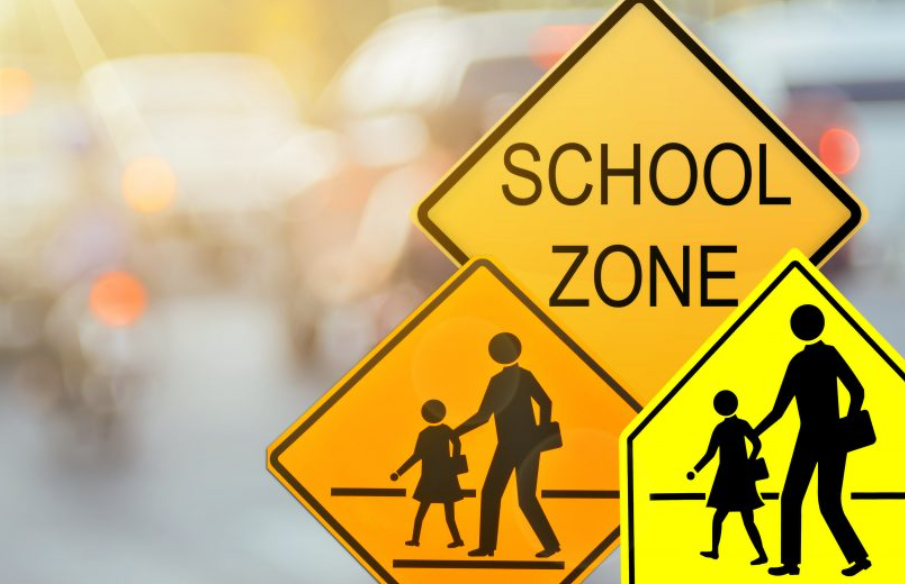
Car accident lawyers like the experienced attorneys at Owen, Owen & Smith often handle injury and fatality car accident cases related to school zones. The areas around or near schools are dangerous due to high levels of chaotic, congested, and rushed traffic. Drivers and vulnerable road users alike also frequently engage in unsafe activities in school zones.
School zone accidents typically involve drivers who break speed limits, roll through stop lights and signs, illegally pass a stopped school bus, or drive distracted or while intoxicated. Other factors increase the danger, especially non-driving behaviors and the ages of all drivers, pedestrians, bicyclists, skateboarders and others.
School Zones Traffic Conditions
School zones are similar to packed parking lots. Motor vehicles and pedestrian traffic move at different speeds through a relatively small area. Posted speed limits are usually no higher than 25 mph, with an average speed limit of 15 mph or less. Yet, many experts recommend that drivers of passenger and commercial vehicles and buses move at less than 10 mph to better handle hectic and stressful traffic conditions.
Hyper-vigilance is necessary in school zones. Drivers must attempt to protect themselves and vulnerable children, parents, staff members and even pets in a less-than-ideal environment where anything can and does happen. Common dangers include:
– Across-the-road drop-offs and pick-ups that force children to more frequently jaywalk and use crosswalks
– Parents who fail to look both ways while rushing into and out of drop-off and pick-up areas
– Students rushing to make it indoors before the start of their classes
– A high number of manual and electric bike, scooter and skateboard users
– Children and pets running out in front of a vehicle from peripheral areas
– Groups of children or staff members suddenly stepping off a sidewalk or lingering in a road
– New and young drivers who lack experience or impulse control
Inexperienced and distracted teen drivers are among the most dangerous people in school zones. As reported in recent years by the AAA Foundation for Traffic Safety, older teens cause crashes three times more than adults, especially during holidays, the start or end of an academic period, and the “100 Deadliest Days of Summer.” The number of deadly crashes increases by 30%, or an average of 8 people each day, during the “100 Days.” Teens lack the defensive driving and summertime navigation experience necessary for dealing safely with dangers like road construction and vacation traffic. Biological changes in teens also make it difficult for them to control impulsive, risky behavior and maintain focus when behind the wheel.
The Predominant Causes of Accidents
Illegal actions by drivers account for a high number of school zone accidents. According to a 2025 report by the National Association of State Directors of Pupil Transportation Services, right-side passing with a down bus stop arm and no left turn increased year-to-year from 2022 to 2024 by 20%, even though the action is a traffic violation. Over 114,000 school bus drivers reported that more than 67,000 passenger and commercial drivers illegally passed to the left of their vehicles in a day while the stop arm was down. Since these numbers only came from drivers in 36 states and D.C., NASDPTS calculated that drivers nationwide likely commit more than 39 million school bus traffic violations yearly.
Distracted driving and risk-taking are also among the most serious dangers in school zones. Beyond inexperienced drivers, many adult drivers with plenty of driving experience enter school areas while using electronics, especially to make calls, send texts, and follow navigational directions. They typically look away from the road in front of them while having conversations with passengers, drinking and eating, smoking or vaping, or thinking about something.
The danger of cognitive distraction is greater at times in a school zone for other reasons as well:
– Students, parents and teachers on a school campus often allow their minds to wander while thinking about an upcoming exam or school event or mentally check out and daydream before a holiday or vacation.
– People on school campuses are more likely to experience complex, heightened emotions because of fatigue, irritation and stress related to academic or job performance or packed schedules.
– Bus drivers must watch for traffic issues while also dealing with highly energetic children who often leave secure seats, speak too loudly, or act out in negative ways.
The Impact of School Zone Car Accidents
An at-fault driver typically receives points on their driver’s license for years and stiff penalties that can cost hundreds of dollars. With a single violation, their state’s Department of Motor Vehicles might require them to retake driver education classes. If they break the law more than once, they might experience a license suspension for months. In severe cases, they can permanently lose their license.
As with any car accident, victims of school zone accidents and their loved ones must attempt to heal and rebuild their lives. Victims must file claims through various avenues, including insurers and local courts, to recoup their losses. In some cases, emotional and financial stresses become too much and destroy relationships or rip families apart.
For example, a parent who lost their spouse or partner in a school zone car accident might suddenly have to face raising one or more children alone with only one source of income and limited social support. A family that must deal with a lengthy rehabilitation process for a child often experiences medical and associated debt far above their means. The death of a child or children can haunt their parents forever.
School zone car accidents don’t always affect only individuals and families, either. After injuries to or loss of one or more children or beloved educators, these accidents shock entire communities. Like a parent who loses a child, people living and working in the area of the accident, especially school and community leaders, might question their past actions and feel guilt or shame. Children who have never experienced car accidents, serious injuries or the loss of someone they know often suffer academically because of depress and other post-traumatic stress disorder symptoms or lash out with anger and frustration.