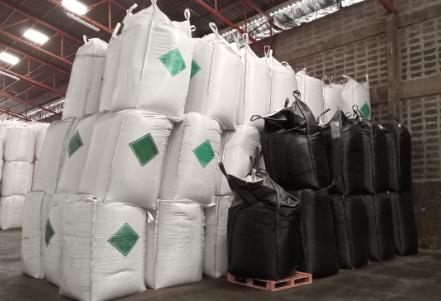
A facility switches to FIBC bulk bags for a dry chemical powder, gets a great price on a standard bag, and a few weeks into production has an ignition incident that stops operations entirely. The investigation traces it back to static discharge during filling.
The bag they bought wasn’t wrong for bulk storage in general; it was wrong for that specific material in that specific environment.
Understanding the four FIBC bag types and when each one applies is the kind of knowledge that prevents that situation from happening in the first place.
Why Static Electricity Is a Real Problem With FIBC Bulk Bags
Static charge builds up naturally during the filling and discharge of bulk bags. Fine powders are especially vulnerable because the friction created by particles moving against the bag fabric generates a charge that accumulates over time. When that charge discharges suddenly, it creates a spark. In the presence of flammable dust or vapor, that spark has consequences.
This isn’t a rare edge case. It’s a well-documented hazard in industries handling fine chemicals, pharmaceuticals, food ingredients, and agricultural products. The bag type you choose is your primary line of defense against it.
The Four FIBC Bulk Bag Types Explained
Most buyers don’t realize that FIBC bulk bags come in four distinct types with very different static control properties. Getting this wrong isn’t just an operational problem; it’s a safety one.
- Type A bags offer no static protection whatsoever. They’re standard woven polypropylene with no special treatment. Fine for non-flammable materials in non-flammable environments, but they have no place in any application involving combustible dust or flammable vapors.
- Type B bags are made from fabric with a low breakdown voltage, which limits the energy of any spark that occurs. They reduce the risk of certain types of discharge but provide no protection against surface propagating brush discharges. They’re suitable for flammable powders but not for use around flammable solvents or vapors.
- Type C bags are woven with conductive threads that dissipate static charge safely, but only when the bag is properly grounded during filling and discharge. The grounding requirement is not optional. An ungrounded Type C bag provides no more protection than a Type A.
- Type D bags are made from fabric that dissipates static safely without requiring a ground connection. That makes them the most practical choice for environments where reliable grounding isn’t always guaranteed, which describes a lot of real-world facilities more accurately than most people want to admit.
Matching the Right FIBC Bulk Bag Type to Your Application
The selection process comes down to three questions. Is your material a flammable powder? Are there flammable vapors or solvents present in the filling or discharge environment? Is reliable grounding available and consistently enforced?
If flammable vapors are present, Type C with verified grounding or Type D are your options. Type A and Type B are not appropriate regardless of the powder being handled. If your material is a flammable powder but the environment is vapor-free, and grounding is reliable, Type C works well. If grounding can’t be guaranteed consistently, Type D removes that variable entirely.
When comparing FIBC bulk bags for sale across suppliers, filter by bag type before looking at anything else. Price, size, and lift loop configuration all matter, but bag type is the spec that determines whether the product is safe for your application.
Certifications to Request From Any FIBC Supplier
IEC 61340-4-4 is the international standard governing electrostatic classification of FIBC bulk bags. Any supplier selling Type C or Type D bags should be able to provide documentation showing compliance with this standard. If they can’t, that’s a meaningful gap worth taking seriously.
Also, ask about safe fill levels and whether the bag has been tested for your specific material category. Some certifications are material-specific, and a bag certified for one powder class may not be appropriate for another.
The Right FIBC Bulk Bag Is a Safety Decision First
Bag type selection in hazardous material handling isn’t a procurement preference; it’s a safety requirement. The four types exist for good reason, and the consequences of getting it wrong range from a compliance violation to something far worse.
Container Exchanger is a North American marketplace where businesses source new and used FIBC bulk bags across a range of types, sizes, and specifications. Whether you’re setting up a new bulk handling operation or replacing existing bags, it’s a practical place to compare real options and find what your application actually calls for.