You can stop basement waterproof moisture before it becomes costly damage by targeting the real causes—poor drainage, foundation cracks, and faulty sump systems—and choosing the right waterproofing method for your situation. Assessing how water reaches your space and fixing those entry points will give you the best long-term protection.
This article Basement Waterproofing walks you through the common causes of basement moisture and clear, practical waterproofing options—interior and exterior drainage, sealants, and sump pump strategies—so you can decide whether a DIY fix or a professional solution fits your home. Learn what to inspect, what solutions actually work, and how to prioritize repairs to keep your basement dry and usable.
Causes of Basement Moisture
You’ll most often find moisture coming from water that moves through soil, moves through the foundation, or pools at the perimeter. Identify which of these is active in your home to choose the right fix.
Groundwater Seepage
Groundwater seepage happens when the water table rises or soil stays saturated, forcing water into your foundation through the path of least resistance. If your lot drains toward the house, you’ll see dampness increase after heavy rain or during spring thaw. Signs include consistent damp patches on lower walls, a musty odor, and efflorescence (white mineral streaks).
Control measures focus on managing exterior water before it reaches the foundation. Grading the yard so it slopes away from the house, extending downspouts at least 3–6 feet, and installing a French drain or exterior perimeter drain will lower the local water table and reduce pressure on your walls. In high water-table areas, a combination of exterior drains and an interior sump pump may be necessary to keep the basement dry.
Foundation Cracks
Cracks in poured concrete or gaps between blocks create direct channels for water and can appear from settling, freeze-thaw cycles, or hydrostatic pressure. Horizontal cracks or stair-step cracks in block walls are especially concerning because they indicate structural movement. Small hairline cracks can still leak during long periods of rain.
Repair begins with identifying active leaks versus old, sealed cracks. For active leaks, use hydraulic cement or epoxy injections on interior cracks as a temporary fix, and plan for permanent repairs such as exterior excavation and sealing or installing an interior drainage system tied to a sump. Monitor repaired areas for recurrence; recurring wetness often signals unresolved pressure or additional adjacent cracks.
Poor Drainage Systems
Poor drainage includes clogged gutters, short or absent downspout extensions, compacted soil, and failing yard drains. Water that collects within a few feet of the foundation increases hydrostatic pressure and soaks the footing and wall base. You’ll notice pooling near the foundation, wet landscaping beds, or basement moisture after storms.
Start by clearing gutters and extending downspouts away from the foundation. Regrading soil to slope at least 6 inches over the first 10 feet away from the house helps surface runoff. If surface measures aren’t enough, install or repair subsurface systems: replace clogged yard drains, add a perimeter French drain, or install a sump pump and interior drain tile to intercept water before it reaches the walls.
Effective Waterproofing Methods
You can stop most basement water problems by addressing outside drainage, sealing interior surfaces, and installing targeted drainage systems. Each approach targets different water sources and works best when combined to match your specific foundation and site conditions.
Exterior Waterproofing Techniques
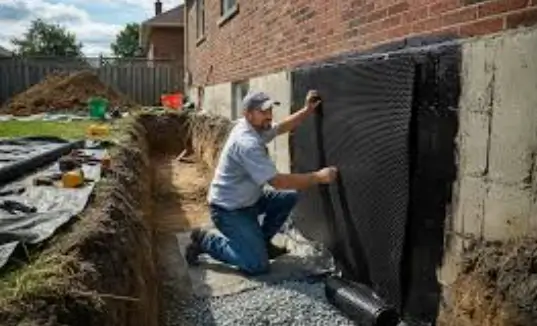
Exterior waterproofing prevents water from reaching your foundation by controlling soil moisture and creating an impermeable barrier. Common steps include excavating around the foundation to the footing, applying a waterproof membrane (rubberized asphalt or polymer-modified coatings), and adding a rigid drainage board to protect the membrane from backfill damage.
Install or repair perimeter drain tile at the footing level to collect groundwater and route it to a sump or storm drain. Replace saturated backfill with free-draining material like crushed stone; compact in lifts to maintain proper grade away from the house. Ensure gutters and downspouts discharge at least 6–10 feet from the foundation or into a storm system.
Exterior work requires heavy equipment and skilled installers for proper slope, membrane continuity, and drain connections. Expect higher upfront cost but longer-lasting results, especially where hydrostatic pressure or persistent seepage exists.
Interior Sealants and Coatings
Interior sealants stop minor leaks and reduce wall moisture without excavation. Use hydraulic cement to fill active cracks and holes; it expands slightly and sets fast to plug running water. For hairline cracks and general dampness, apply a quality masonry waterproofing coating or silicate-based sealer to concrete or block walls.
Follow manufacturer prep: clean loose mortar, remove mold, and allow surfaces to dry if possible. Apply two coats with a brush or roller, and pay attention to floor-to-wall joints where leak paths concentrate. These coatings won’t relieve hydrostatic pressure; pair them with internal drainage (see French drains) if water pressure is driving leaks.
For below-grade walls with finished interiors, vapor barriers and interior-grade insulation can control condensation. Choose products rated for basements and maintain ventilation to limit trapped moisture.
See also: Is Your Business Continuity Plan Just a Cloud Backup?
French Drain Installation
A French drain intercepts groundwater before it reaches the foundation and redirects it away from your basement. Inside, a trench is cut along the perimeter floor slab; a perforated pipe is set in gravel at the footing level, sloped toward a sump pump or daylight outlet. Outside, a similar trench with geotextile-wrapped pipe moves surface and subsurface water away from your foundation.
Key details: maintain a minimum 1% slope (1/8″–1/4″ per foot) toward the outlet, wrap pipe with fabric to prevent sediment clogging, and use clean crushed stone for consistent drainage. Inside installations often tie into a sump basin; ensure the sump pump capacity matches expected inflow and that you have battery or backup power for outages.
French drains control hydrostatic pressure rather than sealing cracks, so combine them with targeted repairs and membrane work for comprehensive protection.