Dental crowns are custom-made devices that are the first line of defence to restore structural integrity and masticatory function when a tooth has advanced decay, structural fractures, or has undergone root canal therapy. For decades, material choice was a direct compromise: one could choose the flawless, translucent appearance of glass-ceramics or the unforgiving structural strength of metallic substructures.
However, modern dental material science has radically altered this equation. Selecting the proper dental crown is no longer just a cosmetic choice, but a clinical decision based on biomechanics, oral forces, and biochemistry. The present discussion focuses on two high-performance materials: traditional dental porcelain (including lithium disilicate glass-ceramics) and zirconium dioxide (zirconia). Different materials have different crystalline structures, different optical properties and different physical wear properties which will make them more suitable for certain areas of the mouth.
Know the Materials: What are Porcelain and Zirconia?
To understand how these restorations behave under pressure we need to look directly at their atomic composition and structural characteristics.
Glass-Ceramics and Dental Porcelain
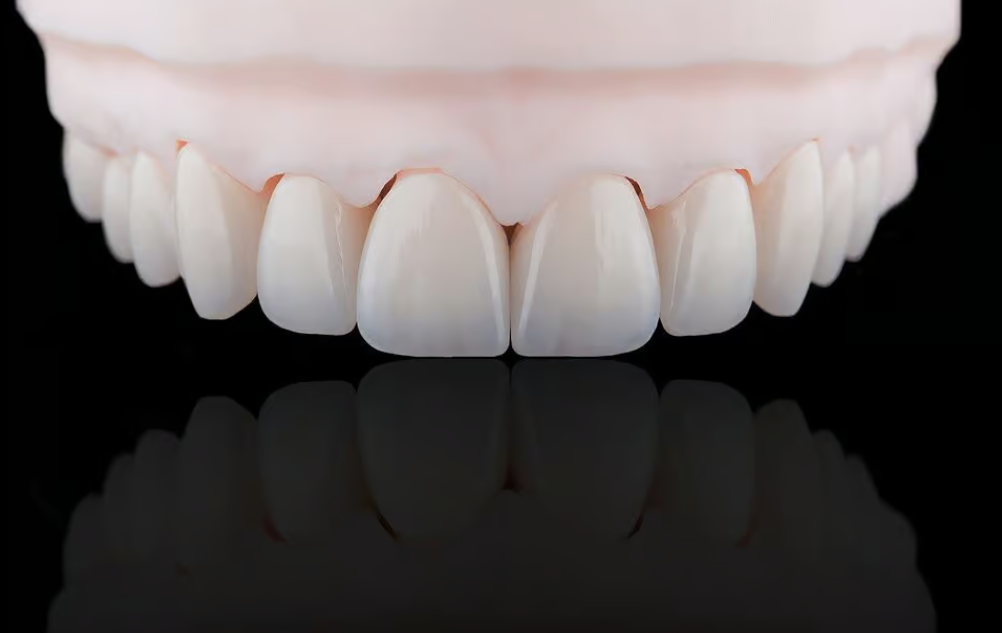
Almost any synthetic substance that better mimics human enamel than traditional dental porcelain. High-performance glass-ceramics like Lithium Disilicate are made of a glass matrix with crystalline phases. This unique combination allows light to travel through the material the same way natural tooth structure does, reproducing the subtle variances of hue, chroma, and value that prevent a prosthetic crown from looking artificially opaque.
See also: Modern Advancements in Metal Bending Technology
Zirconia: The “Ceramic Steel”
Zirconia (zirconium dioxide) belongs to a completely different class, i.e., polycrystalline ceramics. It has no glass phase at all like porcelain does. It is a polymorphic material that changes its crystalline framework at different temperatures. In clinical dentistry, it is usually stabilised with yttria (yttrium oxide) to maintain a highly stable tetragonal crystal structure at room temperature. Due to its amazing resistance to breaking it got the nickname “ceramic steel” for its unique microscopic architecture.
Engineering Showcase: Flexural Strength and Fracture Toughness
The forces produced by the human jaw during mastication, grinding and clenching are enormous in magnitude. Prosthodontists consider two main mechanical properties when choosing a material for a dental crown: flexural strength, which is the maximum amount of stress that a material can sustain before it bends or breaks, and fracture toughness, which is the resistance of the material to the growth of a crack.
- Porcelain / Lithium Disilicate: These restorations usually provide a flexural strength of 360 to 500 megapascals (MPa). While they are highly durable and perfectly adequate for lower-stress environments in your front teeth, they are still vulnerable to chipping or fracturing if subjected to extreme, concentrated heavy biting forces.
- Monolithic Zirconia: The flexural strength of standard 3Y-TZP (3 mol% yttria-stabilized tetragonal zirconia polycrystal) is impressive with more than 1,000 to 1,200 MPa. This makes it virtually indestructible under physiological conditions.
Zirconia does this by a remarkable thermodynamic trick called transformation toughening that makes it unmatched in durability. The stress at the onset of a microscopic crack in a zirconia crown induces a transformation of the surrounding crystal structure from a tetragonal to a larger monoclinic phase. This localised expansion functions as an internal airbag that compresses the micro-crack and physically prevents its propagation through the crown.
Endurance or Aesthetics: Which Material for What
Due to their very different physical properties, their clinical success is highly dependent on strategic placement in the dental arch.
Front Teeth (Anterior Region)
Light interaction is important in the smile zone. Natural teeth are translucent, and light passes through the outer enamel and reflects off the underlying dentin. Porcelain, with its rich glass matrix, reproduces this depth perfectly. Zirconia is naturally more opaque, but recently introduced aesthetic formulations with a higher cubic crystal content (e.g. 4Y or 5Y zirconia) have improved the appearance significantly. Therefore, in the case of front teeth where the appearance is a priority, porcelain or porcelain overlaid on a fine zirconia core is usually the best option.
Posterior zone (premolars and molars)
The molars at the back of your mouth are the heavy-duty grinders of your digestive system. They regularly take punishing vertical forces. For posterior teeth, monolithic zirconia is the obvious choice because porcelain veneers are at risk of chipping in high-stress areas. A well made, accurately milled zirconia crown can take the rigours of severe bruxism (teeth grinding) without fracturing and maintain the vertical dimensions of your bite over years of service.
Biocompatibility and Accurate Milling
A dental crown has to blend in with the living tissues of your mouth. Both materials are very biocompatible, but they interact with your gums and opposing teeth differently.
Gingival health and resistance to plaque
Both high-grade zirconia and polished glass-ceramics have ultra-smooth and non-porous surfaces that resist bacterial adhesion. Clinical studies have demonstrated that high-strength zirconia exhibits very low plaque accumulation, which significantly decreases the risk of localised gingival inflammation or secondary decay at the crown margin.
The Surprise of Different Tooth Wear
Patients commonly have the misconception that zirconia is so hard that it will grind down the opposing natural teeth completely. Surprisingly, it has been found by scientific laboratory testing that highly polished smooth monolithic zirconia causes less wear to antagonistic natural enamel than traditional feldspathic dental porcelain. Porcelain surfaces can be microscopically abrasive and over time they act like a fine grit sandpaper against opposing teeth. In contrast, polished zirconia behaves like smooth, frictionless glass and moves easily against opposing tooth structures throughout the chewing cycles.
Conservative Dentistry: Preserve Your Natural Enamel
To accommodate a crown, a dentist must shave down some of the remaining outer structure of a damaged tooth. The thickness requirements of the material you select will dictate directly how much healthy tooth structure will have to be sacrificed permanently.
Tooth reduction comparison
Porcelain does not stand up well to pressure, so it requires a thicker bulk of material, which usually means the clinician needs to remove 1.5 to 2.0 millimetres of natural tooth structure. Thanks to zirconia’s remarkable internal strength, it is able to be milled to be extremely thin, sometimes requiring only 0.5 to 1.0 millimetres of structural reduction.
It is of great advantage to select a material that allows conservative preparation. The goal is to retain as much natural dentin and enamel as possible to preserve the structural integrity of the underlying tooth root, and to keep the preparation well away from the sensitive inner nerve tissues.
Clinical Criteria Checklist
A prosthodontist considers many biological factors when reviewing your unique oral health profile to find the best restoration for you:
- Bruxism Severity: Patients who are known severe night-time clenchers/grinders are placed immediately into high strength monolithic zirconia to avoid fracture risk.
- The Bite Dynamics: If you have a deep or misaligned bite, monolithic zirconia can get along with the limited space, needing less physical space to work reliably.
- The Substructure Shade: If the natural tooth structure below is heavily stained or has a dark metallic post from a previous root canal, an opaque zirconia crown will cover the dark background and prevent a grey appearance from shining through.
- Translucency Index: When the desire of the patient is for an exact colour match to highly translucent, pristine adjacent natural teeth, then a lithium disilicate or feldspathic glass-porcelain crown provides the ultimate aesthetic solution.
And when you go to a modern practice like Nuffield Dental for your consultation, your clinician will use these same scientific metrics, mapping out your bite forces, checking structural clearance and assessing your cosmetic goals, to custom-tailor a restorative plan strictly to your mouth.
FAQs about Crowns
What does a natural tooth with a dental crown look like?
Porcelains and lithium disilicate glass-ceramics appear as the most natural since they imitate the natural translucency and light-reflecting properties of the human enamel.
Do Zirconia Crowns Crack or Fracture?
Monolithic zirconia is almost indestructible but can degrade or microchip if cooled improperly in the laboratory or aggressively adjusted without proper irrigation during placement.
Can zirconia crowns hurt the teeth opposite them?
No. Studies have shown that highly polished smooth monolithic zirconia is actually less abrasive to the opposing natural dentition than traditional porcelain restorations.
How much tooth must be removed for a crown?
Porcelain crowns require approximately 1.5 to 2.0 mm of tooth reduction whereas high strength zirconia can be milled thinner requiring only 0.5 to 1.0 mm of reduction.
What is the typical lifespan of contemporary dental crowns?
Both premium porcelain and zirconia crowns are very durable and with good oral hygiene, regular dental checkups and a balanced bite, usually last 10 to 15 years or even longer.
Choose Your Final Material
In the end, no clear winner emerges in the porcelain vs. zirconia discussion. Instead it speaks to the remarkable versatility of modern restorative materials. In the anterior smile zone, porcelain is still the gold standard for unmatched aesthetic integration, with the absolute top priority being catching the light naturally. On the other hand, zirconia is an indestructible, biocompatible beast for back molars so you can keep all your chewing power without worrying about a break. In most cases, your perfect treatment plan will combine the best of both biomaterials, systematically restoring the natural beauty of your smile while engineering an incredibly resilient, long-lasting bite.