Introduction to Retail Merchandising
Retail merchandising is the practice of presenting and managing products in ways that maximize sales while creating a satisfying shopping experience. It touches nearly every part of a retail business, from selecting which products to stock to deciding how they’re displayed on the shelf. Several roles contribute to this process, including merchandisers who plan product assortments, buyers who source goods, and visual merchandisers who design how products are presented in-store. Together, these functions ensure that the right products reach the right customers in a way that feels intentional and appealing.
Core Principles of Merchandising
At its heart, retail merchandising follows what’s often called the “5 Rights”: having the right product, in the right place, at the right time, in the right quantity, and at the right price. These principles require a deep understanding of customer needs and shopping behavior. Retailers must constantly analyze what their customers want, when they want it, and how much they’re willing to pay. Successful merchandising also means balancing supply and demand—overestimating demand ties up capital in unsold inventory, while underestimating it leads to missed sales opportunities.
Product Assortment Planning
Choosing which products to carry is one of the most strategic merchandising decisions a retailer makes. This involves selecting a product mix that reflects the store’s brand identity and target customer base. Retailers must decide between assortment depth (many variations of a single product) and breadth (a wide range of different products). Seasonal trends play a major role here too, as does the choice between private label products, which offer higher margins, and established branded goods, which often carry stronger customer trust and recognition.
Inventory Management
Effective inventory management ensures that products are available when customers want them, without tying up excessive capital. This includes stock planning and replenishment schedules, as well as open-to-buy (OTB) budgeting, which helps retailers plan how much they can spend on new inventory within a given period. Markdown and clearance strategies are also essential tools, allowing retailers to move slow-selling items before they become a financial burden. The ultimate goal is to avoid the two extremes of overstocking, which increases holding costs, and stockouts, which frustrate customers and lose sales.
Visual Merchandising
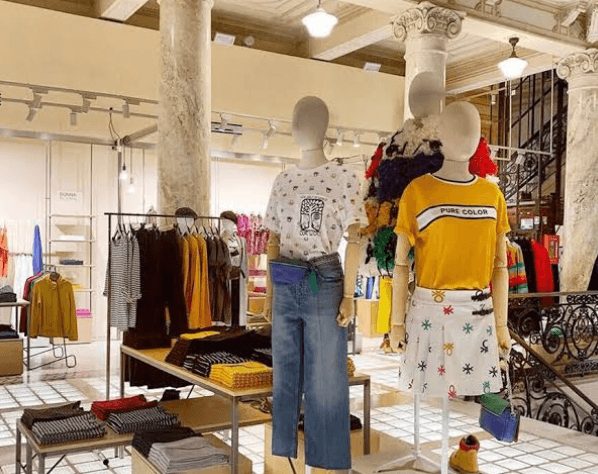
Visual merchandising is where strategy meets creativity. Store layout and flow guide customers naturally through the space, often steering them toward high-margin or promotional items. Window displays and focal points capture attention and draw people inside. Product placement—including shelf positioning at eye level versus lower shelves—significantly impacts what customers notice and purchase. Signage, lighting, and color choices further shape the shopping atmosphere, helping to reinforce brand identity while making navigation intuitive.
Pricing Strategies
Pricing decisions directly influence both profitability and customer perception. Retailers typically choose between cost-plus pricing, which adds a standard markup to the cost of goods, and value-based pricing, which sets prices according to perceived customer value. Promotional pricing and discounts can drive short-term traffic and clear excess inventory, while psychological pricing tactics—like pricing an item at $19.99 instead of $20—subtly influence buying decisions by making prices feel lower than they are.
Category Management
Category management involves organizing products into logical groupings that make sense to shoppers and support business goals. Retailers allocate shelf space based on each category’s sales performance, ensuring top performers get prominent placement. Cross-merchandising, such as displaying complementary products together, and bundling strategies encourage customers to purchase more items per visit, increasing average transaction value.
Data and Performance Metrics
Modern merchandising relies heavily on data to measure success and guide decisions. Key metrics include sell-through rate, which measures how quickly inventory sells relative to what was received; gross margin return on investment (GMROI), which evaluates profitability relative to inventory investment; inventory turnover, which tracks how often stock is sold and replaced; and sales per square foot, a critical measure of how efficiently physical retail space is being used.
Merchandising Across Channels
As retail has expanded beyond physical stores, merchandising strategies must now account for both in-store and e-commerce environments. While the underlying principles remain similar, execution differs significantly—online merchandising relies on product photography, search optimization, and digital layout rather than physical displays. Omnichannel consistency ensures customers have a cohesive experience whether shopping online or in person, which builds trust and brand loyalty.
Trends and Future of Merchandising
Looking ahead, several trends are reshaping the merchandising landscape. Sustainability and ethical sourcing are increasingly important to consumers, pushing retailers to rethink their supply chains. Artificial intelligence and data analytics are enabling more precise, data-driven merchandising decisions, from demand forecasting to personalized product recommendations. Personalization itself is becoming a central focus, as retailers strive to tailor the shopping experience to individual customer preferences rather than relying solely on broad strategies.
See also: Enhancing Automotive Business Operations for Financial Efficiency
Conclusion
Retail merchandising is a multifaceted discipline that blends strategy, creativity, and data analysis. From assortment planning and inventory management to visual display and pricing, every decision plays a role in shaping the customer experience and driving business performance. As retail continues to evolve, particularly with the rise of e-commerce and AI-driven insights, merchandisers who stay adaptable and customer-focused will be best positioned for long-term success.