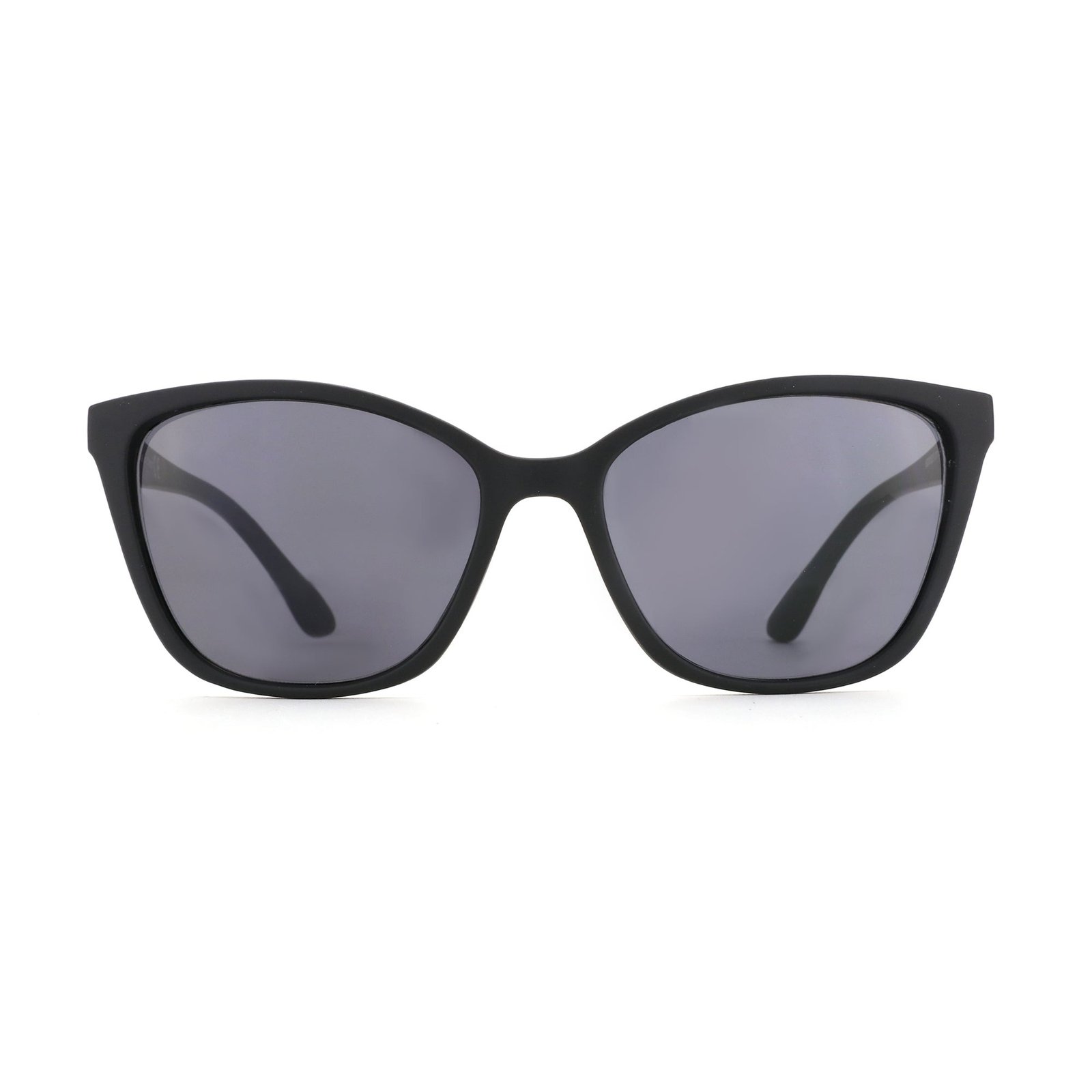
Ask an optician which part of their work has changed most over the past decade, and tinted corrective lenses come up more often than you might expect. Sun protection once sat at the edge of a prescription conversation, a seasonal add-on to sort out before a holiday. That framing has quietly collapsed. Clearer clinical guidance around cumulative ultraviolet exposure, tighter manufacturing tolerances, and a generation of wearers who spend genuine hours outdoors have moved corrective sun lenses from accessory to core eyewear. What emerged is a category that behaves far more like optics than fashion. Materials get chosen for how faithfully they hold a correction across a curved surface. Tints are specified for the light conditions a person actually encounters rather than for how they photograph. Knowing what shifted, and why professionals now ask a different set of questions before recommending a lens, makes it considerably easier to judge whether a pair genuinely suits your eyes or simply looks convincing on a display shelf.
Why the Category Stopped Behaving Like an Accessory
The old model was simple and slightly careless. Someone with a correction wore clear lenses indoors and squinted through the rest, or layered a cheap clip-on over the top and accepted the ghosting and glare that came with it. Contact lens wearers had it easier, so the market treated tinted correction as a niche within a niche. Two developments unsettled that assumption. Digital work pushed people to seek deliberate time outside, which meant more sustained exposure in exactly the conditions where uncorrected vision strains hardest. At the same time, free-form lens surfacing matured enough that a complex correction could be ground into a steeply curved, heavily tinted blank without the peripheral distortion that used to make wrapped frames unusable for anything beyond a mild prescription.
Once the manufacturing constraint eased, expectations rose accordingly. A pair of Prescription Sunglasses is now judged on whether it delivers the same visual accuracy as an everyday pair while managing brightness, contrast, and reflected light. That is a meaningfully higher bar, and it explains why the sensible questions have moved away from tint colour and toward how a lens is built.
What Sits Behind a Well-Made Sun Lens
Most disappointment with tinted correction traces back to decisions made long before the lens reaches a frame. Three matter most.
Material Chosen for the Prescription, Not the Frame
Lens substrate determines how much design freedom exists downstream. Polycarbonate and similar impact-resistant materials suit active use and thinner edges on stronger corrections, but they carry more chromatic dispersion, which some wearers notice as faint colour fringing at the edges of high-contrast objects. Higher-clarity plastics reduce that effect at the cost of thickness. Neither is universally correct. The judgement depends on how strong the correction is, how curved the frame front sits, and whether the wearer is unusually sensitive to peripheral softness. When a dispenser asks about your daily activities before naming a material, that is the calculation happening in the background.
Tint Density Separated From Optical Clarity
Darkness and protection get conflated constantly, and the confusion is worth dismantling. A tint controls how much visible light reaches the eye. Ultraviolet filtration is a separate property, built into the material or applied as a treatment, and a pale lens can block ultraviolet as completely as a very dark one. This matters practically because an overly dark lens dilates the pupil while doing nothing extra for protection, and it flattens the contrast cues you rely on for reading terrain or road surfaces. Practitioners generally steer toward moderate density with high optical quality rather than maximum darkness, then adjust for genuinely extreme environments such as open water, snow, or high altitude.
Coatings That Earn Their Place
An anti-reflective treatment on the rear surface of a tinted lens addresses a problem few wearers can name but most have experienced: light arriving from behind, bouncing off the inner lens face, and washing across the field of view as a faint veil. Removing that veil sharpens perceived contrast noticeably. Hydrophobic and oleophobic layers matter less to optics and more to maintenance, though a lens that sheds water and resists fingerprints stays cleaner, and a cleaner lens is genuinely a clearer one.
Polarization, Reconsidered
Polarized filters remain the most effective tool available for cutting glare reflected off flat surfaces, and for driving, water, and snow the benefit is difficult to overstate. Industry thinking has become more nuanced about where the filter belongs, however. A polarized lens interacts awkwardly with liquid crystal displays, which means dashboard instruments, phone screens, and some aircraft panels can dim or shift depending on head angle. Certain professions avoid the filter entirely for that reason. Wearers of progressive corrections sometimes report that the added visual quiet makes head positioning feel more critical rather than less.
The current guidance, in practice, is to match the filter to the dominant use rather than treating it as a blanket upgrade. Someone who spends afternoons on a lake gains far more than someone whose outdoor time is mostly walking under tree cover, where dappled shifting light gives polarization less reflected glare to work against. Brands such as ZENOTTIC now present polarized and non-polarized configurations as parallel options rather than tiers, which reflects how professionals actually frame the decision.
Reading, Distance, and the Problem With Bright Light
The fastest-growing complication in tinted correction is presbyopia. Wearers who need help at both distances outdoors are poorly served by a single-vision tint, and the workarounds are unsatisfying. Removing sunglasses to read a menu, a map, or a phone means repeatedly re-adapting to full brightness, which strains the eyes more than either state alone. Progressive lenses tinted for outdoor use resolve this, though they demand more precision during fitting. The corridor between distance and near zones is narrower than most people assume, so pupil height and the frame’s tilt need measuring rather than estimating.
Where budget or adaptation difficulty makes progressives impractical, a bifocal or a dedicated single-vision reading tint aimed at stationary outdoor use serves better than compromising on distance. The honest guidance is that outdoor multifocal wear works best when the frame is fitted properly and the wearer accepts a short adjustment period, typically measured in days.
Frame Geometry as an Optical Variable
A frame is not merely a housing. Wrap angle, front curvature, and the distance from lens to eye all alter how a correction performs once mounted. A lens ground flat and dropped into a steeply curved sports frame introduces unwanted prism, which the eyes attempt to compensate for and which surfaces as headaches or a subtle sense of the ground tilting. Compensated surfacing solves this by accounting for the mounted position during manufacture, but the frame has to be measured, not assumed.
Coverage deserves equal attention. Light entering above or beside a lens undermines the filtration, and the skin around the eye receives no protection at all. A frame that sits close, with adequate depth and temple width, protects more effectively than a larger one that stands away from the face. Fit, in other words, is functional before it is aesthetic.
Signals Worth Watching
Several developments are reshaping what the category will offer next. Photochromic behaviour behind windscreens has improved, narrowing the gap for drivers who prefer one pair. Contrast-enhancing tints designed around specific activities are moving from sport into everyday ranges. Measurement itself is becoming more accurate as digital centring tools replace pupillometers and pen marks, which raises the floor on fitting quality across the board.
A quieter change may prove the most consequential. Lens designers have started treating the wearer’s habitual posture as design input, adjusting where the optical zones fall based on how someone actually holds their head while walking, driving, or looking down at a screen in daylight. Two people with identical corrections can be served better by slightly different surfaces, and the tooling finally exists to act on that. Expect fitting appointments to involve more questions about routine and fewer assumptions drawn from the prescription alone. The direction of travel is toward correction specified for a person rather than for a number written on a card, and tinted lenses are where the difference shows up most clearly.
Judging a Lens by How It Is Built
The useful shift in this category is not a single technology but a change in what counts as adequate. Tinted correction is now expected to match the optical fidelity of everyday eyewear while managing brightness and reflected glare, and the manufacturing has caught up enough to make that expectation reasonable. For anyone choosing a pair, the practical takeaway is to reason about construction rather than appearance. Ask which material suits the strength of your correction. Treat tint density and ultraviolet filtration as separate properties, because they are. Decide on polarization according to where you actually spend time rather than accepting it as an automatic improvement. If reading vision is part of the picture, insist on proper measurement rather than a rough fitting. Frames curve, faces differ, and a lens performs only as well as the position it is mounted in. Judged that way, the difference between a pair that genuinely serves your eyes and one that merely looks the part becomes fairly easy to see.