Introduction
Plastic manufacturing continues to expand across packaging, construction, automotive components, household products, and numerous other industries. As production volumes increase, manufacturers face growing pressure to manage waste efficiently, reduce raw material costs, and maintain consistent product quality. Plastic scraps, rejected components, leftover production materials, and recyclable polymer waste can all represent valuable resources when processed correctly.
Modern size-reduction technology allows businesses to transform suitable plastic materials into reusable particles or fine powders. The appropriate processing method depends on the type of polymer, the required particle size, and the intended application. For many industrial operations, pulverizing equipment provides an effective way to prepare plastic materials for further manufacturing.
Understanding how this technology works, where it provides the greatest value, and what to consider when selecting equipment can help businesses develop more efficient production systems.
Understanding Industrial Plastic Pulverizing Technology
Plastic pulverizing is a mechanical process that reduces suitable plastic granules, flakes, or preprocessed scraps into smaller, finely ground particles. Unlike conventional shredding, which primarily breaks large objects into manageable pieces, pulverizing focuses on achieving a finer and more consistent output.
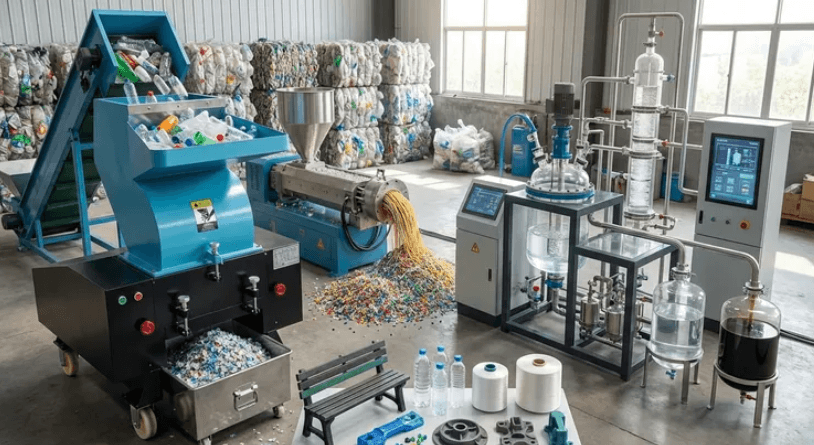
An industrial plastic pulverizer can form part of a larger production or recycling line, depending on the material and the requirements of the operation. Typical systems may include a feeding mechanism, grinding chamber, rotating components, cooling arrangements, and a collection unit.
The grinding process generates friction and heat, making temperature control an important consideration. Excessive heat can soften certain polymers, affect particle quality, and cause material to accumulate inside the machine. Equipment selection should therefore account for both the physical characteristics of the plastic and the expected production workload.
The resulting material may be used in selected manufacturing processes, blended with compatible feedstock, or prepared for additional treatment. However, its suitability depends on cleanliness, polymer composition, contamination levels, and the quality standards of the final application.
Where Pulverizing Equipment Creates Industrial Value
Plastic Recycling Facilities
Recycling plants process different forms of plastic waste, including manufacturing rejects, discarded products, and material recovered from commercial operations. Depending on the recycling process, the material may need to pass through sorting, washing, drying, shredding, granulating, and pulverizing stages.
Fine grinding can help prepare certain plastics for applications that require powder rather than flakes or pellets. This is particularly relevant when the downstream process specifies a controlled particle size.
An effective processing line should match each stage to the next. Feeding oversized or poorly prepared material directly into equipment that is designed for smaller particles can reduce throughput and increase wear. Proper preparation helps maintain stable operation and supports more predictable output quality.
Plastic Compounding and Material Blending
Plastic compounders combine polymers with additives, fillers, colorants, or other ingredients to achieve particular material properties. In selected formulations, finely ground plastic can support blending and material preparation.
Particle size influences how materials mix and behave during processing. A consistent powder can be easier to distribute in applications designed for powdered feedstock, although the ideal specification varies by formulation.
Manufacturers should evaluate whether pulverized material is compatible with their mixing and extrusion equipment. They must also consider contamination, moisture, thermal history, and the proportion of recycled material in the final blend.
Rotational Molding
Rotational molding is used to manufacture hollow plastic products, including storage tanks, containers, playground equipment, and selected industrial components. The process commonly requires polymer powder that can distribute throughout a heated mold.
For suitable polyethylene materials, pulverizing equipment can help produce powder with characteristics appropriate for rotational molding. Consistency matters because particle size and flow behavior can influence how the material melts and distributes across the mold surface.
Processors should establish particle-size specifications through testing rather than relying on machine capacity alone. The correct settings depend on the resin, mold design, production cycle, and required product quality.
Pipe, Sheet, and Profile Manufacturing
Manufacturers of plastic pipes, sheets, and profiles often generate offcuts and rejected products during production. Depending on the polymer and manufacturing process, some of this material can be recovered for reuse.
Pulverizing may be appropriate when the production formula requires finely ground material. In other cases, conventional granulation may be sufficient. Choosing the correct process prevents unnecessary energy consumption and avoids producing a material that the next manufacturing stage cannot use effectively.
Factors to Consider Before Purchasing Equipment
1. Material Compatibility
Different polymers behave differently during grinding. Rigid PVC, polyethylene, polypropylene, and engineering plastics vary in toughness, thermal response, and grinding characteristics.
Before purchasing equipment, businesses should identify the exact materials they plan to process. If the facility handles multiple polymer types, it should determine whether one machine can meet all requirements or whether separate configurations are necessary.
Mixed or contaminated plastics may require additional sorting and preparation before processing.
2. Required Particle Size
The target particle size should be determined by the intended application. A recycling operation producing coarse flakes has different requirements from a manufacturer that needs fine powder for molding or compounding.
Buyers should discuss acceptable particle-size ranges, distribution consistency, and the possibility of adjusting grinding settings. Material testing can help establish whether a proposed machine meets the actual production specification.
3. Production Capacity
Equipment capacity should reflect the quantity of material that needs to be processed during a normal shift. Selecting a machine based only on its advertised maximum output may create problems if actual performance differs under real operating conditions.
Important factors include feed size, polymer type, target fineness, operating hours, and the condition of the incoming material. Businesses should also account for future production growth without paying unnecessarily for unused capacity.
4. Cooling and Temperature Management
Heat generated during grinding can influence productivity and product consistency. Some polymers soften more readily than others, so the cooling arrangement should suit the material and operating conditions.
Buyers should ask about temperature monitoring, cooling requirements, and the measures used to prevent overheating. Stable temperature management can help reduce material buildup and support more consistent results.
5. Maintenance and Operating Costs
The initial purchase price is only one part of equipment ownership. Electricity consumption, replacement grinding components, cleaning, routine servicing, and downtime all influence long-term operating costs.
A practical assessment should compare the expected cost per unit of processed material rather than focusing exclusively on the purchase price. Accessible maintenance points, dependable replacement parts, and clear operating instructions can also make a meaningful difference.
Improving Efficiency After Installation
Even well-designed machinery requires suitable operating practices. Consistent feeding helps prevent fluctuations in grinding performance, while routine inspections can identify worn components before they cause serious interruptions.
Operators should monitor output quality and record relevant production information, including processing rates, energy consumption, maintenance intervals, and rejected material. These records help identify opportunities to improve efficiency.
Cleanliness is equally important. Residues from incompatible polymers, dust accumulation, or foreign particles can affect the quality of recovered material. Appropriate cleaning procedures and separation practices help protect both product consistency and equipment performance.
Worker safety should remain a priority throughout installation and operation. Facilities need suitable guarding, emergency-stop arrangements, electrical protection, and training for authorized personnel. Dust extraction and other environmental controls should be selected according to the material being processed and the risks identified at the facility.
Supporting More Responsible Plastic Manufacturing
Recovering usable plastic material can reduce waste and help manufacturers make better use of their existing resources. When recycled feedstock meets the required technical specifications, it may replace a portion of newly purchased material in suitable applications.
Nevertheless, recycling does not eliminate every environmental impact. Grinding consumes energy, equipment requires maintenance, and some contaminated or degraded materials cannot be reused in the intended product. Businesses should evaluate the complete process, including collection, sorting, transportation, processing, and final material use.
The strongest results come from integrating suitable machinery into a well-planned material recovery strategy. Clear quality standards, responsible sourcing, and careful process control allow manufacturers to make more informed decisions about when and how recovered plastics should re-enter production.
Frequently Asked Questions
1. What is the main purpose of plastic pulverizing equipment?
Its main purpose is to reduce suitable plastic granules, flakes, or prepared scraps into fine particles or powder. The resulting material can be used in manufacturing processes that require a specific particle size, including selected molding, compounding, and recycling applications.
2. Which plastics can be processed using industrial pulverizing machinery?
Depending on the machine design and configuration, suitable materials may include PVC, polyethylene, polypropylene, and certain other thermoplastics. Actual compatibility depends on the polymer’s properties, the required output size, and the equipment specifications. Material testing is advisable before large-scale production.
3. How can manufacturers choose the right machine capacity?
Manufacturers should consider the type and condition of the incoming plastic, the required particle size, expected hourly output, operating schedule, cooling needs, and available space. Comparing these requirements with verified performance data and maintenance costs helps identify equipment that suits the production process.
See also: Why Location Matters So Much in the Restaurant Business
Conclusion
Efficient plastic processing requires more than reducing waste into smaller pieces. Manufacturers must understand their materials, identify the needs of downstream production, and select equipment that delivers the appropriate output consistently.
Pulverizing technology can support plastic recycling, material preparation, rotational molding, and other industrial applications when the process is properly matched to the polymer and production requirements. By evaluating material compatibility, particle size, capacity, temperature control, maintenance, and safety, businesses can make better equipment decisions and improve resource utilization.
A carefully planned processing system helps manufacturers control operating costs, recover suitable production waste, and build more efficient material management practices over the long term.