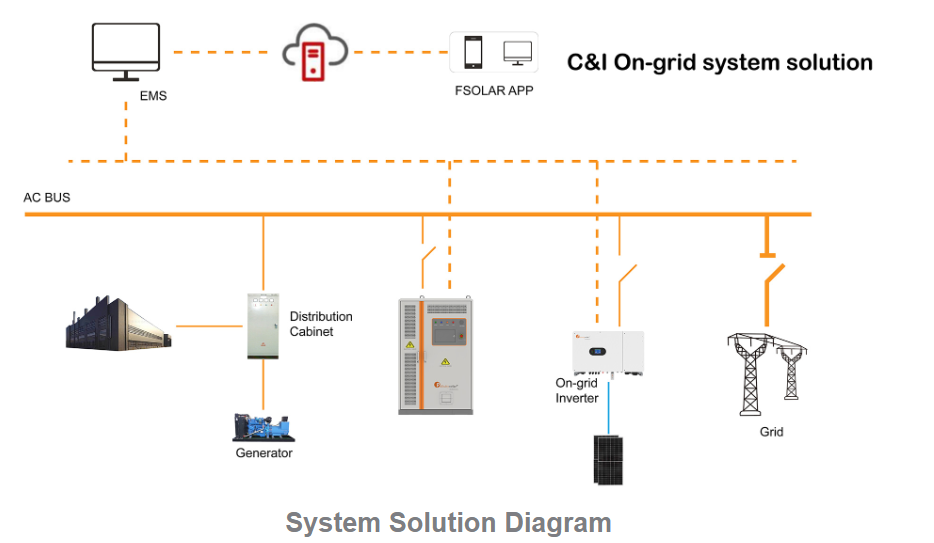
Energy management has become an important consideration for commercial buildings, manufacturing facilities, warehouses, retail businesses, and other organizations with substantial electricity requirements. Changes in operating schedules, electricity tariffs, peak demand, and energy resilience requirements can make it difficult to manage consumption efficiently.
Commercial and industrial energy storage offers one possible approach. By storing electricity and making it available when required, a properly designed system may help a business manage selected energy demands more effectively.
Its value depends on the facility’s consumption profile, tariff structure, available space, electrical infrastructure, and operational objectives.
Understanding Commercial Energy Demand
Commercial electricity consumption often varies throughout the day. An office may experience high demand during working hours, while a manufacturing facility may have large loads associated with production equipment.
Some businesses also experience short periods of particularly high demand. Depending on the utility’s tariff structure, these peaks may influence electricity costs.
Before considering energy storage, a facility should review its electricity bills, interval-meter data, operating schedules, and major electrical loads. This information helps identify when energy is consumed and whether the pattern offers a practical opportunity for storage.
A system should be evaluated against the facility’s actual operating profile rather than general assumptions about how businesses use electricity.
What an Energy Storage System Does
An energy storage system combines a storage medium, power-conversion equipment, controls, protection devices, and other components needed for its intended application.
A battery-based system can store electricity when charging conditions permit and supply energy later, subject to its capacity and power limits. The charging source may include the grid, a solar installation, or another approved source, depending on the system design and local regulations.
Energy storage does not create electricity. It shifts the availability of previously generated or purchased energy, with some losses during charging and discharging.
This distinction is important when estimating savings. The financial benefit depends on the cost of charging, the value of the electricity used later, system efficiency, and any applicable demand charges.
Supporting Peak-Demand Management
One potential application is peak shaving, where stored energy supplies part of the facility’s demand during selected high-consumption periods.
For example, a business may experience a short demand peak when several large machines operate simultaneously. If the storage system has sufficient power and usable energy, its controls may reduce the amount of electricity drawn from the grid during that period.
Whether this reduces costs depends on the utility tariff and the way demand is measured. A peak that lasts longer than expected may exhaust the available stored energy, limiting the benefit.
A C&I energy storage solution is one category of equipment businesses may investigate when evaluating commercial and industrial storage options. The appropriate configuration should be determined from the facility’s load data, electrical design, required power, and expected operating conditions.
Integrating Storage With Solar Generation
Businesses with solar installations may generate electricity at times that do not match their demand. For example, a facility may produce substantial solar power during the afternoon but consume more electricity later.
Energy storage can provide a way to retain some of that generation for later use. However, the amount of energy available depends on solar output, battery capacity, conversion losses, and the facility’s consumption schedule.
The project team should examine whether the existing solar system can support the proposed storage arrangement and whether its inverter and controls are compatible.
Solar integration should also account for local interconnection rules, export limitations, protection requirements, and any restrictions imposed by the utility.
Improving Energy Resilience
Some organizations need to maintain selected operations during power interruptions. A suitably designed storage system may support designated loads, but backup capability must be specified rather than assumed.
Not every grid-connected battery system automatically provides backup power. The equipment may require compatible inverters, transfer arrangements, controls, and electrical isolation provisions.
The facility should identify critical loads and estimate how much energy they require during an outage. It should also consider the expected outage duration and whether the system can recharge during the interruption.
See Also: Why is a Samsung 43 inch Smart TV a Popular Choice?
A battery sized for peak-demand management may not be large enough to support critical equipment for an extended period. Backup objectives should therefore be assessed separately from routine energy savings.
Choosing Capacity and Power
Two central design considerations are usable energy capacity and output power. Energy capacity determines how much electricity the system can deliver over time, while power capacity determines how much it can supply at a particular moment.
A facility with large but short-lived demand peaks may have different requirements from a site seeking to support critical equipment for several hours.
Battery chemistry, operating temperature, cycle requirements, charging limits, and expected service life also affect system selection.
The design should account for future demand changes where practical, but oversizing can increase capital cost without producing a proportional benefit. Load analysis helps establish a more appropriate balance.
Safety, Space, and Maintenance
Commercial battery installations require attention to fire protection, ventilation, electrical protection, access, and environmental conditions. Requirements vary with the technology, system size, building type, and applicable regulations.
The installation should be designed and commissioned by appropriately qualified professionals. Businesses should establish procedures for monitoring alarms, arranging inspections, and responding to faults.
Maintenance and warranty terms should be considered as part of the total cost of ownership. The organization should understand which inspections are required, what operating conditions are permitted, and how the supplier handles service issues.
Evaluating the Business Case
An energy storage investment should be assessed using realistic financial assumptions. Relevant factors include equipment and installation costs, expected energy savings, demand-charge reductions, efficiency losses, maintenance, financing, and eventual battery replacement.
The analysis should use the facility’s actual tariff and consumption data. Sensitivity analysis can help show how the result changes if electricity prices, operating schedules, or demand patterns change.
Businesses should also compare storage with other options, such as improving equipment efficiency, adjusting operating schedules, or upgrading energy monitoring.
Conclusion
Commercial energy storage can support peak-demand management, solar self-consumption, and selected resilience objectives when the system is designed around a facility’s real requirements.
A structured assessment of load profiles, tariffs, technical compatibility, safety, and lifecycle cost helps businesses determine whether storage is a practical investment. The strongest decisions are based on measured operating data and clearly defined objectives rather than broad promises of savings.