Margins in courier work are razor-thin. Same-day delivery expectations keep climbing, volume keeps growing, and throwing more drivers at the problem is the fastest way to burn through your profit.
If you run a small courier service, the real question is not how to hire more. It is how to squeeze more deliveries out of the fleet you already have.
The Spreadsheet Ceiling
You know the routine. Get a list of addresses, open a spreadsheet, sort by neighborhood or ZIP code. Maybe copy-paste into Google Maps to eyeball the best order. Thirty minutes on a good day. An hour when volume spikes.
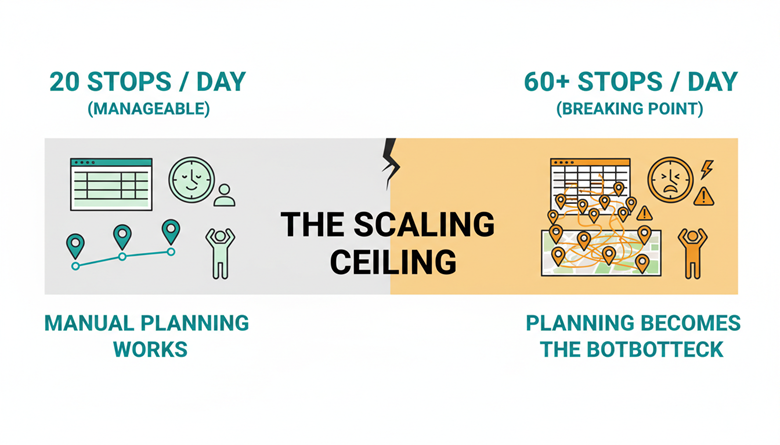
The problem is not that it does not work. It does, barely. The problem is that it does not scale. When you go from 20 deliveries a day to 60, manual sorting becomes a full-time job. And the routes you build by gut feel are almost never optimal. You burn fuel on backtracking, miss tight delivery windows, and exhaust drivers who could be making more stops if the sequence were smarter.
This is where most small couriers hit their ceiling. Orders increase but capacity does not keep up because planning is the bottleneck.
See also: Soundbars: Transform Your Home Audio Experience
What to Look for in a Route Planning Tool
Not every tool solves this problem. Most mapping apps were built for road trips, not last-mile delivery. Here is what actually moves the needle for courier operations.
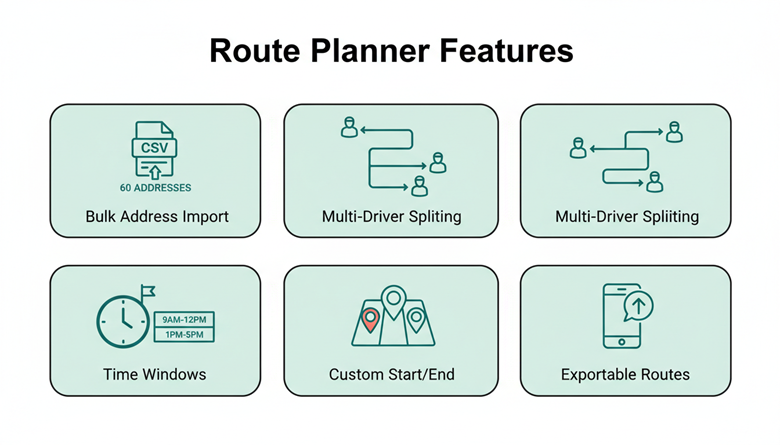
Bulk address import. You have 60 stops in a spreadsheet. The tool should accept a CSV upload and return optimized routes in seconds. If you are still entering addresses one at a time, the tool is slower than the spreadsheet.
Multi-driver route splitting. You do not just need one optimized route. You need to split 60 stops across three drivers, balanced by zone and workload. A good route planner does this in one step instead of forcing you to manually divide the list.
Time window support. Priority deliveries with tight windows need to be sequenced first. Flexible drops fill in around them. The tool should handle this automatically, not force you to choose between efficiency and keeping your promises.
Custom start and end points. Your drivers do not all leave from the same place. The tool should let you set different origins and destinations per driver so routes reflect reality.
Exportable routes. Once routes are built, drivers need them on their phones in seconds. CSV download, shareable link, or push to a driver app. If the only option is a screenshot of a map, it does not work at scale.
The Math Behind Smarter Routes
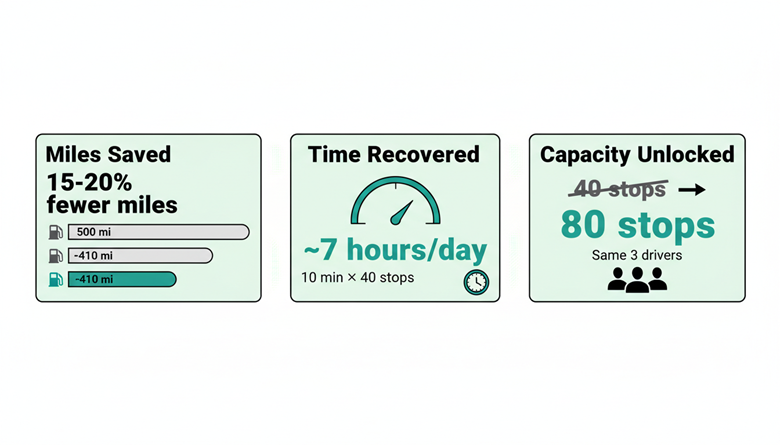
Couriers who switch from manual planning to optimized routing typically cut total miles driven by 15 to 20 percent. For a small fleet logging 500 miles a day, that is 75 to 100 fewer miles. That translates directly into lower fuel costs and less vehicle wear.
Time savings compound faster. Shaving 10 minutes of drive time per stop across 40 stops gives you nearly 7 extra hours of driver capacity per day. That is enough to add a full route without hiring anyone.
A three-driver operation doing 40 stops per day can often push to 70 or 80 just by eliminating wasted miles and idle time between deliveries.
How to Start Without Overhauling Everything
You do not need to change your entire operation overnight.
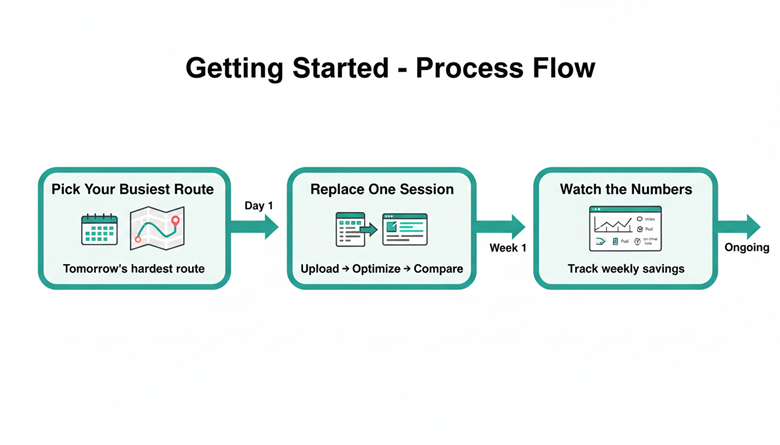
Pick your busiest route tomorrow. Upload the stops into a route planner, let it optimize, and compare the result to what you would have built manually. Track miles, time, and stops completed.
Replace one planning session at a time. Start with your morning batch. Once you trust the output, add afternoon routes. Within a week the spreadsheet sits untouched.
Watch the numbers. Total miles, fuel spend, on-time rate, stops per driver. The patterns show up fast and the savings compound weekly.
The Gap Is Compounding
Every day your competitors optimize routes and you do not, they are doing more drops per hour at lower cost. They take on more volume without adding headcount. They respond to same-day requests you have to turn down because your fleet is maxed out on inefficient routes.
In a business where every mile and every minute counts, route optimization is the single highest-leverage change you can make before spending a dollar on growth.