Concrete stands as one of the most enduring materials in human history. Yet even the toughest slabs lose their sparkle. Weather erodes, cracks creep, and stains spread. Many think demolition is the answer. In truth, resurfacing breathes new life into weary concrete without full replacement.
This article traces the lifecycle of concrete resurfacing in Melbourne. From the first stage of application to the final step of maintenance, each chapter reveals a tale of strength, design, and durability.
Stage One: Preparation
Every successful resurfacing journey begins with preparation. The slab must be stripped of debris. Dirt, grease, and oil vanish under pressure washing. Loose chips or fragile flakes must be removed. This step shapes the foundation for what follows. A clean, stable base allows overlays to bond. Without it, no resurfacing can thrive.
Preparation also requires inspection. Contractors hunt for structural weakness. Large cracks or deep fractures may demand repair before coatings begin. If ignored, they spread under the new layer. Resurfacing then becomes a bandage rather than a cure.
Once cleaned and repaired, the surface waits like a blank canvas. The stage is set for renewal.
Stage Two: Mixing Materials
Resurfacing blends science with creativity. The chosen mix dictates the strength and finish of the final surface.
Standard overlays use a balance of cement, sand, and polymers. Each ingredient plays a role.
- Cement gives structure.
- Sand adds grit.
- Polymers grant flexibility and adhesion.
Together they form a coat that clings tightly to the old slab.
Some mixes include recycled aggregates. These sustainable choices reduce waste. Others feature pigments for colour. Pigments open doors to browns, charcoals, or even bold blues. The blend becomes more than repair. It becomes an expression.
Contractors mix with precision. Perfect consistency ensures smooth spreading and lasting strength.
Stage Three: Application
The moment of transformation arrives. The overlay meets the slab.
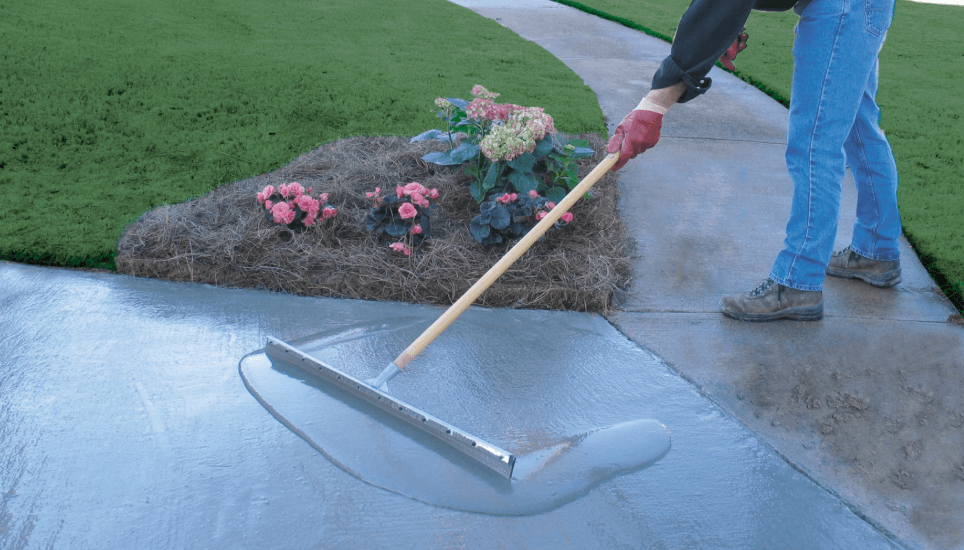
Workers pour or spread the mix with trowels. In some projects, machines spray a thin mist across the surface. In others, rollers or brushes spread texture. The method depends on design goals.
- A micro-topping offers sleek, modern minimalism.
- A stamped overlay mimics cobblestone or slate.
- A spray finish suits pool decks with a slip-resistant grip.
Application requires rhythm and speed, as the blend sets quickly. Every stroke shapes the outcome. Every motion builds texture and character.
Stage Four: Curing
Curing begins once the overlay sets. This period ensures strength. Moisture within the blend evaporates slowly. If the surface dries too fast, cracks form. If curing fails, durability suffers.
Contractors may mist water to control evaporation, while others use curing blankets or sealers. The process requires patience. It cannot be rushed. Hours stretch into days, as the overlay gains resilience with each passing moment.
See also: How Art Transforms Home Improvement: From Ordinary Spaces to Inspiring Homes
Stage Five: Sealing
A sealer guards the new surface. Think of it as armour. It blocks stains, resists water, and enhances colour.
Sealers vary. Some are acrylic, which provides a glossy finish that highlights texture. Others are penetrating. They soak deep and shield from within. Choices depend on function and aesthetics.
Application of the sealer is swift yet significant. Rollers or sprayers coat the surface evenly. Two thin layers often perform better than one thick layer. Once sealed, the resurfaced slab enters its prime.
Stage Six: Everyday Use
The resurfaced surface enters daily life. Cars roll across driveways, feet march across patios, and pool chairs scrape across decks. The slab now proves its value.
Durability defines this stage. Overlays withstand weight, weather, and wear. Colours resist fading under sunlight. Textures provide safety in the rain. The concrete performs not just as a floor but as part of daily living.
Stage Seven: Maintenance
Resurfaced concrete thrives with simple care. Unlike fragile flooring, it asks little.
- Sweeping removes dust and grit.
- Mild soap with water erases stains.
- Harsh chemicals are avoided.
- A soft broom or mop maintains the finish.
- Pressure washers work when grime builds, but gentleness remains key.
Resealing every few years extends life. The surface regains gloss and shield. This step repeats the protection stage. It refreshes colour and renews resistance.
With attention, resurfaced concrete lasts for decades. Neglect, however, shortens the journey.
Longevity and Renewal
How long does resurfaced concrete endure? Lifespans vary. Quality of application matters. Climate plays a role. Maintenance seals the outcome.
Well-executed resurfacing can last ten to fifteen years or more. Some surfaces remain strong for decades. When the layer eventually fades, resurfacing can occur again. The cycle repeats. Old slabs avoid demolition once more. Resources remain conserved.
The lifecycle begins anew.
Environmental Benefits Through the Lifecycle
The story of resurfaced concrete is not only about beauty or strength. It is also about sustainability.
- Reflective coatings lower surface temperatures.
- Homes stay cooler.
- Energy demands drop.
- Low-VOC sealers protect air quality.
- Recycled aggregates reduce raw extraction.
From preparation to maintenance, eco-conscious choices ripple outward. Each stage respects the environment while providing functionality.
Conclusion
Concrete may crack. It may stain and go dull with time. Yet resurfacing turns decline into revival. Each stage of the lifecycle has importance, from prep to mixing to curing. This cycle repeats as needed.
Resurfaced concrete is more than flooring. It is renewal in action. It is proof that even the hardest material can find fresh life with the right touch.
To give your concrete new life, contact the experts at Premium Concrete Resurfacing. You will be glad to see your surface brighten up once again. Good luck!