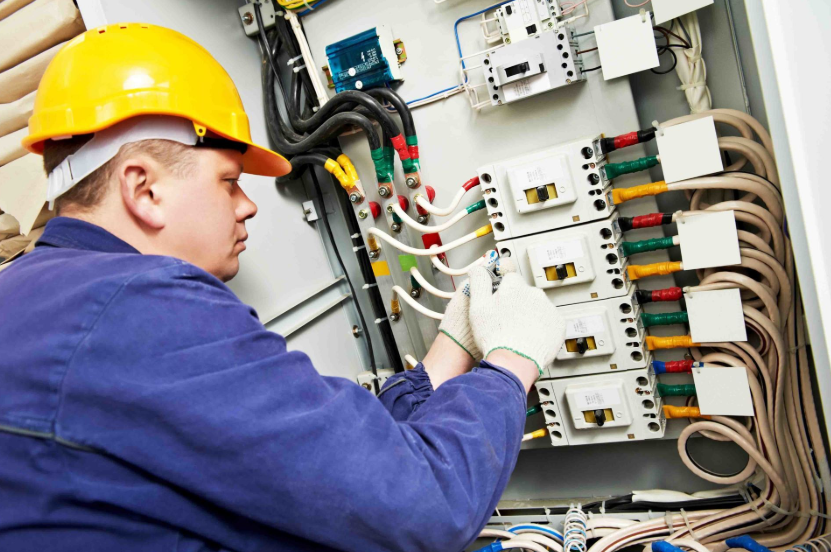
Wiring a new commercial development is one of the most critical aspects of the construction process. Whether the project involves an office complex, retail center, warehouse, or mixed-use facility, the electrical system must be designed and installed to handle modern power demands safely and efficiently. This task is far more complex than residential wiring and requires the expertise of trained commercial electricians to ensure it meets all safety, regulatory, and operational standards.
Planning and Designing the Electrical System
Load Analysis and Future-Proofing
The first step in any commercial wiring project is planning the system layout. This involves analyzing how much power the building will require both now and in the future. Load analysis helps determine the size and number of circuits, distribution panels, and backup systems needed.
Commercial electricians work with architects, engineers, and developers to create a comprehensive electrical design tailored to the needs of the business. They consider not just lighting and outlets, but also HVAC systems, elevators, data infrastructure, and energy efficiency goals. Future-proofing is critical, as electrical upgrades in commercial buildings are far more disruptive and expensive than initial installations.
Compliance With Codes and Permits
Commercial developments are subject to strict electrical codes at the local, state, and national levels. These regulations are in place to protect the structure, its occupants, and the public utility grid. The planning phase includes submitting drawings for approval, securing permits, and incorporating safety measures like emergency lighting and fire alarm systems.
Experienced commercial electricians are well-versed in these codes. They ensure the system will pass inspections and function without risk of overload, fire, or operational failure.
Installation of Core Components
Main Electrical Service and Distribution Panels
Once planning is complete and the permits are secured, the physical work begins. Commercial electricians start by installing the main electrical service, which includes connecting the building to the utility grid, setting up transformers if needed, and installing the main service panel.
From there, power is routed to subpanels located throughout the building. These panels distribute power to different zones and help prevent overload on any single circuit. The setup is designed for balance and safety, with each panel clearly labeled and built to handle anticipated electrical loads.
Interior Wiring and Circuit Setup
Interior wiring includes running conduits, cables, and wires throughout the building to power lighting, outlets, equipment, and systems like HVAC and security. Commercial electricians must route wires according to detailed plans, often navigating walls, ceilings, and concrete flooring to reach all areas without disrupting the building’s structural integrity.
Every circuit is tested during and after installation to ensure safety and functionality. Proper labeling, grounding, and circuit protection are essential parts of this phase, along with compliance with all fire safety regulations.
See also: Is AI Image Editing as Accurate as Traditional Photoshop Techniques?
Specialized System Integration
Low-Voltage and Data Wiring
Modern commercial developments rely heavily on low-voltage systems. These include phone lines, internet, data networks, intercoms, and audio-visual components. While they operate on less power, they must still be installed with precision to avoid interference, degradation, or future connectivity problems.
Commercial electricians often handle these systems alongside IT professionals to ensure proper placement, shielding, and compatibility. The infrastructure must support current needs while remaining flexible for future upgrades as technology evolves.
Energy Efficiency and Smart Controls
Energy efficiency is no longer optional in commercial development—it’s a requirement. LED lighting, motion sensors, daylight harvesting, and smart building controls are all integrated into the electrical system to reduce energy use and operating costs.
Commercial electricians are responsible for installing and programming these advanced systems. They help building owners comply with green building standards and optimize energy performance through proper system design and component selection.
Final Testing, Inspections, and Handover
System Testing and Quality Assurance
Before the electrical system is deemed ready, it undergoes rigorous testing. Every outlet, switch, fixture, and panel must function correctly under full load. Grounding systems are verified, breakers are tested, and emergency backup systems are checked to ensure immediate activation when needed.
Commercial electricians lead this testing phase, making adjustments and repairs as necessary. Their work ensures that when power is turned on, the system performs reliably from day one.
Inspections and Client Handover
After internal testing, external inspections by local authorities are required. These inspections ensure that all work is code-compliant and safe. Once passed, the final documentation—including schematics, load calculations, and maintenance guidelines—is handed over to the building owner.
Commercial electricians remain available for final walkthroughs, adjustments, and future maintenance planning, making them a long-term partner in the facility’s success.
Conclusion
Wiring a new commercial development is a highly technical, multi-phase project that demands planning, expertise, and attention to detail. From initial design and load analysis to installation, testing, and inspections, every step must be carefully executed. Commercial electricians play a vital role in ensuring these systems are safe, efficient, and scalable. Their knowledge and craftsmanship are the foundation of a building’s operational reliability, making them essential to every successful commercial construction project.