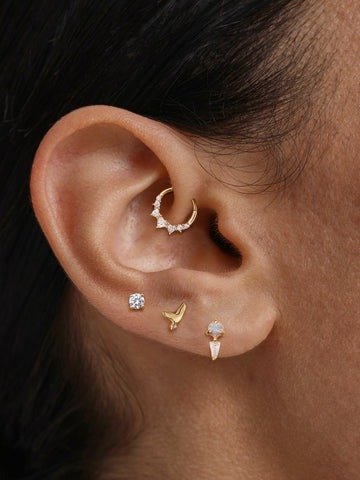
Ear cartilage jewelry has evolved from a bold statement to a mainstream fashion choice, embraced by people seeking to express their personal style through subtle yet striking adornments. The rise of cartilage piercings—from helix to tragus placements—has created a thriving market for jewelry that balances aesthetic appeal with everyday wearability.
Finding cartilage jewelry that feels comfortable throughout the day while maintaining a polished appearance can be challenging. Unlike lobe piercings, cartilage requires pieces that won’t snag on clothing or cause irritation during sleep, making the selection process crucial for both new and experienced piercing enthusiasts.
Today’s ear styling landscape offers endless possibilities, from curated ear arrangements featuring multiple piercings to simple single-stud statements. Minimalist studs have emerged as a versatile foundation for these looks, providing the perfect starting point for building a cohesive ear aesthetic that transitions seamlessly from casual daywear to elegant evening occasions.
Understanding Ear Cartilage Piercings
The ear’s cartilage forms the firm, flexible framework that shapes the outer ear, distinct from the soft tissue of the earlobe. This resilient structure consists of a single piece of elastic cartilage covered by a thin layer of skin, with minimal blood flow compared to other body parts. Understanding this anatomy helps explain why cartilage piercings require longer healing times and more careful jewelry selection than traditional lobe piercings.
The helix piercing follows the upper outer rim of the ear and remains the most requested cartilage placement, offering versatility for single studs or multiple arrangements. Forward helix piercings sit at the front of this rim, near where the ear meets the head, creating an eye-catching accent point. The tragus piercing penetrates the small, rounded cartilage flap that partially covers the ear canal, while the conch occupies the large, flat central area of the ear. Daith piercings curve through the innermost cartilage fold above the ear canal, and rook piercings pass through the ridge of cartilage parallel to the outer helix. Each placement offers unique styling opportunities and requires specific jewelry dimensions to ensure proper fit and comfort during the extended healing process that typically spans six to twelve months.
Choosing the Right Stud
Material selection forms the foundation of successful cartilage jewelry, directly impacting healing time, comfort, and long-term wearability. The cartilage’s limited blood supply makes it particularly sensitive to irritation from low-quality metals, which can trigger allergic reactions or prolong the healing process by months. Investing in hypoallergenic materials becomes essential rather than optional, especially during the initial healing phase when your body is most vulnerable to adverse reactions.
Titanium stands as the gold standard for cartilage piercings, offering unmatched biocompatibility that makes it suitable even for those with severe metal sensitivities. This lightweight metal resists corrosion and won’t leach nickel into your skin, eliminating the most common cause of piercing complications. Implant-grade titanium (ASTM F136) receives approval from medical professionals for use in surgical procedures, making it the safest choice for fresh piercings. Surgical stainless steel (316L) provides a budget-friendly alternative with good durability, though it contains trace amounts of nickel that may affect highly sensitive individuals. Solid gold in 14k or 18k offers luxury and hypoallergenic properties when you choose nickel-free yellow, white, or rose gold varieties, though its higher price point makes it a considered investment.
Design considerations extend beyond aesthetics to practical functionality in daily life. Flat-back labret studs have revolutionized cartilage jewelry by eliminating the butterfly backs that dig into skin during sleep and snag on hair or clothing. The disc backing sits flush against the ear, distributing pressure evenly and reducing irritation. Threadless or push-pin closures simplify jewelry changes while maintaining security, as the slight tension between post and top keeps the piece firmly in place. Screw-back options provide maximum security for active lifestyles, though they require more dexterity to install correctly. The post length matters significantly—too short creates pressure and swelling, while excessive length catches on everything and increases infection risk through movement.
Minimalist Studs
Minimalist studs have captured the attention of jewelry enthusiasts precisely because they reject ornate embellishment in favor of clean lines and understated elegance. These pieces typically feature simple geometric shapes—tiny spheres, delicate flat discs, or subtle gemstone settings that measure between 2mm and 4mm in diameter. The restrained design philosophy allows the jewelry to enhance rather than dominate your natural features, creating focal points that draw attention to your ear’s architecture without overwhelming it.
The versatility of minimalist studs makes them invaluable for building cohesive ear compositions across multiple piercings. A constellation of small matching studs creates visual harmony while allowing each piercing to maintain its individual presence. You can mix metals strategically—pairing warm gold tones in your helix with cool silver in your tragus—to add dimension without introducing competing design elements. This approach works equally well whether you’re cultivating a curated ear with five or more piercings or keeping things simple with just two or three placements. The neutral aesthetic transitions effortlessly between contexts, maintaining professionalism in conservative work environments while providing the perfect foundation for adding statement pieces when you want to elevate your look for social occasions or creative settings.
Styling Tips for Minimalist Studs
The beauty of minimalist studs lies in their adaptability to different settings and personal aesthetics. For professional environments, a uniform approach works exceptionally well—choosing identical small studs in a single metal tone across all your cartilage piercings creates a polished, intentional look that reads as sophisticated rather than casual. Stick with classic gold or silver in 2mm to 3mm sizes that provide presence without drawing excessive attention during client meetings or presentations. Weekend styling opens up more creative possibilities while maintaining the minimalist foundation. Try graduating sizes from smaller studs in upper helix placements to slightly larger pieces in lower positions, creating a subtle cascade effect that guides the eye naturally along your ear’s curve.
Layering minimalist studs with other jewelry requires thoughtful coordination to maintain visual balance. When incorporating hoops or huggies into your ear arrangement, position them strategically between clusters of studs to create breathing room and prevent a cluttered appearance. A single small hoop in your daith or conch can anchor an arrangement of three to four minimalist studs scattered across your helix, with the circular shape providing contrast against the dot-like quality of the studs. Temperature mixing—combining warm and cool metals—adds depth without requiring additional pieces. Place rose gold studs in your forward helix and tragus while using white gold or silver in your mid and upper helix positions, allowing the color variation to create interest through strategic placement rather than competing designs.
Occasion-based styling lets you transform your minimalist studs from understated to elevated with minimal effort. For formal events, consider replacing one or two of your everyday studs with versions featuring tiny diamonds or cubic zirconia, positioning these accent pieces in your most visible piercings while keeping supporting placements simple. The sparkle catches light without reading as excessive, maintaining the refined aesthetic that makes minimalist jewelry so versatile. Beach vacations and active pursuits call for the opposite approach—swap any gemstone studs for solid metal options that won’t risk stone loss during swimming or sports, and verify all closures are secure before activities that involve movement or water exposure.
Maintenance of Ear Cartilage Jewelry
Proper maintenance of your cartilage jewelry extends its lifespan while protecting your piercings from complications that can derail months of healing progress. Daily care routines differ significantly between fresh and fully healed piercings, with new placements requiring sterile saline solution applied twice daily using clean gauze or a disposable cotton pad. Avoid rotating the jewelry during cleaning, as this outdated practice actually introduces bacteria into the piercing channel and irritates the forming tissue. For healed piercings, gentle cleaning during your regular shower routine usually suffices—let warm water run over the jewelry while using your fingertips to remove any buildup of soap, shampoo, or natural oils that accumulate around the post and backing.
Deep cleaning your jewelry every few weeks maintains its appearance and prevents the dull film that develops from daily exposure to hair products and skin oils. Remove the pieces and soak them in warm water mixed with a few drops of mild, fragrance-free soap for five to ten minutes, then use a soft-bristled toothbrush dedicated solely to jewelry cleaning to gently scrub around settings and backings. Rinse thoroughly under running water to eliminate soap residue that can cause irritation when you reinsert the jewelry. For stubborn tarnish on silver pieces, a specialized jewelry polishing cloth restores shine without harsh chemicals. Many jewelry specialists, including brands like Kosinerjewelry, offer collections specifically designed with flat-back labret studs and hypoallergenic materials that simplify maintenance while ensuring long-term comfort.
Storage practices protect your investment when jewelry isn’t being worn. Keep pieces separated in individual compartments of a jewelry box or small zip-lock bags to prevent scratching, particularly important for gold which marks easily against harder metals. Store your collection in a cool, dry location away from humidity that accelerates tarnish on silver and can compromise certain gemstone settings. Before swimming in chlorinated pools or ocean water, remove jewelry when possible, as both chlorine and salt water can damage metal finishes and loosen stone settings over time, turning a minor inconvenience into a costly replacement situation.
Embracing Minimalist Elegance in Cartilage Jewelry
Minimalist studs represent the intersection of practicality and elegance in ear cartilage jewelry, offering a foundation that adapts to your lifestyle while expressing personal style through subtle sophistication. Understanding your cartilage anatomy, selecting hypoallergenic materials like titanium or solid gold, and choosing flat-back designs ensures comfort during the extended healing process and years of daily wear. The versatility of simple geometric shapes and small-scale designs allows you to build cohesive ear arrangements that transition seamlessly between professional settings and creative expression.
Whether you’re starting with a single helix piercing or curating a complex constellation across multiple placements, minimalist studs provide the perfect canvas for experimentation. Their understated nature invites mixing metals, graduating sizes, and layering with statement pieces without overwhelming your natural features. Combined with proper maintenance routines and thoughtful styling choices, these timeless pieces become reliable companions in your jewelry collection. Explore the possibilities that minimalist studs offer for your cartilage piercings, and discover how simplicity can create the most enduring and versatile expressions of personal style.