Ride-on toys represent a crucial milestone in early childhood development, offering toddlers aged 1 to 4 their first taste of independent mobility and adventure. These engaging toys do far more than simply entertain—they help young children develop essential motor skills, build confidence, and explore their physical capabilities in a safe, controlled manner.
Parents of children aged 1 to 4 are looking for safe and durable ride-on toys for their toddlers that can withstand the energetic play of growing children while providing peace of mind. The challenge lies in finding options that balance fun with safety, ensuring that little ones can enjoy active play without unnecessary risks.
This guide will explore the benefits of tricycles, lightweight trikes, and indoor/outdoor trikes for this age group, helping you understand which features matter most and how different types of ride-on toys can support your child’s developmental journey. Whether your toddler is just learning to balance or ready for more adventurous rides, the right ride-on toy can make all the difference in fostering a love of physical activity.
Understanding Ride-On Toys for Toddlers
Ride-on toys serve as powerful tools for physical and cognitive development during the critical years between ages 1 and 4. As toddlers push, pedal, or scoot on these toys, they strengthen their leg muscles, improve coordination, and develop spatial awareness. The act of steering and navigating obstacles teaches cause-and-effect relationships while building problem-solving skills. Balance and core strength naturally improve as children learn to maintain stability while in motion, laying the groundwork for future activities like cycling and sports.
When selecting a ride-on toy, prioritize stability as the foundation of safety. A wide wheelbase prevents tipping during enthusiastic turns and sudden stops. The seat height should allow your child’s feet to rest flat on the ground, giving them control over movement and the ability to stop independently. Look for smooth edges and rounded corners to minimize injury risks during inevitable bumps and falls. Quality construction matters significantly—sturdy frames made from durable materials withstand rough play and support growing children over extended periods. Non-toxic finishes ensure safety if little ones decide to explore with their mouths, while secure, easy-to-grip handlebars give children confidence as they navigate their environment. Weight capacity should exceed your child’s current weight to accommodate growth and ensure longevity.
Types of Ride-On Toys for 1-4 Year Olds
The ride-on toy market offers diverse options tailored to different developmental stages and play preferences within the 1-4 age range. Understanding these categories helps parents match toys to their child’s current abilities and interests.
Traditional tricycles feature three wheels with pedals and handlebars, making them ideal for children aged 2.5 to 4 who have developed the leg strength and coordination needed for pedaling. These classic toys teach children how mechanical motion works while building endurance and rhythm. Many modern tricycles include adjustable seats that grow with your child and parent push-handles for younger riders still mastering pedal coordination. The structured seating position encourages proper posture development while the pedaling motion strengthens leg muscles symmetrically.

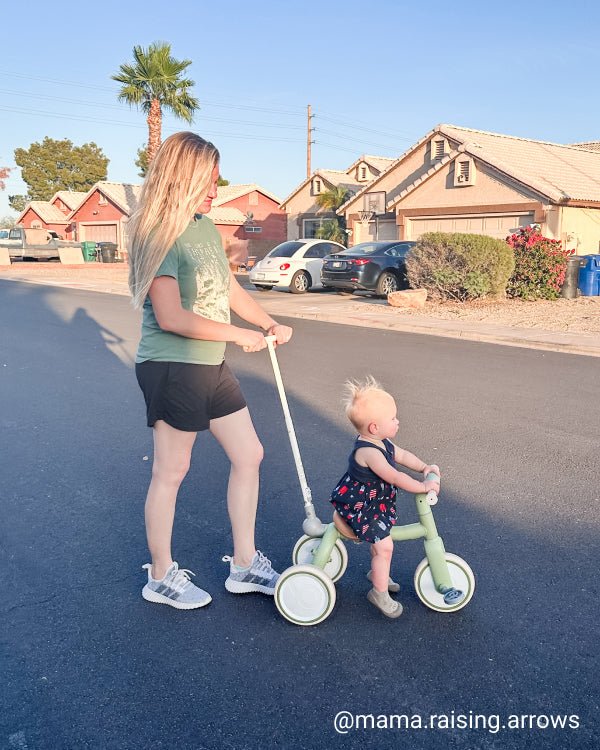
Lightweight trikes prioritize easy maneuverability for younger toddlers aged 1.5 to 3. Constructed from materials like molded plastic or lightweight aluminum, these simplified versions often eliminate pedals entirely, allowing children to propel themselves using their feet against the ground. This foot-to-floor design builds confidence in children who aren’t ready for pedaling, letting them control speed and direction intuitively. The reduced weight means children can easily turn and stop, developing steering skills without frustration.
Indoor/outdoor trikes bridge both environments with versatile designs featuring quiet wheels that won’t scratch floors or disturb neighbors. These adaptable options typically include rubberized or foam wheels that provide traction on various surfaces from hardwood to concrete. Compact frames allow navigation through doorways and around furniture, while durable construction withstands exposure to weather elements during outdoor adventures. This versatility maximizes play value throughout different seasons and weather conditions.
Safety Features to Consider
Safety features form the foundation of any quality ride-on toy, protecting your child during play while giving you confidence in their equipment. The materials used in construction directly impact both safety and longevity. High-quality plastics should be thick and impact-resistant, free from sharp seams or rough edges that could scratch delicate skin. Metal frames need smooth welds and powder-coated finishes that resist rust and chipping. All materials must meet safety standards for non-toxic composition, particularly important since toddlers frequently touch surfaces and may put parts in their mouths. Check for certification labels indicating compliance with safety regulations specific to your region.
Braking systems vary significantly across ride-on toys and deserve careful evaluation. For pedal-powered tricycles, look for rear-wheel brakes that children can operate independently, either through handlebar levers designed for small hands or foot-activated mechanisms. The braking action should be smooth and gradual rather than abrupt, preventing sudden stops that could throw a child forward. Push-along models benefit from parent-controlled brakes on push handles, allowing adult intervention when needed. Some designs incorporate automatic braking that engages when the child’s feet leave the ground, adding an extra layer of protection on inclines.
Stability features extend beyond just wheel configuration. Anti-tip designs include low centers of gravity achieved through strategic weight distribution and seat positioning close to the ground. Wider rear axles provide greater stability during turns without compromising maneuverability. Wheel materials matter too—rubber or foam wheels offer better traction than hard plastic, reducing slipping on smooth surfaces. Examine the steering mechanism to ensure it has built-in limitations preventing wheels from turning too sharply, which could cause tipping. Secure seat construction with back support helps maintain proper positioning, while safety harnesses or seat belts on models for younger toddlers prevent sliding during movement. Test the toy’s stability by applying pressure from different angles before purchase, ensuring it remains upright under typical play conditions.
Choosing the Right Ride-On Toy
Selecting the perfect ride-on toy requires careful assessment of your child’s current abilities and interests rather than simply matching age recommendations on packaging. Start by observing how your child moves and plays. A confident walker who runs and climbs is ready for more challenging ride-on toys, while a cautious toddler still perfecting balance benefits from stable, low-to-ground options. Watch how your child interacts with similar toys at playgrounds or friends’ homes to gauge their comfort level with different styles.
Physical readiness indicators help narrow your choices effectively. Measure your child’s inseam from floor to crotch while standing—this measurement should be slightly less than the seat height to ensure feet touch the ground comfortably. Check if your child can grasp and turn handlebars without overreaching, as proper grip prevents fatigue and maintains control. For pedal-powered options, observe whether your child can perform circular leg motions smoothly, a skill that typically develops around age 2.5. Strength matters too—your child should be able to support their own weight while seated and push off the ground or pedal without strain.
Developmental stage considerations extend beyond physical capabilities to cognitive and emotional readiness. Children around 12-18 months thrive with simple pushing walker toy options they can mount and dismount independently, building confidence through mastery of basic skills. By age 2-3, most toddlers enjoy the challenge of steering and navigating obstacles, making this ideal for introducing directional control and spatial reasoning. Children approaching age 4 often seek more complex features like pedals, gears, or storage compartments that engage their growing problem-solving abilities and imagination during play.
Interest alignment significantly impacts how much your child will use their ride-on toy. Some children gravitate toward realistic designs that mimic adult vehicles, complete with steering wheels and dashboard details that fuel imaginative play scenarios. Others prefer whimsical animal shapes or colorful abstract designs that spark creative storytelling. Consider your child’s favorite colors, characters, or themes when making your selection. A toy that resonates with their interests becomes a cherished companion rather than forgotten equipment. Test rides when possible allow your child to experience different options firsthand, revealing preferences you might not have anticipated and ensuring their enthusiasm for the final choice.
Indoor and Outdoor Play
Ride-on toys excel in both indoor and outdoor environments, each offering distinct developmental advantages that complement your child’s growth throughout different seasons and weather conditions. Understanding how to maximize play value in each setting helps you create enriching experiences year-round while protecting your investment and your home.
Indoor play with ride-on toys transforms living spaces into safe exploration zones where toddlers can practice new skills without weather constraints. Hardwood floors, tile, and low-pile carpets provide smooth surfaces for maneuvering, allowing children to focus on steering and balance without fighting rough terrain. The controlled environment lets younger toddlers build confidence at their own pace, free from outdoor distractions like wind, uneven ground, or curious pets. Indoor riding develops fine motor control as children navigate around furniture corners and through doorways, learning spatial relationships and depth perception. Rainy days become opportunities for active play rather than frustrating periods of confinement, helping children burn energy and maintain healthy sleep patterns regardless of weather. Consider designating specific riding areas away from stairs and fragile items, using baby gates to create safe boundaries. Foam floor mats or area rugs in play zones cushion inevitable tumbles while protecting both floors and toys from impact damage.
Outdoor play elevates the ride-on experience with expanded space, varied terrain, and sensory stimulation that indoor environments cannot replicate. Driveways, sidewalks, and paved paths offer smooth surfaces for building speed and confidence, while gentle slopes introduce children to momentum and braking concepts in controlled settings. Grass lawns provide natural cushioning for falls and teach children how different surfaces affect movement and effort required for propulsion. The outdoor environment engages multiple senses simultaneously—children feel wind on their faces, hear wheels crunching on gravel, and see changing scenery as they move, creating rich neural connections that support cognitive development. Social opportunities multiply outdoors as neighborhood children gather, fostering sharing, turn-taking, and cooperative play skills. Natural vitamin D exposure during outdoor riding supports bone development and immune function while establishing healthy habits of outdoor activity. Parks and playgrounds with designated riding areas let children practice alongside peers of varying skill levels, providing both inspiration and realistic challenges that motivate advancement.
Transitioning between environments requires thoughtful toy selection and preparation strategies. Choose ride-on toys with wheels appropriate for multiple surfaces—rubberized or foam wheels work well both indoors and out, whereas hard plastic wheels may scratch floors or slip on smooth surfaces. Before bringing outdoor toys inside, establish a cleaning routine that removes dirt, moisture, and debris that could damage floors or spread mess throughout your home. A designated storage spot near the door with a small brush or cloth makes this habit easy to maintain. Check wheels regularly for embedded stones or sticks that could scratch indoor flooring. For toys used exclusively outdoors, invest in weather-resistant covers or storage solutions that protect against rain, sun damage, and temperature extremes that degrade plastic and fade colors. Indoor-only toys benefit from occasional outdoor excursions on dry days, providing variety without requiring permanent outdoor durability features. Rotate toys between environments based on your child’s current interests and developmental focus—indoor use might emphasize steering precision while outdoor sessions prioritize endurance and speed exploration. This strategic approach maximizes each toy’s lifespan while keeping play experiences fresh and engaging across all settings.
Tips for Parents
Active supervision transforms ride-on toy play from potentially risky to confidently safe, requiring your presence without hovering or restricting natural exploration. Position yourself where you can observe your child’s entire play area while remaining close enough to intervene within seconds if needed. This proximity allows you to spot hazards before they become problems—a toy rolling toward stairs, another child approaching too quickly, or your toddler attempting maneuvers beyond their skill level. Avoid distractions like phone scrolling during supervision, as accidents happen in moments of inattention. Your presence also provides emotional security that encourages children to attempt new skills, knowing help is available if needed.
Create clear riding boundaries that balance freedom with safety, establishing designated play zones appropriate for your child’s abilities and the environment. Indoors, use furniture arrangements or baby gates to block off stairs, kitchens, and rooms with fragile items, creating a circuit your child can navigate independently. Mark boundaries with colorful tape on floors if needed, teaching spatial limits through visual cues. Outdoors, define riding areas away from driveways where cars park, pools or water features, and streets with traffic. Fence lines, garden edges, or chalk-drawn paths help children understand where riding is permitted. Consistently enforce these boundaries with gentle redirection rather than punishment, explaining why certain areas are off-limits. As children demonstrate mastery and responsibility, gradually expand boundaries to match their growing capabilities, rewarding good judgment with increased freedom.
Regular maintenance prevents mechanical failures that compromise safety and extends your toy’s functional lifespan significantly. Establish a weekly inspection routine that checks all moving parts for wear, looseness, or damage. Tighten any bolts or screws that have worked loose from vibration and play, using appropriate tools to ensure secure connections without over-tightening. Examine wheels for cracks, flat spots, or embedded debris that affects rolling smoothness—remove stones or sticks caught in wheel mechanisms. Test steering components for smooth operation without excessive wobbling or sticking. Check seats for stability and secure attachment, ensuring no sharp edges have developed from wear. Clean toys regularly with mild soap and water, removing dirt that can degrade materials and checking for hidden damage during the process. Lubricate moving parts like wheel axles with child-safe lubricant if they squeak or resist smooth motion. Store ride-on toys in dry, protected areas when not in use, preventing weather damage and extending material integrity. Address small repairs immediately before they worsen—a loose handlebar grip today becomes a dangerous detachment tomorrow if ignored.
Age-appropriate selection and usage guidelines ensure your child benefits from challenges without facing overwhelming frustration or danger. Resist the temptation to buy toys your child will “grow into,” as oversized equipment prevents proper foot placement and control, increasing accident risk and discouraging use. Start with simpler models that match current abilities, upgrading as skills develop rather than expecting children to adapt to advanced features prematurely. A 15-month-old needs stable push toys with four wheels and low seats, not tricycles requiring pedaling coordination they haven’t developed. Conversely, continuing to use toys designed for younger ages limits skill development—a confident 3.5-year-old ready for pedal tricycles gains little from push toys mastered long ago. Brands like Kidpop offer age-specific designs that align with developmental milestones, making it easier to find options suited to your child’s current stage. Observe your child’s engagement level as an indicator of appropriate matching. Frustration signals the toy exceeds current abilities, while boredom suggests they’ve outgrown its challenges. Hand-me-down toys from older siblings require careful evaluation to confirm they match the younger child’s stage rather than assuming all ride-on toys suit all toddlers. Teach proper mounting and dismounting techniques from the beginning, demonstrating how to approach the toy from the side, swing one leg over while holding handlebars, and step off carefully rather than jumping. Practice emergency stops in controlled situations so children develop instinctive braking responses before encountering real hazards. Model safe riding behaviors yourself during play, showing how to look before turning, slow down near obstacles, and respect others’ space in shared play areas. Your demonstrated habits become your child’s learned behaviors, establishing safety practices that extend beyond ride-on toys to future cycling and wheeled activities throughout childhood.
Building Confidence Through Safe Ride-On Play
Ride-on toys provide toddlers aged 1 to 4 with invaluable opportunities to develop motor skills, build confidence, and establish healthy active play habits that benefit them throughout childhood. The right selection balances your child’s current developmental stage with safety features that protect during energetic exploration. Traditional tricycles challenge older toddlers ready for pedaling coordination, while lightweight trikes offer younger children intuitive foot-powered mobility. Indoor/outdoor versatile options maximize play value across seasons and settings, ensuring year-round engagement regardless of weather conditions.
Safety considerations form the foundation of any purchase decision—prioritize stable designs with wide wheelbases, appropriate seat heights that allow ground contact, and quality construction using non-toxic materials. Regular maintenance, active supervision, and clearly defined play boundaries transform these toys from simple entertainment into developmental tools that strengthen bodies and minds. By matching toys to your child’s abilities rather than age labels alone, you ensure frustration-free experiences that encourage persistence and skill mastery.
Investing in safe and durable ride-on toys rewards families with years of active play that builds physical strength, spatial awareness, and independence. These early mobility experiences create positive associations with movement and outdoor activity, establishing patterns that support lifelong health and well-being. Choose thoughtfully, supervise consistently, and watch your toddler flourish through the joy of self-propelled adventure.