Buying or settling into a rural property brings a different set of fencing questions than a standard suburban block. You are not just thinking about privacy or a tidy front yard. You are thinking about containing livestock, managing boundaries with neighbouring farms, keeping horses safe, and choosing a fence that will actually survive a WA summer and the kind of ground movement that comes with larger blocks. Getting this wrong is not a minor inconvenience either. A fence that fails to contain stock, or one that triggers a dispute with a neighbour over cost sharing, can end up costing far more than doing it properly the first time.
Start With What the Fence Actually Needs to Do
Before looking at materials or prices, it is worth being specific about the job the fence needs to perform. A fence built to contain cattle looks very different to one built to safely hold horses, and both are different again from a fence whose only real purpose is marking a boundary line with no livestock involved at all. Horses in particular are prone to injury around certain fencing styles, which is why post and rail or purpose built equine fencing is generally recommended over wire designs that can cause serious injury if a horse becomes entangled.
If your property runs a mix of stock, such as cattle in one paddock and horses in another, it is common and sensible to use different fencing styles for different areas rather than assuming one design needs to suit the whole property. Spending time mapping out exactly what each section of fencing needs to achieve before getting quotes will save you from paying for a fence that technically exists but does not actually do the job you needed it to.
Common Rural Fencing Styles and Where Each One Fits
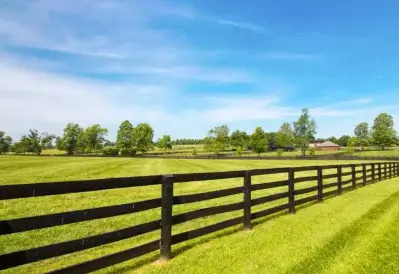
Post and rail fencing remains one of the most popular choices for horse paddocks and general rural boundaries because it is highly visible to animals, reasonably low maintenance, and sits well visually on larger rural blocks. Plain wire and barbed wire fencing is more commonly used for cattle and general stock containment where visibility to the animal matters less than cost efficiency across long boundary runs. Ringlock and mesh style fencing suits smaller livestock such as sheep and goats, where the gaps in standard wire fencing would otherwise be too wide to contain the animal.
Beyond the paddock fencing itself, farm gates deserve just as much thought as the fence line. A gate that is undersized, poorly hung, or made from the wrong material for the traffic it needs to handle becomes the weak point in an otherwise solid fencing job, and it is usually the first thing to fail under regular use.
Choosing Materials That Suit Perth Hills and Peel Region Conditions
Properties across the Perth Hills, Serpentine and the broader Peel region deal with a specific combination of conditions that affect fencing material choices. Sandy or gravelly soils common through this area can affect how securely timber posts sit once installed, which is why many contractors recommend concreting posts in rather than relying on compacted soil alone, particularly on exposed or sloped sections of a property. Treated timber and galvanised steel posts both hold up well against WA’s dry summers and the occasional heavy winter rain that this region receives, provided they are installed correctly from the outset.
Boundary Fences and Your Obligations to Neighbouring Landowners
If you are fencing a boundary line rather than an internal paddock division, Western Australia’s Dividing Fences Act 1961 comes into play, and it is worth understanding before you start rather than after a disagreement with a neighbour arises. Under the Act, neighbouring property owners are generally each responsible for half the cost of erecting or repairing a dividing fence, with some exceptions, such as where damage has been caused by one owner’s negligence. A dividing fence is also treated as the joint property of both landowners, meaning changes one owner makes to it can affect the other, which is exactly why discussing the plan with your neighbour before work begins tends to avoid problems down the track.
The Act also defines what counts as a sufficient fence, generally based on local council by-laws and whether the fence would be capable of containing cattle, though the specific standard can vary between local government areas. If you are planning a boundary fence, it is worth checking with your local council on any specific requirements that apply in your area before finalising your design, since a fence that does not meet the sufficient fence standard may not be enforceable for cost sharing purposes even if your neighbour initially agrees to split the expense.
Planning Your Fence Line Before Any Posts Go In
A surprising number of rural fencing problems trace back to decisions made before a single post is installed. Walking the full proposed fence line on foot, rather than relying purely on a title plan or satellite image, reveals practical issues that are easy to miss otherwise, such as low lying sections that pool water after rain, rocky outcrops that will slow post installation considerably, or established trees that sit awkwardly close to where a straight line would otherwise run.
It is also worth thinking about access for both installation and future maintenance. A fence line that looks straightforward on paper but actually runs through a section of the property only reachable by foot can significantly increase both the cost and time needed to build it, since materials and equipment may need to be carried in rather than driven to the site. Discussing access with your contractor during the planning stage, rather than discovering the problem once work has started, tends to avoid unpleasant cost surprises partway through the job.
Working Out Where Gates Actually Need to Go
Gate placement deserves its own dedicated thought rather than being squeezed in wherever happens to be convenient once the fence line is set. Think through how you will actually move around the property day to day, including where vehicles, machinery and livestock need to pass through, and whether a single wide gate or several smaller ones better suits how you work the land. Gates positioned at the low point of a paddock can become difficult to use after rain if the ground turns to mud, so it is often worth favouring a slightly higher or firmer section of ground even if it means the gate sits a little further from the most obvious or convenient looking spot.
Budgeting Realistically for a Rural Fencing Project
Rural fencing costs vary considerably depending on terrain, fencing style, length and site access, which makes it difficult to budget accurately from a general online estimate alone. A fence line running across flat, clear, easily accessible ground will cost noticeably less per metre than one crossing rocky or sloped terrain, or ground that requires significant clearing before posts can even go in. It is worth budgeting for this variability upfront rather than being caught out partway through a project when a contractor identifies a section of ground that needs extra work to prepare properly.
Beyond the fence line itself, it is easy to underestimate the cost contribution of gates, corner bracing and strainer posts, all of which are more labour and material intensive per metre than the straight runs of fencing between them. A quote that seems unusually low compared to others you have received is worth questioning closely, since it may reflect lighter bracing, cheaper materials, or an assumption about ground conditions that will not hold up once work actually begins.
Maintaining Your Fence Once It Is Built
A well built rural fence still requires regular attention to stay effective over its working life. Checking for loose wire, leaning posts and gate hinges that have started to sag should become a routine part of managing the property, rather than something only addressed once a problem has already allowed stock to escape or a section has visibly failed. Seasonal changes affect fencing differently depending on material, with timber posts more prone to movement after extended wet periods and wire tension changing with temperature fluctuations across the year.
Setting aside a basic annual inspection, ideally after the wetter months when ground movement is most likely to have affected posts and bracing, catches small issues while they are still cheap and straightforward to fix. Waiting until a fence has visibly failed, particularly with livestock on the property, almost always ends up costing more in both repair expense and the practical disruption of managing escaped animals.
How Fencing Fits Into a Broader Property Development Plan
For many rural property owners, fencing is just one piece of a larger set of earthworks and site preparation needs, and it is worth thinking about how these different elements interact rather than planning each one in isolation. Drainage work completed before fencing goes in, for example, can prevent water pooling along a fence line that would otherwise undermine posts over time. Similarly, access tracks and driveways planned alongside fencing can be positioned to share clearing work rather than requiring separate site visits and separate disruption to the property.
Property owners who plan earthworks, drainage, driveways and fencing as a connected sequence, rather than as entirely separate projects tackled whenever convenient, often end up with a more coherent result and generally spend less overall than if each element had been approached as a standalone job with its own site preparation and access requirements.
Getting Quotes and What a Professional Rural Fencing Contractor Should Ask You
When you start getting quotes, the quality of the questions a contractor asks you is often a better indicator of their experience than the price on the quote itself. A contractor who asks about your livestock type, ground conditions, boundary obligations and how the fence will be used day to day is thinking about the job properly. One who only asks for a total length and quotes a flat per metre rate without digging into any of that detail is more likely to hand you a fence that technically meets the brief but misses the practical realities of your specific property.
It is also worth asking directly about post spacing, bracing at corners and gate openings, and what happens on sloped or uneven ground, since these details affect both the cost and the long term durability of the fence far more than the headline material choice does.
See also: Protecting Your South Carolina Business with Proactive IT
New Fencing Versus Repairing or Replacing Existing Fence Lines
Many rural properties come with existing fencing already in place, often installed by a previous owner years or even decades earlier, and one of the first decisions a new landowner faces is whether to repair what is there or replace it outright. This is not always a straightforward call. A fence that looks tired on the surface, with weathered timber or surface rust on steel components, may still have sound structural bones, while a fence that looks reasonably tidy from a distance can sometimes have failing posts or compromised bracing that only becomes obvious on close inspection.
A practical approach is to have a contractor walk the existing fence line with you before committing either way, checking post stability by hand, assessing wire tension, and looking closely at corner and gate bracing, which tend to be the first points of failure on an ageing fence. In many cases, a hybrid approach makes the most sense, where sound sections are retained and reinforced while clearly failing sections are fully replaced, rather than treating the whole property as an all or nothing decision. This approach can meaningfully reduce cost compared with a full replacement, provided the assessment of what is genuinely sound versus what only looks sound is done properly and honestly.
Seasonal Timing Considerations for Starting a Fencing Project
When you choose to start a rural fencing project can have a real impact on both the ease of installation and the final result. Installing posts during or immediately after a wet period, when ground is soft and workable, is often easier for digging but can lead to less stable post placement once the ground dries and contracts again later in the year. Conversely, attempting to install posts into hard, dry ground during the peak of summer can slow progress considerably and increase wear on equipment.
Many experienced contractors across WA prefer to schedule major fencing work during the milder months, when ground conditions sit somewhere between the extremes of a wet winter and a baked summer, giving posts the best chance of settling into stable, well compacted ground. If your project has some flexibility in timing, discussing the best window with your contractor rather than simply starting whenever the idea first comes to mind can meaningfully improve the long term stability of the finished fence.
Common Mistakes Property Owners Make When Planning Rural Fencing
The most common mistake is underestimating how much ground conditions and terrain affect both cost and installation method, leading to quotes that balloon once the contractor actually gets onto the block. A close second is choosing a fencing style based on appearance or cost alone without properly matching it to the livestock or purpose it needs to serve, which often means redoing sections within a few years once the fence proves unsuitable. Skipping the conversation with a neighbour before building a boundary fence is another frequent issue, sometimes resulting in a dispute over cost sharing that could have been avoided with an upfront discussion. Finally, treating gates as an afterthought rather than planning them properly alongside the fence line tends to create ongoing frustration once the property is actually being used day to day.
Final Word
If you live in Perth and are looking for arural fencing contractor who understands the specific conditions of acreage and hobby farm properties across the Perth Hills and Peel region, our team is here to help. The right fence is not just about marking a boundary, it is about building something that genuinely holds up to the way your property is actually used.
Get in touch with our team to talk through your fencing project, whether that is a full boundary line, paddock divisions, or farm gates that actually suit your property.
Frequently Asked Questions
1. How do I know what type of fencing suits my rural property?
It depends on what the fence needs to achieve. Horses generally need highly visible fencing like post and rail to avoid injury, cattle are often contained well with plain or barbed wire, and smaller livestock like sheep or goats usually need a tighter mesh style fence. Matching the fence to your specific animals and purpose is the starting point.
2. Who pays for a boundary fence between two rural properties in WA?
Under the Dividing Fences Act 1961, neighbouring property owners are generally each responsible for half the cost of erecting or repairing a dividing fence, though this can vary depending on specific circumstances and any written agreement between the parties.
3. How long does rural fencing typically last?
This depends heavily on the material and installation quality, but well installed timber or steel post fencing on properly prepared ground can generally last fifteen to twenty five years or more with reasonable maintenance.
4. Do I need council approval before building a rural fence?
Requirements vary by local government area, so it is worth checking with your specific council before starting, particularly for boundary fences where the sufficient fence standard may be defined by local by-laws.
5. Should I fence different paddocks differently if I run multiple types of livestock?
Yes, this is often the better approach. Using a fencing style suited to each specific type of animal, rather than one style across the whole property, generally gives better results than compromising on a single design that only partially suits each use.
This article is general information only and does not constitute professional or legal advice. Fencing requirements, boundary obligations and local council by-laws vary by location and are subject to change. Always confirm current requirements with your local council and seek independent advice specific to your property.
Buying or settling into a rural property brings a different set of fencing questions than a standard suburban block. You are not just thinking about privacy or a tidy front yard. You are thinking about containing livestock, managing boundaries with neighbouring farms, keeping horses safe, and choosing a fence that will actually survive a WA summer and the kind of ground movement that comes with larger blocks. Getting this wrong is not a minor inconvenience either. A fence that fails to contain stock, or one that triggers a dispute with a neighbour over cost sharing, can end up costing far more than doing it properly the first time.
Start With What the Fence Actually Needs to Do
Before looking at materials or prices, it is worth being specific about the job the fence needs to perform. A fence built to contain cattle looks very different to one built to safely hold horses, and both are different again from a fence whose only real purpose is marking a boundary line with no livestock involved at all. Horses in particular are prone to injury around certain fencing styles, which is why post and rail or purpose built equine fencing is generally recommended over wire designs that can cause serious injury if a horse becomes entangled.
If your property runs a mix of stock, such as cattle in one paddock and horses in another, it is common and sensible to use different fencing styles for different areas rather than assuming one design needs to suit the whole property. Spending time mapping out exactly what each section of fencing needs to achieve before getting quotes will save you from paying for a fence that technically exists but does not actually do the job you needed it to.
Common Rural Fencing Styles and Where Each One Fits
Post and rail fencing remains one of the most popular choices for horse paddocks and general rural boundaries because it is highly visible to animals, reasonably low maintenance, and sits well visually on larger rural blocks. Plain wire and barbed wire fencing is more commonly used for cattle and general stock containment where visibility to the animal matters less than cost efficiency across long boundary runs. Ringlock and mesh style fencing suits smaller livestock such as sheep and goats, where the gaps in standard wire fencing would otherwise be too wide to contain the animal.
Beyond the paddock fencing itself, farm gates deserve just as much thought as the fence line. A gate that is undersized, poorly hung, or made from the wrong material for the traffic it needs to handle becomes the weak point in an otherwise solid fencing job, and it is usually the first thing to fail under regular use.
Choosing Materials That Suit Perth Hills and Peel Region Conditions
Properties across the Perth Hills, Serpentine and the broader Peel region deal with a specific combination of conditions that affect fencing material choices. Sandy or gravelly soils common through this area can affect how securely timber posts sit once installed, which is why many contractors recommend concreting posts in rather than relying on compacted soil alone, particularly on exposed or sloped sections of a property. Treated timber and galvanised steel posts both hold up well against WA’s dry summers and the occasional heavy winter rain that this region receives, provided they are installed correctly from the outset.
Boundary Fences and Your Obligations to Neighbouring Landowners
If you are fencing a boundary line rather than an internal paddock division, Western Australia’s Dividing Fences Act 1961 comes into play, and it is worth understanding before you start rather than after a disagreement with a neighbour arises. Under the Act, neighbouring property owners are generally each responsible for half the cost of erecting or repairing a dividing fence, with some exceptions, such as where damage has been caused by one owner’s negligence. A dividing fence is also treated as the joint property of both landowners, meaning changes one owner makes to it can affect the other, which is exactly why discussing the plan with your neighbour before work begins tends to avoid problems down the track.
The Act also defines what counts as a sufficient fence, generally based on local council by-laws and whether the fence would be capable of containing cattle, though the specific standard can vary between local government areas. If you are planning a boundary fence, it is worth checking with your local council on any specific requirements that apply in your area before finalising your design, since a fence that does not meet the sufficient fence standard may not be enforceable for cost sharing purposes even if your neighbour initially agrees to split the expense.
Planning Your Fence Line Before Any Posts Go In
A surprising number of rural fencing problems trace back to decisions made before a single post is installed. Walking the full proposed fence line on foot, rather than relying purely on a title plan or satellite image, reveals practical issues that are easy to miss otherwise, such as low lying sections that pool water after rain, rocky outcrops that will slow post installation considerably, or established trees that sit awkwardly close to where a straight line would otherwise run.
It is also worth thinking about access for both installation and future maintenance. A fence line that looks straightforward on paper but actually runs through a section of the property only reachable by foot can significantly increase both the cost and time needed to build it, since materials and equipment may need to be carried in rather than driven to the site. Discussing access with your contractor during the planning stage, rather than discovering the problem once work has started, tends to avoid unpleasant cost surprises partway through the job.
Working Out Where Gates Actually Need to Go
Gate placement deserves its own dedicated thought rather than being squeezed in wherever happens to be convenient once the fence line is set. Think through how you will actually move around the property day to day, including where vehicles, machinery and livestock need to pass through, and whether a single wide gate or several smaller ones better suits how you work the land. Gates positioned at the low point of a paddock can become difficult to use after rain if the ground turns to mud, so it is often worth favouring a slightly higher or firmer section of ground even if it means the gate sits a little further from the most obvious or convenient looking spot.
Budgeting Realistically for a Rural Fencing Project
Rural fencing costs vary considerably depending on terrain, fencing style, length and site access, which makes it difficult to budget accurately from a general online estimate alone. A fence line running across flat, clear, easily accessible ground will cost noticeably less per metre than one crossing rocky or sloped terrain, or ground that requires significant clearing before posts can even go in. It is worth budgeting for this variability upfront rather than being caught out partway through a project when a contractor identifies a section of ground that needs extra work to prepare properly.
Beyond the fence line itself, it is easy to underestimate the cost contribution of gates, corner bracing and strainer posts, all of which are more labour and material intensive per metre than the straight runs of fencing between them. A quote that seems unusually low compared to others you have received is worth questioning closely, since it may reflect lighter bracing, cheaper materials, or an assumption about ground conditions that will not hold up once work actually begins.
Maintaining Your Fence Once It Is Built
A well built rural fence still requires regular attention to stay effective over its working life. Checking for loose wire, leaning posts and gate hinges that have started to sag should become a routine part of managing the property, rather than something only addressed once a problem has already allowed stock to escape or a section has visibly failed. Seasonal changes affect fencing differently depending on material, with timber posts more prone to movement after extended wet periods and wire tension changing with temperature fluctuations across the year.
Setting aside a basic annual inspection, ideally after the wetter months when ground movement is most likely to have affected posts and bracing, catches small issues while they are still cheap and straightforward to fix. Waiting until a fence has visibly failed, particularly with livestock on the property, almost always ends up costing more in both repair expense and the practical disruption of managing escaped animals.
How Fencing Fits Into a Broader Property Development Plan
For many rural property owners, fencing is just one piece of a larger set of earthworks and site preparation needs, and it is worth thinking about how these different elements interact rather than planning each one in isolation. Drainage work completed before fencing goes in, for example, can prevent water pooling along a fence line that would otherwise undermine posts over time. Similarly, access tracks and driveways planned alongside fencing can be positioned to share clearing work rather than requiring separate site visits and separate disruption to the property.
Property owners who plan earthworks, drainage, driveways and fencing as a connected sequence, rather than as entirely separate projects tackled whenever convenient, often end up with a more coherent result and generally spend less overall than if each element had been approached as a standalone job with its own site preparation and access requirements.
Getting Quotes and What a Professional Rural Fencing Contractor Should Ask You
When you start getting quotes, the quality of the questions a contractor asks you is often a better indicator of their experience than the price on the quote itself. A contractor who asks about your livestock type, ground conditions, boundary obligations and how the fence will be used day to day is thinking about the job properly. One who only asks for a total length and quotes a flat per metre rate without digging into any of that detail is more likely to hand you a fence that technically meets the brief but misses the practical realities of your specific property.
It is also worth asking directly about post spacing, bracing at corners and gate openings, and what happens on sloped or uneven ground, since these details affect both the cost and the long term durability of the fence far more than the headline material choice does.
New Fencing Versus Repairing or Replacing Existing Fence Lines
Many rural properties come with existing fencing already in place, often installed by a previous owner years or even decades earlier, and one of the first decisions a new landowner faces is whether to repair what is there or replace it outright. This is not always a straightforward call. A fence that looks tired on the surface, with weathered timber or surface rust on steel components, may still have sound structural bones, while a fence that looks reasonably tidy from a distance can sometimes have failing posts or compromised bracing that only becomes obvious on close inspection.
A practical approach is to have a contractor walk the existing fence line with you before committing either way, checking post stability by hand, assessing wire tension, and looking closely at corner and gate bracing, which tend to be the first points of failure on an ageing fence. In many cases, a hybrid approach makes the most sense, where sound sections are retained and reinforced while clearly failing sections are fully replaced, rather than treating the whole property as an all or nothing decision. This approach can meaningfully reduce cost compared with a full replacement, provided the assessment of what is genuinely sound versus what only looks sound is done properly and honestly.
Seasonal Timing Considerations for Starting a Fencing Project
When you choose to start a rural fencing project can have a real impact on both the ease of installation and the final result. Installing posts during or immediately after a wet period, when ground is soft and workable, is often easier for digging but can lead to less stable post placement once the ground dries and contracts again later in the year. Conversely, attempting to install posts into hard, dry ground during the peak of summer can slow progress considerably and increase wear on equipment.
Many experienced contractors across WA prefer to schedule major fencing work during the milder months, when ground conditions sit somewhere between the extremes of a wet winter and a baked summer, giving posts the best chance of settling into stable, well compacted ground. If your project has some flexibility in timing, discussing the best window with your contractor rather than simply starting whenever the idea first comes to mind can meaningfully improve the long term stability of the finished fence.
Common Mistakes Property Owners Make When Planning Rural Fencing
The most common mistake is underestimating how much ground conditions and terrain affect both cost and installation method, leading to quotes that balloon once the contractor actually gets onto the block. A close second is choosing a fencing style based on appearance or cost alone without properly matching it to the livestock or purpose it needs to serve, which often means redoing sections within a few years once the fence proves unsuitable. Skipping the conversation with a neighbour before building a boundary fence is another frequent issue, sometimes resulting in a dispute over cost sharing that could have been avoided with an upfront discussion. Finally, treating gates as an afterthought rather than planning them properly alongside the fence line tends to create ongoing frustration once the property is actually being used day to day.
Final Word
If you live in Perth and are looking for arural fencing contractor who understands the specific conditions of acreage and hobby farm properties across the Perth Hills and Peel region, our team is here to help. The right fence is not just about marking a boundary, it is about building something that genuinely holds up to the way your property is actually used.
Get in touch with our team to talk through your fencing project, whether that is a full boundary line, paddock divisions, or farm gates that actually suit your property.
Frequently Asked Questions
1. How do I know what type of fencing suits my rural property?
It depends on what the fence needs to achieve. Horses generally need highly visible fencing like post and rail to avoid injury, cattle are often contained well with plain or barbed wire, and smaller livestock like sheep or goats usually need a tighter mesh style fence. Matching the fence to your specific animals and purpose is the starting point.
2. Who pays for a boundary fence between two rural properties in WA?
Under the Dividing Fences Act 1961, neighbouring property owners are generally each responsible for half the cost of erecting or repairing a dividing fence, though this can vary depending on specific circumstances and any written agreement between the parties.
3. How long does rural fencing typically last?
This depends heavily on the material and installation quality, but well installed timber or steel post fencing on properly prepared ground can generally last fifteen to twenty five years or more with reasonable maintenance.
4. Do I need council approval before building a rural fence?
Requirements vary by local government area, so it is worth checking with your specific council before starting, particularly for boundary fences where the sufficient fence standard may be defined by local by-laws.
5. Should I fence different paddocks differently if I run multiple types of livestock?
Yes, this is often the better approach. Using a fencing style suited to each specific type of animal, rather than one style across the whole property, generally gives better results than compromising on a single design that only partially suits each use.
This article is general information only and does not constitute professional or legal advice. Fencing requirements, boundary obligations and local council by-laws vary by location and are subject to change. Always confirm current requirements with your local council and seek independent advice specific to your property.