All-terrain vehicles (ATVs) are designed to tackle rugged trails, farms, forests, and off-road adventures. Their powerful engines, aggressive tires, and durable suspension systems make them ideal for terrain where conventional vehicles cannot travel. However, many ATV owners eventually wonder whether they can legally ride their machine on public roads instead of transporting it on a trailer every time they want to explore a new destination.
The answer is not as straightforward as a simple yes or no. In the United States, ATV laws are determined primarily at the state level, meaning the rules vary significantly depending on where you live. Some states allow ATVs on certain public roads under specific conditions, while others prohibit them almost entirely except for agricultural, emergency, or government purposes.
If you’re considering making your ATV street legal, it’s important to understand that simply adding mirrors or lights does not automatically make your ATV legal to operate on public roads. Registration requirements, licensing, insurance, equipment standards, and local ordinances all play an important role.
This guide explains what it generally takes to make an ATV street legal and highlights how regulations differ across many U.S. states.
What Does “Street Legal” Mean?
A street-legal ATV is one that meets all legal requirements necessary to operate on public roads where such operation is permitted.
Depending on the state, this may involve:
- Registering the ATV.
- Obtaining a license plate if required.
- Carrying liability insurance.
- Installing required safety equipment.
- Having a valid driver’s license.
- Following local traffic laws.
Even if an ATV meets these requirements, some states still restrict the roads where it may be operated.
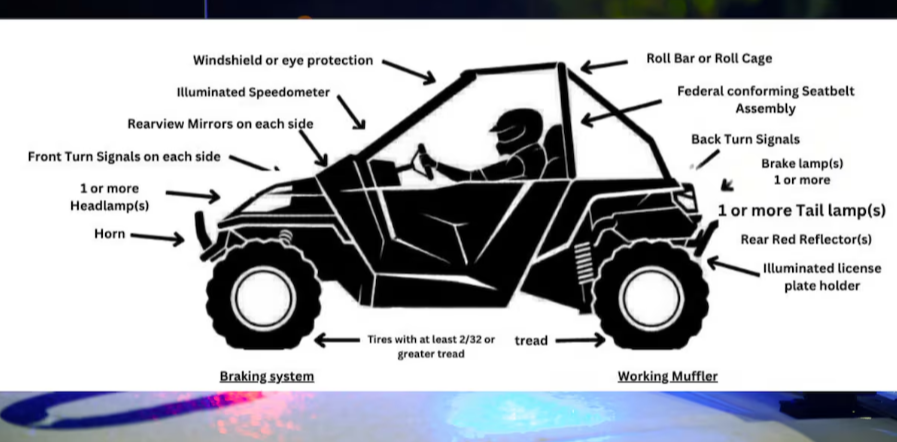
Common Equipment Needed
Although requirements vary, many jurisdictions that permit street use require equipment similar to that found on motorcycles or passenger vehicles.
Common requirements may include:
- Headlights
- Tail lights
- Brake lights
- Turn signals
- Rear-view mirrors
- Horn
- Muffler
- DOT-approved tires where required
- Speedometer (in some jurisdictions)
- Reflectors
- License plate mounting bracket
Some states may also require annual inspections before registration.
Federal vs. State Laws
There is no single federal law that automatically makes ATVs street legal throughout the United States.
Instead:
- Federal regulations mainly govern manufacturing and safety standards.
- Each state determines whether ATVs may operate on public roads.
- Counties and municipalities may adopt additional local restrictions or permissions.
This means riders should always check both state and local regulations before riding on public roads.
State-by-State Considerations
Below is a general overview of ATV street-use rules in several U.S. states. Regulations can change, so riders should always verify current requirements with their state’s motor vehicle agency before operating an ATV on public roads.
Alabama
Alabama generally limits ATV use to private property and designated off-road areas. Public road use is typically prohibited except under limited circumstances authorized by local governments or for specific purposes such as farming.
Alaska
Alaska offers greater flexibility than many states. Certain communities permit ATVs on local roads, particularly in rural areas. However, local ordinances often determine exactly where they may be ridden.
Arizona
Arizona is among the more ATV-friendly states. Many ATVs can be registered for limited on-road use if they meet equipment requirements and the owner obtains the appropriate registration and insurance.
Arkansas
Arkansas generally prohibits ATV operation on highways but allows limited exceptions, including crossing roads and certain agricultural or emergency uses.
California
California has some of the nation’s stricter ATV regulations. Most ATVs are intended for off-highway recreation and are not permitted on public streets except in specifically designated areas or under limited local authority.
Colorado
Colorado primarily limits ATVs to off-highway vehicle trails, although some counties and municipalities permit operation on designated roads. Local rules play a significant role.
Connecticut
Connecticut generally prohibits ATV use on public roads. Riding is largely limited to approved off-road locations and private property with permission.
Delaware
Public roadway use is generally prohibited except in limited situations authorized by law.
Florida
Florida does not generally permit ATVs on paved public roads. However, certain unpaved public roads or approved local areas may allow ATV operation under specific regulations.
Georgia
Georgia typically restricts ATVs to off-road use and private property. Public street use is generally prohibited unless specifically authorized.
Hawaii
ATV use on public highways is generally not permitted. Riders typically use ATVs on private land or approved recreational areas.
Idaho
Idaho is considered relatively ATV-friendly. Some counties allow ATVs on designated roads if registration and equipment requirements are met.
Illinois
Illinois generally prohibits ATV operation on public streets except for crossing roadways or specific authorized situations.
Indiana
Indiana allows limited roadway use under certain local ordinances. Riders should check county regulations before operating on public roads.
Iowa
Iowa allows ATV use on designated roads in many counties. Registration requirements and local rules vary depending on where the vehicle is operated.
Kansas
Kansas permits certain ATVs to operate on some roads under local authority. Registration and equipment requirements may apply depending on the municipality.
Kentucky
Kentucky generally limits ATV operation to private property and designated trails, although certain local governments may authorize limited roadway access.
Louisiana
Louisiana generally prohibits ATV use on highways but provides limited exceptions for agricultural purposes, crossing roadways, and certain authorized routes.
Maine
Maine allows ATV access on designated routes and trail systems. Some local roads may be opened for ATV travel depending on municipal approval.
Maryland
Maryland generally restricts ATVs to private property and approved off-road parks. Public roadway operation is typically prohibited.
Massachusetts
Massachusetts has strict ATV regulations. Public road operation is generally prohibited except where specifically authorized by law.
Michigan
Michigan has an extensive ORV trail system. Some counties permit ATVs on designated county roads, making local regulations especially important.
Minnesota
Minnesota allows ATV operation on certain roads under specific conditions. Many counties and cities establish their own ATV routes.
Mississippi
Mississippi generally limits ATVs to off-road environments, although local governments may authorize certain road use.
Missouri
Missouri allows limited ATV operation on roads under certain circumstances, particularly where local ordinances permit it.
Montana
Montana allows greater flexibility than many states. Some communities permit street use provided equipment and registration requirements are satisfied.
Nebraska
Nebraska permits ATV operation on designated roads in some areas, particularly where local governments have approved access.
Nevada
Nevada allows registration of some off-highway vehicles for limited road use if they meet equipment requirements and comply with applicable regulations.
New Hampshire
New Hampshire generally restricts ATVs to approved trails and private property. However, some municipalities permit ATV travel on designated local roads to connect trail systems. Riders should always check local ordinances before riding on public streets.
New Jersey
New Jersey has some of the strictest ATV laws in the country. ATVs are generally prohibited on public roads and highways. Riding is typically limited to private property with permission or approved off-road parks and trail systems.
New Mexico
New Mexico allows limited ATV operation on certain roads when local authorities permit it. In some cases, ATVs may be equipped with required safety equipment and operated on roads with lower speed limits.
New York
New York generally prohibits ATVs on public highways except when crossing roads or where local governments specifically authorize ATV routes. The state has numerous designated ATV trails where riding is permitted.
North Carolina
North Carolina generally limits ATV operation to private land and designated off-road areas. Public roadway use is typically prohibited except in limited situations authorized by law.
North Dakota
North Dakota allows ATVs on certain roads under specific conditions. Registration is generally required, and local governments may establish additional rules regarding where ATVs may be operated.
Ohio
Ohio permits ATV use primarily on private property and designated trails. Some local governments may authorize limited road use, but statewide operation on public highways is generally restricted.
Oklahoma
Oklahoma generally limits ATV use to off-road environments. Some counties and municipalities allow operation on designated roads under local ordinances.
Oregon
Oregon has an extensive off-highway vehicle program, but ATVs are generally not permitted on public highways except in approved areas or where local authorities authorize limited access.
Pennsylvania
Pennsylvania is well known for its ATV trail systems. While ATVs are generally prohibited on public roads, some municipalities allow access on designated local routes connecting trail networks.
Rhode Island
Rhode Island generally prohibits ATV operation on public roads. Riding is typically limited to approved recreational areas and private property with permission.
South Carolina
South Carolina generally restricts ATVs to private land and off-road recreation. Public roadway operation is usually prohibited except for specific legal exceptions.
South Dakota
South Dakota allows greater flexibility than many states. Some local governments permit ATVs on designated streets if riders comply with local registration and equipment requirements.
Tennessee
Tennessee generally limits ATVs to off-road use. Public highway operation is typically prohibited except for crossing roads or other limited exceptions established by law.
Texas
Texas generally prohibits ATVs on public roads but provides several exceptions. Farmers, ranchers, utility workers, and certain government employees may operate ATVs under specific circumstances. Some local governments also designate roads where ATVs are permitted.
Utah
Utah is one of the more ATV-friendly states. Properly registered off-highway vehicles may be operated on many designated public roads, particularly in rural communities, provided they meet applicable equipment requirements.
Vermont
Vermont generally prohibits ATVs on public highways. However, some towns authorize ATV access on specific roads to connect trail systems.
Virginia
Virginia generally restricts ATV operation to private property and designated off-road facilities. Public street use is typically not allowed.
Washington
Washington allows limited ATV use on certain roads when vehicles meet equipment requirements and local governments authorize operation.
West Virginia
West Virginia is popular for ATV recreation. While many trail systems exist, public road use generally depends on local authority and designated routes.
Wisconsin
Wisconsin has one of the country’s largest ATV trail networks. Many counties and towns permit ATV travel on designated roads, making it relatively ATV-friendly for riders who follow local regulations.
Wyoming
Wyoming allows ATV operation on many designated roads and trails, particularly in rural communities. Local ordinances determine where ATVs may legally travel on public streets.
Driver’s License Requirements
Many states require operators to possess a valid driver’s license before riding an ATV on public roads where street use is permitted.
Some states also require:
- Minimum operator age requirements.
- Completion of an ATV safety education course.
- Helmet use for younger riders.
- Eye protection in certain situations.
Even when a driver’s license is not legally required for off-road riding, it may become mandatory once an ATV is operated on a public roadway.
Registration and Insurance
Registration requirements vary considerably across the United States.
Some states require:
- Annual registration.
- Off-highway vehicle registration.
- License plates for approved street-legal ATVs.
- Liability insurance.
Insurance may become mandatory if the ATV is legally operated on public roads. Even where insurance is not required, many owners choose coverage to help protect against property damage or liability claims.
Is It Worth Making an ATV Street Legal?
Whether converting an ATV for legal road use is worthwhile depends on your location and intended use.
Advantages include:
- Easier travel between trail systems.
- Reduced need to transport the ATV on a trailer.
- Greater convenience in rural communities.
- Access to approved local roads where permitted.
Potential disadvantages include:
- Equipment upgrade costs.
- Registration and licensing fees.
- Insurance expenses.
- Ongoing compliance with changing regulations.
- Limited access even after conversion, depending on state or local laws.
For many riders, making an ATV street legal is worthwhile only if they live in a state or county that actively supports on-road ATV use.
Safety Should Always Come First
Even if your ATV is legally permitted on certain public roads, remember that ATVs are designed primarily for off-road riding. They handle differently than passenger cars and motorcycles, especially on paved surfaces.
To improve safety:
- Wear a DOT-approved helmet if required or recommended.
- Obey posted speed limits.
- Use headlights whenever visibility is reduced.
- Inspect brakes and tires regularly.
- Avoid carrying passengers unless the ATV is designed for more than one rider.
- Ride defensively and remain aware of surrounding traffic.
Safe riding habits are just as important as complying with legal requirements.
Final Thoughts
Making an ATV street legal in the United States is possible in some states but much more difficult—or impossible—in others. Because regulations vary widely between states, counties, and municipalities, there is no universal answer that applies everywhere.
Before investing in mirrors, lights, turn signals, or registration fees, research the specific laws that apply where you plan to ride. Confirm current requirements with your state’s motor vehicle agency and check local ordinances, as they may impose additional restrictions or permit ATV use on designated roads.
With the proper equipment, registration, and knowledge of local laws, many riders can legally enjoy both off-road trails and approved public roads where permitted. Staying informed and following the applicable rules will help you enjoy your ATV safely and responsibly.
Frequently Asked Questions
Can every ATV be made street legal?
No. Whether an ATV can be operated on public roads depends on the laws of the state and local jurisdiction. Some states allow certain ATVs to be equipped for limited street use, while others prohibit on-road operation regardless of modifications.
What equipment is commonly required to make an ATV street legal?
Requirements vary by state, but common equipment may include headlights, tail lights, brake lights, turn signals, mirrors, a horn, a muffler, reflectors, and, in some jurisdictions, DOT-approved tires.
Which states are generally considered more ATV-friendly?
States such as Arizona, Utah, Idaho, Wyoming, Wisconsin, Montana, and parts of Michigan generally provide more opportunities for legal ATV operation on designated public roads, although local regulations still apply.
Do I need a driver’s license to ride an ATV on public roads?
Many states require a valid driver’s license if ATVs are operated on public roads. Rules differ depending on the jurisdiction.
Is ATV insurance required?
Some states require liability insurance for street-legal ATVs, while others do not. Even when it is optional, insurance can provide valuable financial protection.
Can I ride my ATV on interstate highways?
No. Interstate highways and other major highways generally prohibit ATV operation because these vehicles are designed primarily for off-road use.
Can local governments have different ATV rules?
Yes. Counties, cities, and towns often establish additional regulations that may either permit or restrict ATV use on local roads.
Are helmets required?
Helmet laws vary by state and sometimes by rider age. Wearing a properly fitted helmet is strongly recommended regardless of legal requirements.
Can I register an ATV like a car?
Some states allow registration for limited street use, but many only offer off-highway vehicle registration. Requirements vary widely.
How can I find the current ATV laws in my state?
The best sources are your state’s department of motor vehicles, department of transportation, or off-highway vehicle program. Because laws can change, always verify current regulations before riding on public roads.