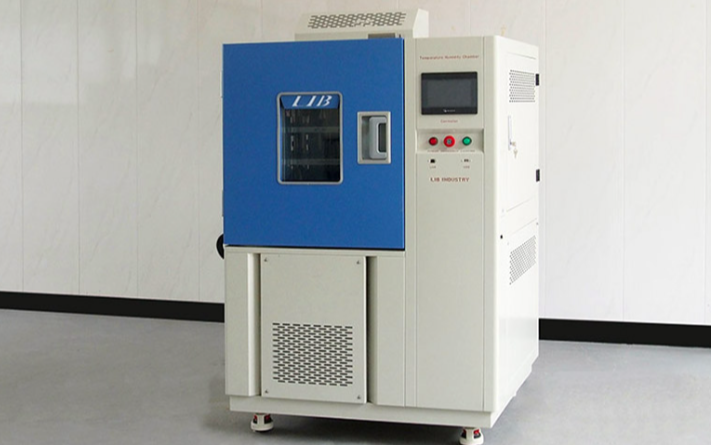
What Is a Temperature Cycling Test?
The temperature cycling test tests a product’s response to repeated thermal shock. So rather than holding a product at one constant temperature, the test cycles it in and out of hot and cold temperatures. Many times this cycle can be repeated to highlight weaknesses that are not evident in normal operation.
They torment materials with temperature changes, making them contract and expand. Not all materials react in the same time frame. This repeated motion can put a load on parts, joints and coatings, seals, and solder connections. These stresses can lead to cracking, deformation, loss of function or other failure over time.
Therefore, temperature cycling is commonly applied in product development and quality testing. It can also help the engineers understand if a product will survive some environmental conditions it might face during its storage, transportation or daily use.
The Importance of Temperature Cycling Testing
Something that worked nicely in the laboratory may not work so well if your temperatures fluctuate quickly. This kind of latent deficiency is uncovered through a temperature cycling test.
For instance, electronic devices might include multiple materials that can have disparate thermal expansion rates. For example, a circuit board, metal housing component, plastic packaging and solder joint all may respond differently to temperature changes. Their junctions are also subjected to mechanical stress, which is greater in the case of repeated cycling.
The test can also help identify problems such as:
- Cracked components
- Loose connections
- Seal failure
- Material deformation
- Solder joint damage
- Electrical performance changes
- Moisture-related problems
- Coating or surface defects
Early detection can reduce the risk of product failure after the product reaches customers.
How Does a Temperature Cycling Test Work?
The test normally takes place inside a controlled environmental chamber. The chamber can create programmed temperature conditions and maintain them for specific periods.
A typical test starts at a defined temperature. The chamber then changes to a higher or lower temperature according to the test profile. The product remains at the target temperature for a set dwell time. The chamber then moves to the next temperature level.
This process creates one complete temperature cycle. Engineers may repeat the cycle dozens, hundreds, or even thousands of times. The exact profile depends on the product, application, and applicable testing standard.
The temperature transition rate is also important. A slow change produces different stresses from a rapid temperature transition. Therefore, engineers must define the test conditions carefully.
Choosing the Right Environmental Chamber
Reliable testing requires accurate temperature control. An environmental chamber must provide stable conditions and repeatable temperature changes throughout the test.
A suitable chamber should match the required temperature range, transition rate, chamber size, and test duration. It should also provide reliable monitoring and control.
Companies that regularly perform these tests may work with an experienced Environmental Chambers manufacturer – OTS Technik to select equipment that fits their testing requirements.
The chamber should also have enough space for proper airflow around the test samples. Poor sample placement can create temperature differences and affect test results.
What Products Can Be Tested?
Temperature cycling can be applied to many products and materials. It is commonly used for electronic components, automotive parts, batteries, sensors, industrial equipment, plastics, seals, and consumer products.
The test is particularly useful when a product will experience significant temperature changes during its service life.
For example, an automotive component may face cold outdoor temperatures and high temperatures inside an engine compartment. Electronic equipment may be transported through different climates before installation. Temperature cycling can simulate these changes in a controlled environment.
Common Temperature Cycling Test Procedure
A basic test procedure includes several steps:
- Inspect and document the test samples.
- Install the samples correctly inside the chamber.
- Set the required temperature profile.
- Expose the samples to the specified high and low temperatures.
- Repeat the programmed temperature cycles.
- Monitor the samples during testing.
- Perform a final inspection and functional check.
- Record and evaluate the results.
Before testing begins, engineers should define the acceptance criteria. These criteria determine whether the product passes or fails.
For a more technical explanation of the process, conditions, and test considerations, see What is a Temperature Cycling Test.
Info: Temperature cycling for improved reliability of our products
Temperature cycling is more than a simple failure discovery test. This too is a handy development tool. Test inputs are used by engineers to refine materials, designs, manufacturing processes and protective features.
If we change the temperature several times and a component breaks, engineers can go look who is to blame. Change the material, better a connection, change an enclosure or modify how it was made.
It assists manufacturers to find their kinks before going into full-scale production.
Final Thoughts
Temperature cycling testing provides controlled conditions to test products on how they respond under repeated temperature transitions. It exposes intricacies of mechanical, electrical and material failure modes that could be buried within normal testing.
The important aspect of obtaining quality test results is the temperature control, tested parameters, equipment and analysis. If managed well, temperature cycling can give insight into durability and reliability of the products.
This type of test can be used as part of a larger environmental reliability program by manufacturers creating products in particularly-demanding environments.