It’s 2 a.m. on a Monday when a critical pump in a manufacturing facility seizes without warning. By morning, production has halted, repair crews are scrambling, and the cost of unplanned downtime is climbing by the hour. The frustrating truth? The warning signs had been there for weeks — buried in subtle shifts in vibration that no one caught in time.
Vibration anomalies are among the most reliable early indicators of mechanical distress in rotating equipment. Yet they remain one of the most overlooked aspects of facility maintenance — not because managers lack diligence, but because spotting them requires the right tools, processes, and knowledge to act before a minor irregularity becomes a catastrophic failure.
For facility managers responsible for keeping operations running smoothly, the challenge is clear: how do you move from reactive firefighting to proactive asset health management? This article breaks down the practical methods and monitoring systems used to detect vibration anomalies early, helping facility managers protect their assets, reduce maintenance costs, and maintain the operational continuity their organizations depend on.
The Fundamental Importance of Vibration Monitoring for Mechanical Assets
Every rotating machine — whether a centrifugal pump, electric motor, compressor, or gearbox — generates vibration as a natural byproduct of operation. Under healthy conditions, that vibration follows predictable patterns. When something begins to go wrong, those patterns change. This makes vibration one of the most sensitive and reliable indicators of mechanical health available to facility managers today.
The value of catching these changes early cannot be overstated. A bearing running slightly out of tolerance will produce a distinctive frequency signature weeks or even months before it fails completely. Misalignment between a motor and its driven load creates measurable vibration imbalances long before the shaft seal gives out. By monitoring these signals consistently, facility managers gain a window into asset condition that visual inspections simply cannot provide.
From a financial perspective, the case for vibration monitoring is equally compelling. Unplanned equipment failures carry costs that extend well beyond the repair itself — lost production, emergency labor rates, expedited parts sourcing, and potential safety incidents all compound quickly. Proactive detection allows maintenance teams to schedule interventions during planned downtime windows, dramatically reducing both repair costs and operational disruption. For facility managers whose core mandate is keeping operations running safely and efficiently, vibration monitoring isn’t a luxury — it’s a foundational practice that directly supports asset longevity, workforce safety, and the kind of operational continuity that organizations depend on to meet their production and service commitments.
Understanding Vibration Anomalies: Types, Causes, and Indicators
A vibration anomaly is any deviation from an asset’s established normal vibration pattern — a change in frequency, amplitude, or phase that signals something has shifted in the machine’s mechanical condition. Recognizing these deviations early is what separates a scheduled repair from an emergency shutdown.
The most common anomaly types each carry a distinct signature. Imbalance, typically the most frequent culprit, produces elevated vibration at the rotational frequency (1x RPM) and is often caused by uneven mass distribution on a rotating component — worn impeller blades or accumulated debris being typical examples. Misalignment between coupled shafts generates strong vibration at both 1x and 2x RPM, frequently accompanied by axial vibration that distinguishes it from pure imbalance. Bearing defects produce higher-frequency signals tied to specific bearing geometry calculations, often appearing as subtle spectral peaks long before audible noise develops. Mechanical looseness creates a broad spectrum of harmonic frequencies, while resonance amplifies vibration dramatically when a machine’s operating speed coincides with a structural natural frequency.
Each of these conditions follows a progression. What begins as a minor spectral irregularity will grow in amplitude over time as the underlying problem worsens. A bearing defect frequency that reads at low amplitude today may triple within weeks as lubrication degrades or fatigue spreads across the raceway. This progression is precisely what makes vibration analysis so powerful — it gives facility managers a measurable timeline to work with, turning vague mechanical concerns into concrete maintenance priorities before the asset reaches the point of no return.
Core Monitoring Systems and Technologies for Asset Health
Facility managers today have access to a spectrum of monitoring technologies, each suited to different asset criticality levels, budget constraints, and operational environments. Choosing the right combination is what transforms raw vibration data into actionable condition intelligence.
Portable vibration analyzers represent the entry point for many facilities. Technicians carry handheld devices to designated measurement points on a scheduled basis — monthly, weekly, or more frequently for critical assets — collecting vibration readings that are then downloaded and compared against historical trends. While cost-effective and flexible, this approach depends heavily on measurement consistency and human discipline. Any variation in sensor placement or measurement timing can introduce noise into the dataset, making trend analysis less reliable.
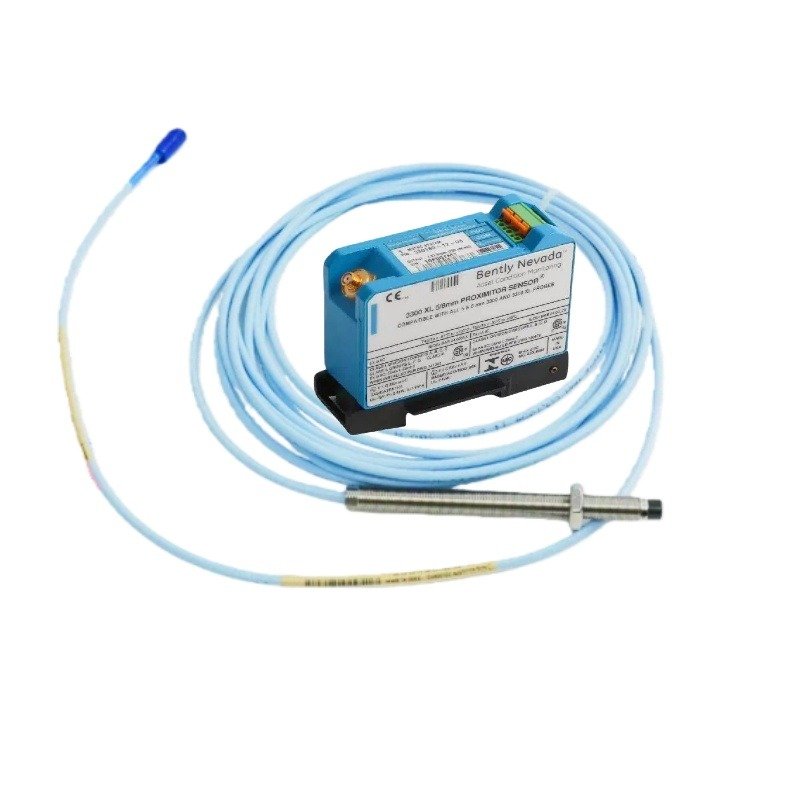
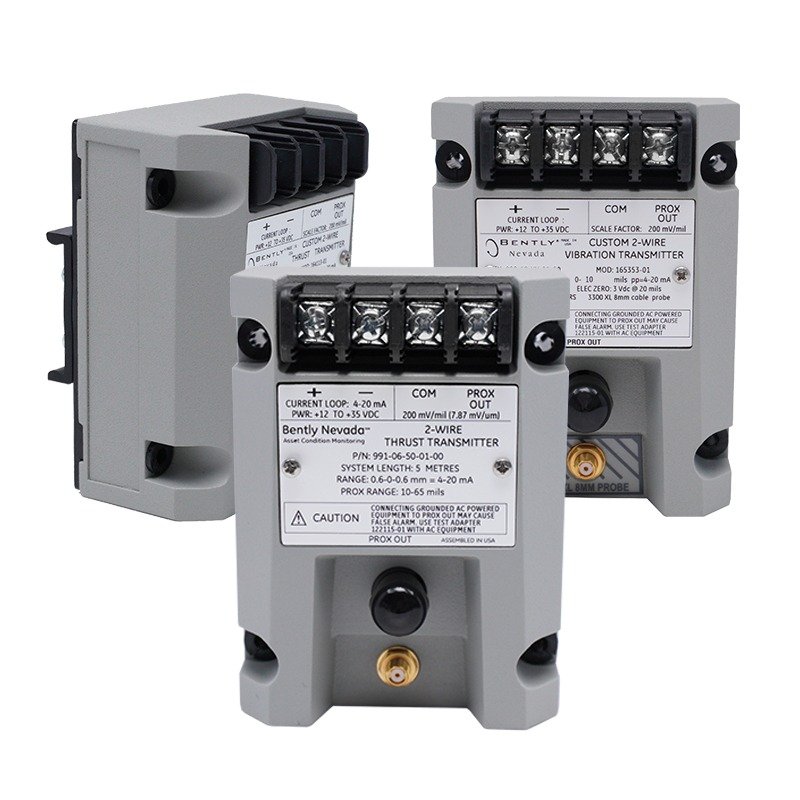
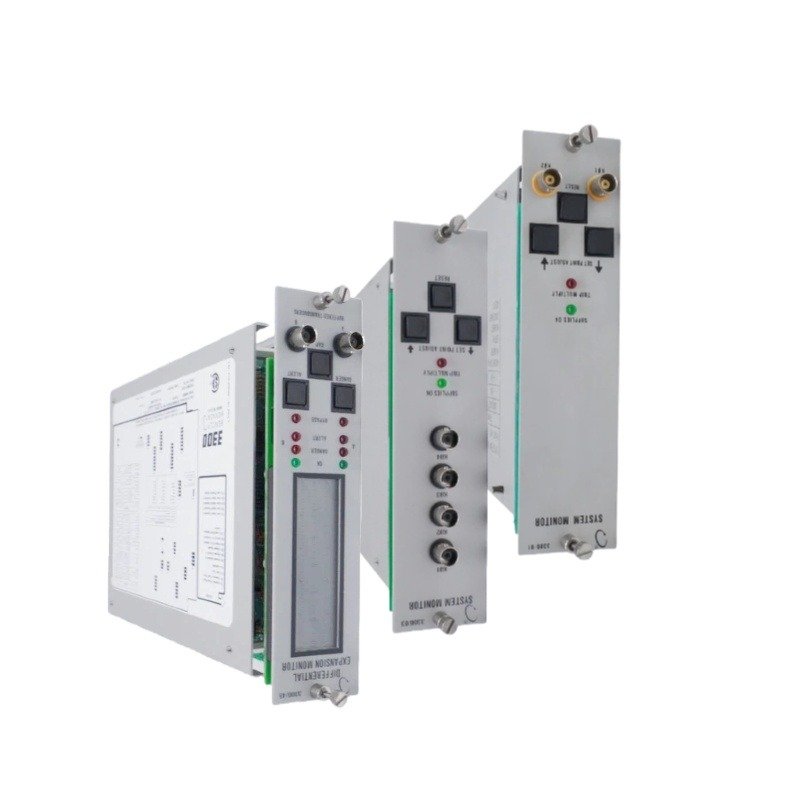
Permanent online monitoring systems address this limitation by mounting sensors directly to asset housings and continuously streaming condition data to a centralized platform. These systems eliminate human variability from data collection entirely and enable real-time alerting when vibration levels exceed defined thresholds. For high-criticality assets — large compressors, turbines, or primary process pumps — this level of continuous coverage is often non-negotiable. Standards such as ISO 10816-1 provide reference criteria for evaluating vibration severity across different machine classes, while API 670 defines protection system requirements for machinery in process industries, giving facility managers a recognized framework for setting alert and danger thresholds.
Wireless sensor networks have emerged as a practical middle ground, combining the broad asset coverage of permanent systems with lower installation costs. Sensors transmit data over industrial wireless protocols to gateways that feed centralized condition monitoring platforms, where machine learning algorithms can flag developing anomalies automatically. In automotive manufacturing environments, for instance, suppliers like Apter Power have demonstrated how integrating sensor-driven condition data into assembly line asset management can meaningfully reduce unplanned stoppages on high-throughput production equipment. Regardless of the technology deployed, the underlying principle remains consistent: reliable, repeatable condition data collection is the foundation upon which all meaningful vibration analysis is built.
A Step-by-Step Guide to Spotting and Analyzing Vibration Anomalies
Detecting vibration anomalies before they escalate into failures isn’t accidental — it’s the result of a disciplined, repeatable process. The following steps give facility managers a practical framework for building that process into daily operations.
Step 1: Establishing Baseline Vibration Levels and Thresholds
Every effective anomaly detection program begins with knowing what “normal” looks like. When an asset is newly commissioned or recently overhauled, collect vibration measurements across all critical measurement points — typically the bearing housings in horizontal, vertical, and axial directions — under representative operating conditions. Record overall vibration levels alongside full frequency spectra. These baseline readings become the reference against which all future measurements are compared. Use recognized severity guidelines such as ISO 10816-1 to set initial alert and danger thresholds, then refine those limits over time as you accumulate asset-specific trend data.
Step 2: Implementing Continuous or Periodic Monitoring Protocols
Once baselines are established, consistency in data collection is everything. For critical assets, permanently mounted accelerometers connected to an online monitoring platform eliminate measurement variability and enable real-time alerting. For lower-criticality equipment, define structured routes for portable analyzer technicians — standardizing sensor placement using marked measurement points, maintaining consistent load conditions during readings, and logging data at fixed intervals. Document the measurement protocol formally so that personnel changes don’t disrupt data continuity. A gap in trend history can mask a developing anomaly just as effectively as missing the anomaly altogether.
Step 3: Analyzing Condition Data to Identify Anomalies
Raw vibration numbers alone tell only part of the story. The most powerful analytical tool available is Fast Fourier Transform (FFT) spectrum analysis, which decomposes a complex vibration signal into its individual frequency components. By examining where energy concentrations appear in the spectrum — at 1x RPM, 2x RPM, bearing defect frequencies, or gear mesh frequencies — analysts can identify the specific mechanical phenomenon generating the anomaly. Trend analysis adds a temporal dimension: plotting overall vibration amplitude or specific frequency band energy over time reveals whether a condition is stable, slowly progressing, or accelerating. A sudden step change in amplitude warrants immediate investigation regardless of whether absolute severity thresholds have been crossed.
Step 4: Interpreting Findings and Taking Corrective Action
Diagnosis requires connecting spectral evidence to physical root causes. Dominant energy at 1x RPM with radial emphasis points toward imbalance — the corrective action is balancing the rotating component. Strong 2x RPM vibration with axial components suggests misalignment, requiring shaft realignment. Elevated bearing defect frequencies call for lubrication assessment first, followed by bearing replacement planning if the condition continues to progress. Once the root cause is identified, prioritize the corrective action based on severity and asset criticality: some findings warrant immediate shutdown, while others can be safely managed through an accelerated monitoring interval until the next planned maintenance window. Document every finding and corrective action taken — this history becomes invaluable for pattern recognition and future maintenance planning.
Reducing Operational Risks Through Proactive Condition Data Management
Detecting a vibration anomaly is only half the battle. The real operational value comes from what facility managers do with that condition data once it’s collected and analyzed. A well-managed condition data program transforms individual asset readings into a facility-wide risk reduction strategy — one that shifts maintenance from reactive response to informed, scheduled intervention.
The most immediate application is predictive maintenance scheduling. When trend data shows a bearing defect frequency steadily increasing over six weeks, maintenance planners have a concrete, evidence-based window to schedule the repair before failure occurs. This eliminates the guesswork that plagues calendar-based maintenance programs, where components are replaced either too early — wasting serviceable life — or too late, after the damage is already done. Condition data gives each asset a voice, communicating its actual health status rather than relying on assumed wear curves.
Prioritization is equally critical. Facilities manage dozens or hundreds of assets simultaneously, and not every anomaly demands the same urgency. By ranking findings according to severity level, asset criticality, and rate of deterioration, maintenance teams can allocate labor and parts budgets where they matter most. A pump feeding a redundant process line can tolerate a longer intervention window than the single compressor supporting a critical production stage. Condition data makes these distinctions objective rather than subjective.
Integrating vibration condition data into broader facility management or computerized maintenance management systems (CMMS) extends these benefits further. When vibration alerts automatically generate work orders, link to asset maintenance histories, and feed into spare parts inventory planning, the entire maintenance workflow becomes more responsive and efficient. Over time, accumulated condition records also reveal systemic patterns — recurring misalignment issues pointing to installation practices, or repeated bearing failures indicating a lubrication specification problem — enabling facility managers to address root causes at the operational level rather than treating symptoms asset by asset.
Building a Resilient Maintenance Culture Through Vibration Monitoring
Vibration anomalies don’t announce themselves with sirens — they emerge quietly in shifting frequency signatures and slowly climbing amplitude trends, waiting to be noticed by those with the right tools and processes in place. For facility managers, the ability to catch these signals early is the difference between a scheduled repair and an emergency shutdown that disrupts operations, strains budgets, and puts personnel at risk.
The path forward is clear: establish reliable baselines, deploy monitoring systems appropriate to each asset’s criticality, analyze condition data with discipline, and integrate findings into a maintenance workflow that prioritizes action based on evidence rather than assumption. Whether using portable analyzers on a structured route or continuous online monitoring for the most critical equipment, the underlying commitment is the same — consistent, repeatable attention to what the machines are communicating.
Facilities that embrace proactive vibration monitoring don’t just reduce repair costs. They build a culture of operational resilience, where maintenance decisions are grounded in real asset health data and unplanned downtime becomes the exception rather than the norm. As monitoring technologies continue to advance — with smarter sensors, more accessible analytics, and tighter integration with facility management platforms — the barriers to adopting these practices are lower than ever. There has never been a better time for facility managers to make vibration monitoring a cornerstone of their asset health strategy.