Introduction
Consistent packaging helps manufacturers protect products, reduce avoidable errors, and maintain a reliable experience for customers. In food-related manufacturing, packaging operations may involve counting individual items, arranging them into sets, sealing packages, and preparing finished goods for distribution. When these tasks are repeated thousands of times, even small process variations can create delays or quality issues.
Automation can help businesses standardize selected activities, but technology alone does not solve every production problem. Manufacturers should first understand where errors occur, how products move through the facility, and which improvements will deliver measurable benefits.
Identify the Main Packaging Challenges
The first step toward better packaging is identifying the problems that affect daily operations. Common challenges include inconsistent product feeding, incorrect counts, misaligned packaging, slow changeovers, and delays between production stages.
These issues may have different causes. Incorrect counts could result from irregular feeding, unsuitable sensors, or poorly defined procedures. Misaligned packages may be associated with conveyor movement, packaging material quality, or equipment settings.
Collecting information about rejected packs, downtime, and production rates can help identify recurring patterns. Operators often have useful practical knowledge because they work with the equipment throughout the day. Including their observations in improvement planning can lead to more realistic solutions.
Standardize the Process Before Automating
Automation works best when the process is clearly defined. Manufacturers should establish consistent product specifications, packaging requirements, operating procedures, and quality checks before integrating new machinery.
For example, a cutlery packaging line may need a defined number of utensils in each pack, a specific arrangement, and a consistent seal. These requirements should be documented so that operators and equipment suppliers understand the expected result.
Standardization also makes training easier. New employees can follow clear procedures instead of relying entirely on informal instructions from experienced colleagues.
How Automation Can Help
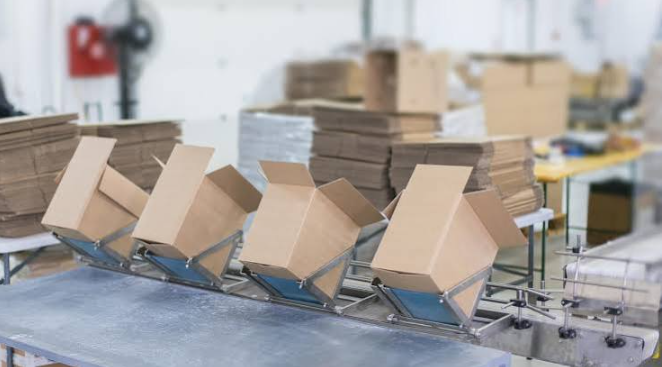
Automated packaging equipment can perform repetitive tasks with programmed movements and consistent operating parameters. Depending on the system, it may help feed products, count items, arrange sets, load packages, or transfer finished packs.
Robotic handling can be useful when products need to be moved or positioned in a controlled manner. A food packaging robot may be considered as part of a broader packaging solution, but buyers should verify that its design supports the exact products and workflow involved.
Automation may also help reduce some forms of repetitive manual handling. Nevertheless, performance depends on product consistency, system configuration, maintenance, and the quality of integration with surrounding equipment.
Maintain Quality Throughout the Line
Quality should be checked at multiple stages rather than only after the final package is complete. Depending on the product, inspection may include piece counts, correct orientation, seal integrity, labeling, and package appearance.
Sensors and automated inspection tools can assist with certain checks. However, manufacturers should validate the system’s performance and define what happens when an error is detected.
A rejected package should follow a controlled process. Staff need to know whether it should be inspected, reworked, or discarded. Clear procedures reduce the risk of defective goods moving into finished inventory.
Select Equipment Based on Real Requirements
The appropriate machinery depends on the product, packaging material, required output, and available space. Buyers should provide suppliers with accurate product dimensions, photographs, package examples, and expected production volumes.
It is also important to discuss changeovers. Facilities that handle several utensil styles may need flexible equipment that can be adjusted for different product formats. Ask how settings are changed, how long the process takes, and whether special tooling is required.
Other considerations include machine guarding, cleaning access, spare parts, service support, and compatibility with existing conveyors and controls.
Train Operators and Plan Maintenance
Even automated equipment requires skilled oversight. Operators should understand normal operation, alarms, safe shutdown procedures, cleaning requirements, and basic troubleshooting.
Preventive maintenance should be based on the manufacturer’s instructions and the actual operating environment. Regular inspections can identify worn components before they cause major interruptions.
Maintenance planning should also include spare-parts availability and a process for contacting technical support. These factors influence the reliability of the entire packaging line.
Measure Results After Implementation
Once a new system is installed, compare its performance with the original baseline. Useful measures include output per hour, packaging defects, material waste, changeover time, and unplanned downtime.
Reviewing these figures helps determine whether the investment is achieving its objectives. If performance falls short, investigate the cause rather than assuming that the machine itself is the only issue. Training, product feeding, material quality, or line balance may require adjustment.
Conclusion
Improving packaging consistency begins with understanding the production process and defining clear quality standards. Automation can support repeatable handling and packaging, but the best results depend on appropriate equipment, effective integration, operator training, and preventive maintenance.
Manufacturers that measure their needs carefully and review performance after implementation are better positioned to make practical improvements and maintain reliable packaging operations.