Precise visual inspection serves as the backbone of critical decision-making in both healthcare and industrial environments. Whether a surgeon is navigating the interior of a patient’s gastrointestinal tract or a technician is examining the bore of a rifle barrel for corrosion, the quality of the visual tool directly impacts outcomes. Yet a surprising amount of confusion exists between medical endoscopes and barrel bore scopes—two instruments that share conceptual similarities but serve vastly different purposes. For medical professionals who occasionally encounter non-clinical inspection needs, such as maintaining facility equipment or conducting research involving mechanical components, the question naturally arises: which device is truly better for the task at hand? The answer isn’t straightforward, as “better” depends entirely on context. This article provides a thorough comparison of features, applications, design philosophy, and cost-effectiveness between medical endoscopes and barrel bore scopes, equipping you with the knowledge to make confident, informed decisions regardless of the inspection scenario you face.
Understanding Medical Endoscopes: Core Tools in Healthcare
Medical endoscopes are sophisticated optical instruments engineered specifically for visualizing the interior of the human body without requiring large surgical incisions. These devices typically feature a flexible or semi-rigid insertion tube equipped with a high-resolution camera sensor, fiber-optic light transmission, and one or more working channels that allow clinicians to pass instruments for biopsy, cauterization, or fluid irrigation. Their design reflects decades of refinement driven by the demands of minimally invasive medicine.
What distinguishes a medical endoscope from any other visual inspection tool is its optimization for the biological environment. The imaging systems deliver exceptional color accuracy and resolution necessary for identifying subtle mucosal changes, vascular abnormalities, or early-stage malignancies. Advanced models incorporate narrow-band imaging, autofluorescence, and chromoendoscopy capabilities that enhance tissue differentiation beyond what the naked eye can achieve. Every component must withstand rigorous sterilization protocols—repeated cycles of high-level disinfection or autoclaving—without degradation of optical clarity or mechanical integrity.
Specialized configurations exist for nearly every anatomical pathway. Gastroscopes navigate the upper digestive tract, colonoscopes examine the large intestine, bronchoscopes access the airways, and laparoscopes provide visualization during abdominal surgery through small port incisions. Each variant is tailored in diameter, length, articulation range, and channel configuration to match its clinical purpose. In modern healthcare, these instruments are indispensable for diagnostics, therapeutic interventions, and ongoing patient monitoring, forming a category of inspection devices so refined that their capabilities far exceed what general-purpose tools can offer in a clinical setting.
Barrel Bore Scopes Explained: Versatile Industrial Inspection Devices
Barrel bore scopes originated as specialized tools designed to inspect the internal surfaces of firearm barrels, allowing gunsmiths and shooters to detect erosion, fouling, pitting, and crown damage without disassembly. Over time, these instruments evolved into a broader category of industrial borescopes used across numerous sectors where visual access to narrow, enclosed spaces is essential. Unlike their medical counterparts, barrel bore scopes prioritize rugged construction and straightforward functionality over biological compatibility.
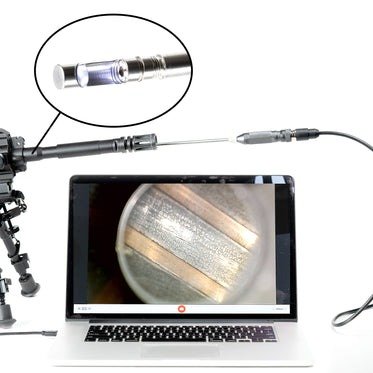
The typical barrel bore scope features a rigid or semi-flexible probe with an integrated micro-camera and LED illumination at the distal tip. The rigid design provides stability and consistent image framing when inspecting straight or nearly straight channels, while semi-flexible variants accommodate slight curves in pipes or mechanical housings. Most models connect to a handheld display unit or smartphone via USB or wireless transmission, making them highly portable and user-friendly without extensive training. Their housings are constructed from stainless steel or hardened aluminum alloys built to resist impact, oil exposure, and temperature fluctuations encountered in workshops and field environments.
Beyond firearms maintenance, barrel bore scopes have found widespread adoption in automotive repair for examining cylinder walls and valve seats, in manufacturing for quality control of drilled holes and machined bores, in plumbing for diagnosing pipe blockages, and in aerospace engineering for turbine blade inspection. HVAC technicians use them to assess ductwork integrity, while facility managers rely on them for checking behind walls or inside structural cavities. Their versatility, combined with relatively accessible pricing and minimal maintenance requirements, positions barrel bore scopes as indispensable inspection devices for any professional working outside the clinical domain who needs reliable visual confirmation in confined or otherwise inaccessible spaces.
Key Differences: Medical Endoscopes vs. Barrel Bore Scopes
When placed side by side, medical endoscopes and barrel bore scopes reveal fundamental differences that reflect their divergent design philosophies. Understanding these distinctions is essential for anyone deciding which inspection device suits a particular task, especially medical professionals who may encounter both clinical and non-clinical inspection scenarios in their work.
Design and Intended Use Cases
Medical endoscopes are engineered with biocompatible materials—medical-grade polymers, stainless steel housings with smooth finishes, and sealed joints that prevent fluid ingress during procedures. Their insertion tubes are typically highly flexible, incorporating articulation mechanisms controlled by thumb wheels that allow the distal tip to bend in multiple directions, navigating the tortuous anatomy of the human body. Diameters range from ultra-thin nasopharyngoscopes under three millimeters to larger therapeutic gastroscopes approaching thirteen millimeters, each calibrated for specific anatomical pathways. Barrel bore scopes, by contrast, favor rigidity. A rigid probe delivers stable, vibration-free images when passed through straight channels like gun barrels, engine cylinders, or machined bores. Their construction uses hardened metals designed to withstand physical contact with rough internal surfaces, exposure to solvents, and temperature extremes that would compromise a medical-grade device. Where a medical endoscope must never scratch delicate mucosa, a bore scope must survive being inserted into a carbon-fouled chamber without damage to itself. These opposing priorities make each tool poorly suited to the other’s environment—a flexible endoscope lacks the structural support needed in an industrial bore, while a rigid bore scope would pose unacceptable risks inside a patient.
Technology and Performance Metrics
Imaging technology represents another major divergence. Medical endoscopes employ high-density CCD or CMOS sensors paired with sophisticated image processors capable of rendering tissue in true-to-life color with minimal distortion. Features like optical zoom, narrow-band imaging, and high-definition output at sixty frames per second enable clinicians to detect lesions as small as one millimeter. Light delivery uses cold fiber-optic illumination to avoid thermal injury to tissue. Barrel bore scopes utilize adequate but less refined camera sensors, typically offering 720p or 1080p resolution sufficient for identifying mechanical defects like scratches, corrosion pits, or debris accumulation. Their LED illumination is direct and bright, optimized for reflecting off metallic surfaces rather than preserving tissue integrity. Data output on industrial scopes often routes to portable screens or mobile devices, prioritizing convenience over the centralized video documentation systems used in medical facilities. The cost differential mirrors this technology gap—a medical endoscope system can represent an investment many times greater than even a professional-grade bore scope, reflecting not just hardware sophistication but also the regulatory compliance, validation testing, and sterilization engineering built into every medical device.
Choosing the Best Tool: Practical Solutions for Medical Professionals
Selecting the right inspection device requires a clear-eyed assessment of what you actually need to accomplish, the environment in which you’ll work, and the standards you must meet. Medical professionals often find themselves in a unique position—deeply familiar with endoscopic technology from clinical practice, yet occasionally facing inspection tasks that fall outside the healthcare domain entirely. Facility equipment checks, research apparatus maintenance, or even personal hobbies like firearms or automotive work can present situations where reaching for a medical endoscope would be impractical, unnecessarily expensive, or simply the wrong tool. The following guidance helps you navigate these decisions with the same analytical rigor you apply to clinical choices.
When Medical Endoscopes Are the Optimal Choice
Medical endoscopes remain irreplaceable whenever the inspection involves living tissue or any scenario requiring biocompatibility, sterilization, and regulatory compliance. Any diagnostic or therapeutic procedure performed on a patient—whether gastrointestinal visualization, airway assessment, joint examination, or urological investigation—demands the precision imaging, articulation control, and safety engineering that only a purpose-built medical endoscope provides. Clinical research involving tissue samples, animal models, or cadaveric studies similarly requires medical-grade equipment to ensure data validity and ethical compliance. If your inspection must meet FDA clearance standards, if the device will contact biological material, or if the imaging must detect subtle color variations in tissue at submillimeter resolution, there is no substitute. Additionally, when documentation needs to integrate with hospital PACS systems or electronic health records, the proprietary video processors and connectivity of medical endoscope platforms deliver functionality that industrial alternatives simply cannot replicate.
Exploring Affordable Borescopes for Non-Medical Applications
For tasks outside patient care, affordable borescopes offer remarkable capability without the substantial investment that medical systems demand. When evaluating options, focus on probe diameter relative to the spaces you need to access—models ranging from 3.9mm to 8mm cover most general inspection needs. Look for adjustable LED brightness, since reflective metallic surfaces require different illumination than dark plastic conduits. Image resolution of 1080p provides sufficient detail for identifying corrosion, cracks, blockages, or wear patterns in mechanical components. Wireless models that stream directly to tablets or smartphones eliminate cable management issues and allow easy image sharing with maintenance teams or colleagues. Reputable manufacturers in the industrial borescope space, such as Teslong, produce durable units with waterproof ratings suitable for environments involving coolants, oils, or moisture. For medical professionals maintaining facility autoclaves, checking plumbing behind walls, inspecting HVAC systems in clinic buildings, or pursuing mechanical hobbies, these devices deliver excellent value. Start with a mid-range unit featuring a semi-flexible cable of at least one meter, dual-camera capability for both forward and side viewing, and a carrying case that protects the optics during storage.
Step-by-Step Selection Guide
Begin by defining your inspection goals precisely—document what you need to see, the minimum defect size that matters, and whether you need still images, video, or both. Next, assess the physical environment by measuring the access diameter, insertion depth required, and whether the path is straight, curved, or tortuous. Straight paths favor rigid scopes for image stability, while curves demand flexible probes. Third, compare specifications across candidate devices, paying particular attention to resolution, field of view angle, working temperature range, and waterproof rating. Fourth, evaluate connectivity and documentation needs—determine whether you require USB output, wireless streaming, SD card recording, or integration with existing systems. Finally, calculate total cost of ownership rather than purchase price alone. Medical endoscopes carry ongoing costs for reprocessing, maintenance contracts, and periodic recalibration. Industrial borescopes typically require minimal upkeep—occasional lens cleaning and cable inspection—making their lifetime expense substantially lower for non-clinical applications. By following this structured approach, you avoid both overspending on unnecessary medical-grade features and underspending on a device that fails to meet your actual inspection requirements.
Matching the Right Scope to Your Inspection Needs
Medical endoscopes and barrel bore scopes represent two highly specialized branches of visual inspection technology, each perfected for its intended domain. Medical endoscopes deliver unmatched precision imaging, biocompatibility, and integration with clinical workflows—qualities that make them indispensable for any procedure involving living tissue, diagnostic evaluation, or therapeutic intervention. Barrel bore scopes, meanwhile, provide rugged durability, straightforward operation, and cost-effective performance across a wide spectrum of industrial and mechanical inspection tasks where sterility and submillimeter tissue differentiation are irrelevant.
Neither device is universally “better” than the other. The superior choice always depends on context—the environment you’re inspecting, the defects you need to detect, the safety standards governing your work, and the budget available. For medical professionals, the key takeaway is straightforward: use medical-grade endoscopes for anything involving patients or biological materials, and confidently reach for an affordable industrial borescope when maintaining equipment, troubleshooting facility infrastructure, or pursuing mechanical interests outside the clinic. By matching the tool to the task with the same precision you bring to clinical decision-making, you ensure optimal outcomes, responsible resource allocation, and reliable inspection results in every scenario you encounter.