Underground construction requires careful planning because much of the work takes place in environments that are difficult to inspect and control. Tunnels, underground chambers, utility corridors, and deep excavations may encounter fractured rock, weak soil, groundwater, and changing geological conditions.
Ground reinforcement helps manage these challenges by improving stability and controlling movement. However, a successful reinforcement strategy involves more than selecting an anchor or drilling system. Engineers must consider the ground profile, expected loads, installation limitations, durability, and inspection requirements throughout the project’s life.
Why Ground Conditions Matter
The geology surrounding an underground structure directly affects its behavior during excavation. Strong, relatively uniform rock may provide predictable support, while fractured or weathered rock can contain discontinuities that allow blocks to move.
Soil conditions introduce different concerns. Loose granular material may require measures to control movement, while cohesive soils can behave differently depending on moisture content and stress conditions. Groundwater can further complicate excavation by affecting stability and increasing the need for water-management measures.
A detailed site investigation helps identify these risks. Geological mapping, borehole data, laboratory testing, and groundwater observations can inform the initial support design.
Because underground conditions may vary along the alignment or excavation, engineers should also establish procedures for documenting and responding to unexpected findings.
Establishing the Reinforcement Objectives
Before choosing a reinforcement method, the project team needs to define what the system must achieve. Objectives may include controlling ground movement, supporting an excavation face, stabilizing a slope above an underground entrance, or improving the interaction between surrounding rock and a structural lining.
Each objective creates different design requirements. Anchor length, orientation, spacing, load capacity, and installation sequence should be determined by qualified professionals using the project’s engineering data.
Temporary reinforcement may be sufficient during one construction stage, while permanent support may need to meet more demanding durability and inspection requirements. Making this distinction early helps prevent unsuitable material selections and unexpected changes later.
Selecting Appropriate Anchoring Technology
Several reinforcement techniques are available, including rock bolts, grouted anchors, soil nails, and self-drilling anchor systems. Their suitability depends on the geological conditions and the intended structural function.
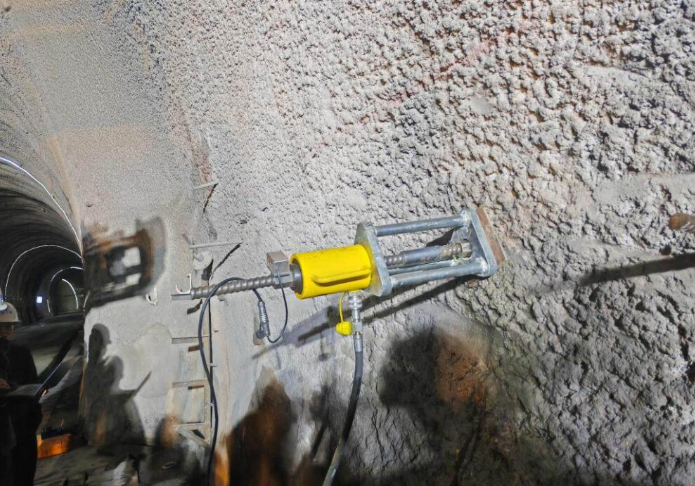
Conventional systems may work well where a stable borehole can be created and maintained. In loose or fractured ground, maintaining an open hole can be more difficult. Depending on the application, a self-drilling system may offer practical advantages by combining drilling and reinforcement components in one installation process.
An IBO hollow bar is an example of a hollow-bar component that project teams may evaluate when considering self-drilling anchoring solutions. Engineers should confirm its technical specifications, compatibility with the selected grout and accessories, corrosion protection, and suitability for the required loads before specifying it.
The best choice is the system that meets the project’s verified performance requirements rather than the one with the simplest description or lowest initial cost.
Grouting and Installation Control
Grouting is an important part of many ground reinforcement systems. It can provide bonding between the reinforcement and surrounding material, depending on the system design. The quality of this bond depends on factors such as grout composition, placement, ground conditions, and curing.
Installation procedures should define the required grout properties, mixing process, delivery method, and quality checks. Contractors should use the approved method rather than making unverified adjustments in response to difficult drilling conditions.
Installation records should capture relevant information such as drilling depth, orientation, grout consumption, interruptions, and any unusual observations. These records can help engineers evaluate whether the installed system corresponds with the design assumptions.
Designing for Long-Term Durability
Underground structures may remain in service for decades. Reinforcement systems must therefore be selected with the surrounding environment and expected design life in mind.
Moisture, groundwater chemistry, and exposure to aggressive substances can influence corrosion risk. Depending on the project, protective coatings, grout cover, material selection, drainage measures, or other specified protections may be required.
Stainless steel or other corrosion-resistant materials may be appropriate in particular environments, but material selection should always be based on the actual exposure conditions and engineering specifications.
Maintenance access should also be considered. Although many reinforcement components are concealed after installation, accessible elements and associated structures may still require inspection over time.
See Also: Turning Plastic Waste into Valuable Industrial Raw Materials
Monitoring and Quality Assurance
Underground work benefits from a clear monitoring plan. Depending on the project, this may include surveying, movement measurements, crack monitoring, groundwater observations, and inspection of support components.
Monitoring results should be compared with the design’s expected behavior and predefined response thresholds. If measurements indicate unexpected movement, engineers can investigate the cause and determine whether additional measures are necessary.
Quality assurance should begin before installation. Product documentation, material certificates, approved method statements, and equipment checks help establish a consistent standard. Testing should follow the project’s specifications and applicable standards.
Coordinating the Project Team
Durable reinforcement depends on cooperation among designers, geotechnical specialists, suppliers, and contractors. Each group contributes different information, from theoretical design requirements to practical observations made during drilling.
Regular coordination meetings can help resolve issues before they affect the construction sequence. When conditions differ from the original investigation, the team should document the change and obtain the necessary technical approval before modifying the system.
Conclusion
Reliable underground construction begins with a clear understanding of ground conditions and a reinforcement strategy suited to the project’s requirements. Appropriate anchoring technology, controlled grouting, durability planning, and systematic monitoring all contribute to long-term performance.
By integrating these measures into the construction process, project teams can manage uncertainty more effectively and create underground structures supported by a documented, engineering-led approach.