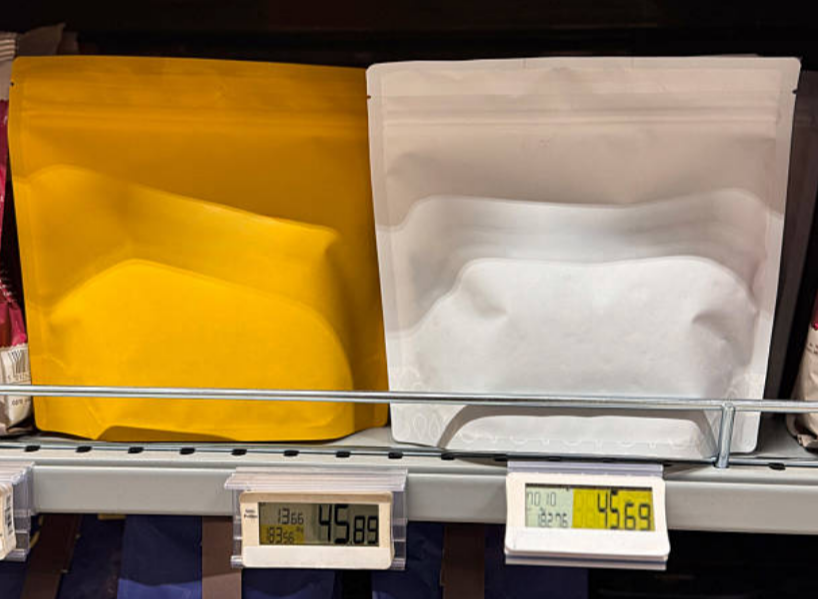
In the retail world, the accuracy of pricing has become a critical aspect of running a successful business. Electronic shelf tags offer a solution to one of retail’s most persistent challenges: maintaining shelf price alignment with system prices in real-time across numerous locations, product categories, and even during various promotion periods.
For enterprise retailers, system integrators, and retail technology vendors, the long-term implications and functionalities of ESL (Electronic Shelf Label) systems are vital. Besides operational efficiency, these technologies can build trust and help reduce costs as part of an omnichannel approach.
In this article, we’re going to examine the impact of ESL technology on retail, one digital price tag at a time.
The Cost of Pricing Errors in Retail
Retail has long relied on manual pricing labeling systems. These systems are not just inefficient—they are labor-intensive, as an employee must walk from aisle to aisle to change tags, leading to numerous errors. This process is expensive for frequently updating large chain stores.
More importantly, inaccurate pricing presents a considerable risk to a business, including:
- Issues related to regulatory compliance and incurring fines
- Dissatisfaction and complaints from customers
- Lost revenue from discounted or mispriced items
- Decreased trust and loyalty towards the brand
As retailers implement omnichannel strategies that combine online and offline sales, paying attention to pricing becomes more challenging. Customers expect uniform pricing on mobile apps, websites, and physical stores. Not delivering on that pricing consistency severely impacts the overall shopping experience.
This is where electronic shelf tags coupled with smart automation systems** can help.
Read Also: How Technology Is Revolutionizing Traditional Education
Advantages of Electronic Shelf Tags in Modern Retail
Replacing the traditional paper price tags with digital displays gives rise to electronic shelf tags. These devices are connected to a centralized system that communicates through wireless protocols 2.4GHz, BLE, or Wi-Fi. Through a management platform or POS system, prices, promotions, stock levels and even QR codes can be updated in real time.
Precision and Real-Time Accuracy
The most immediate benefit of ESLs is precise and up-to-date pricing. Adjusting the price of a single item or running a nationwide promotion is executed in seconds. Automated processes eliminate the chances of outdated or mismatched labels. Doing so not only enhances automation but also builds customer trust.
Labor Optimization
Staff tagging is an essential function of the business an employee in the store does. ESLs greatly mitigate this problem. Employees can now better assist customers, restock, oversee store layout, or manage the store. There’s now better service in the store, better service, and better service.
Supply Chain Synchronization
Inventory and Supply chains are the systems in control of managing stocks. ESLs can be integrated with these systems. If an item is out of stock or new to the inventory, ESLs can manage stock and suggest better alternatives to the stock on the shelf and blurt out promotional and stock statuses. This smoothens the internal coordination and shopper experience.
Strategic B2B Use Cases
Specific business types can serve specific needs strategically with ESLs and these different business types include:
- Grocery chains timely suggest newer stock and can automate the pricing and promotions to manage perishables better.
- Pharmaceuticals equally comply with strict pricing control and regulatory pricing with ESLs marking the display on up to date regulatory pricing.
- Consumer electronics stores can utilize ESLs for SKU management to showcase warranty details, technical specifications, and real-time pricing for multiple products simultaneously.
- Warehouses and logistics utilize digital tags for rack labeling, guiding order fulfillment, and efficient stock rotation.
In every instance, the advantage goes beyond pricing, providing greater operational efficiency, improving data accuracy, and meeting digital transformation objectives.
B2B Scalability and Technical Integration Flexibility
Modern ESL systems have a focused and dedicated approach to system integration, which makes them easier to connect and scale. Integration is made simple with ERP, POS, and WMS (warehouse management systems) since most have APIs and SDKs. B2B features include:
- Support for 2.4 GHz, BLE, WiFi, and NFC, enabling various communication channels.
- E-Ink and LCD screen compatibility.
- Multi-language and multi-format.
- Cloud-connected dashboards for real-time monitoring, overview dashboards, and bulk change capabilities.
- Stock or sales data driven custom alerts and automation for trigger thresholds.
Retail ESL integrating infrastructure allows large groups to operate thousands of devices in various countries and store formats, from convenience shops to hypermarkets.
How ESLs are Transforming Retail Into The Smart Era
Electronic Shelf Labeling or ESLs are more than just an operational improvement; they are foundational to modern smart retailing. As the evolution of physical stores continues towards digitization, connecting shelf data to backend systems provides automation and intelligent analytics to retailers, transforming decision-making.
The ESL systems are more than just an operational feature; they have additional long-term advantages, for example;
- Sustainability: Reduction of paper waste and manual operations streamlines workflows and contributes to greener operations.
- Omnichannel coherence: Uniformity of prices and promotions across all channels.
- Enhanced shopper experience: Modern and clean displays boost shopper confidence, especially with accurate prices.
- IoT connectivity: ESLs are pivotal in retail IoT, serving as data collection touchpoints to analytics platforms, feeding data for real-time insights and augmenting retail intelligence.
Retailers with a more future-oriented outlook are already combining ESLs with smart cameras, shelf and traffic sensors. ESLs integrated with other technologies streamline automation for complex tasks, enabling everything from planogram compliance to automated replenishment and behavioral analytics.
Rationale For ESL Adoption Now
The ESL technology adoption gap poses an opportunity for early adopters to ESL technologies to gain precedence. Beyond the cost and operational benefits, ESLs position early adopters as digitally mature, agile, and future-ready enterprises. The opportunity is global; retailers across Asia, Europe, and North America are harnessing ESL infrastructures for improved responsiveness and operational agility.
ZhSunyco has established itself as a scalable provider of ESL systems, enabling B2B clients to implement centralized pricing, advanced integrations, and multilingual customization at scale. Supporting businesses with years of innovation in electronic shelf labeling and API-rich platforms, ZhSunyco helps in building smart, interconnected retail ecosystems.
Final Thoughts
The retail industry continues to change and adapt, and innovation is a prerequisite for competitiveness and growth. Consumers expect verifiable and transparent pricing. The supply chain is increasingly complex. The pricing mechanism itself needs to be dynamic, precise, and cost effective. In this context, the paper price tag becomes a relic of the past.
For enterprises that wish to stay ahead of the curve, electronic shelf tags offer more than just an upgrade to traditional pricing methods. ESL systems offer unprecedented flexibility, control, and efficiency with respect to pricing strategy and store operations.
For enterprise retailers, ESL solutions are a matter of operational necessity rather than a choice. ESL systems build customer trust, operational brand value, and a digitally resilient infrastructural backbone.
The time to act is now if you’re considering ESL integration for your business. The benefits are clear, the technology has matured, and the opportunities are abundant.