
Abrasive polishing discs serve as indispensable tools across various industries, transforming raw materials into refined, finished products with precision and efficiency. With an evolving range of applications, these discs are integral to processes that require a smooth, polished finish. If you need to procure high-quality abrasive discs, consider RS Components MY | Buy abrasive polishing disc, where an extensive selection is readily available online.
Understanding Abrasive Polishing Discs
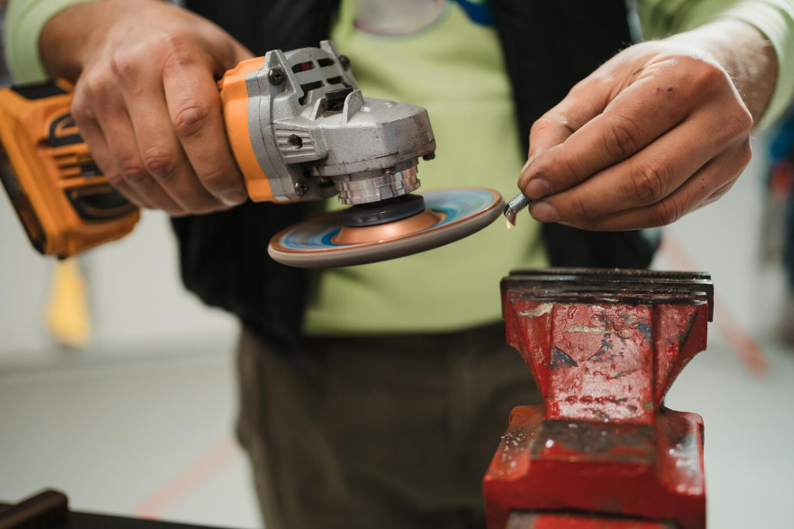
Abrasive polishing discs are circular tools featuring an abrasive surface that grinds, polishes, or finishes various materials, including metals, glass, and ceramics. These discs achieve material removal through friction, exerting particle-laden surfaces against a substrate to produce a desired texture or finish. The science behind their functionality lies in the material of the disc surface, which determines the efficiency and quality of the polishing process.
Composition and Material
The effectiveness of an abrasive polishing disc largely depends on the composition of its abrasive grains. Typical materials used for these grains include aluminium oxide, silicon carbide, and diamond. These abrasives vary in hardness, making each suitable for specific applications. Aluminium oxide, for instance, is commonly used due to its durability and versatility, while diamond, being the hardest known material, delivers superior cutting and polishing ability for tougher surfaces.
Moreover, abrasive disc backings can vary, further influencing performance. The backing might be paper, cloth, or fibreglass, each offering different levels of flexibility and strength. These materials contribute to the disc’s longevity and its ability to conform to different shapes of workpieces.
Grit Size and its Impact
Grit size, denoting the abrasive grain size, is another critical feature affecting the outcome of the polishing process. Lower grit numbers indicate coarser grains, suitable for material removal and shaping, while higher numbers are reserved for fine polishing applications. Selecting the correct grit size is crucial for balancing the removal rate and surface finish quality, ensuring optimal results in any given task.
For example, a disc with an 80-grit might be used to strip paint or sand rough surfaces, while a 400-grit disc would be better suited for finishing work requiring a smooth touch.
Applications Across Industries
The versatility of abrasive polishing discs is evident in their broad range of applications. Their implementation spans diverse fields such as automotive repair, metalworking, woodworking, and even dental procedures where precision is paramount.
Automotive Industry
In the automotive sector, abrasive discs are vital in preparation tasks such as paint removal, rust removal, and surface finishing. The discs are used to smooth and prepare vehicle panels for painting, ensuring a pristine finish that enhances the overall vehicle aesthetics. Their role here is critical, as imperfections in the surface can lead to defects in paint application.
Metalworking and Fabrication
Metalworking relies heavily on these discs for grinding and polishing metals to achieve specific dimensional tolerances and finishes. They are used in fabricating machinery parts, jewellery making, and even large-scale construction projects. The precise action of abrasive discs allows for intricate detailing and finishing, crucial for producing high-quality metal products.
Woodworking
In woodworking, abrasive discs are indispensable for sanding wooden surfaces, preparing them for finishing touches such as varnishing or painting. The flexibility of these discs allows woodworkers to handle curved and irregular shapes, ensuring each piece retains its intended form while achieving a smooth, splinter-free surface.
Innovations in Abrasive Technology
Technological advancements in abrasive materials have paved the way for new-generation polishing discs that boast longer life spans, increased ease of use, and improved safety features. Innovative techniques in bonding agents and the incorporation of advanced grain technologies have resulted in discs that deliver better performance and greater efficiency.
Enhanced Bonding Agents
Modern abrasive discs often feature advanced bonding agents that secure abrasive particles more effectively to the backing material. These developments not only enhance the cutting power and durability of the discs but also reduce heat build-up during use, preserving the integrity of both the disc and the workpiece.
Precision Grains
Recent progress in grain technology has led to the production of precision-grain abrasive discs. These grains are engineered to maintain their sharpness longer and exhibit a more consistent performance throughout their lifespan. This translates to a high-quality finish with fewer disc changes and minimal rework, crucial for productivity in demanding environments.
Safety Guidelines and Best Practices
While abrasive polishing discs are highly effective, their use demands adherence to safety guidelines to protect users from potential hazards. Below are some essential safety practices when handling these tools:
Personal Protective Equipment
Operators should always wear appropriate personal protective equipment (PPE), including safety goggles, gloves, and dust masks. The risk of flying debris, dust inhalation, and contact injuries necessitates comprehensive protection.
Tool Maintenance
Routine inspection and maintenance of tools are imperative to ensure safe operation. Checking the disc for signs of wear or damage before use can prevent accidents caused by disc failure.
See also: Enhancing Automotive Business Operations for Financial Efficiency
Proper Installation
Ensuring the disc is correctly mounted on the power tool is critical. Misalignment can lead to imbalance, increasing the risk of disc breakage and operator injury. Proper installation extends the tool’s operational life and improves performance.
Conclusion
The diversity of abrasive polishing discs and their applications reflects the tool’s indispensable nature in numerous sectors. With ongoing innovation continuing to enhance their capabilities, abrasive discs remain at the forefront of material finishing technology. By adhering to best practices and selecting suitable materials, users can harness the full potential of these tools while ensuring efficiency and safety.
For purchasing versatile and professional-grade abrasive polishing discs, explore the wide range available at RS Components MY | Buy abrasive polishing discs via their comprehensive online platform. With insights into composition and best use cases, you can make an informed decision on the ideal disc for your specific polishing requirements.