Not all freight is created equal, and neither are the trailers that move it. Choosing the right semi trailer is one of the most important decisions in any haulage operation — pick well and the job is efficient, safe, and profitable; pick wrong and you’ll fight the trailer on every load. This guide runs through the main types of semi trailers and what each one is best suited to, so you can match the trailer to the work.
First, what is a semi trailer?
A semi trailer is a trailer without a front axle that connects to a prime mover (truck tractor) via a fifth-wheel coupling, with the front of the trailer’s weight resting on the towing unit. It’s the backbone of road freight worldwide. Transport authorities even classify vehicles partly by their trailer configuration — the U.S. Federal Highway Administration’s vehicle classification scheme, for instance, separates single-trailer and multi-trailer combinations by axle count. You can see how that works on the FHWA’s vehicle types reference.
Now to the main types.
Flatbed (flat top)
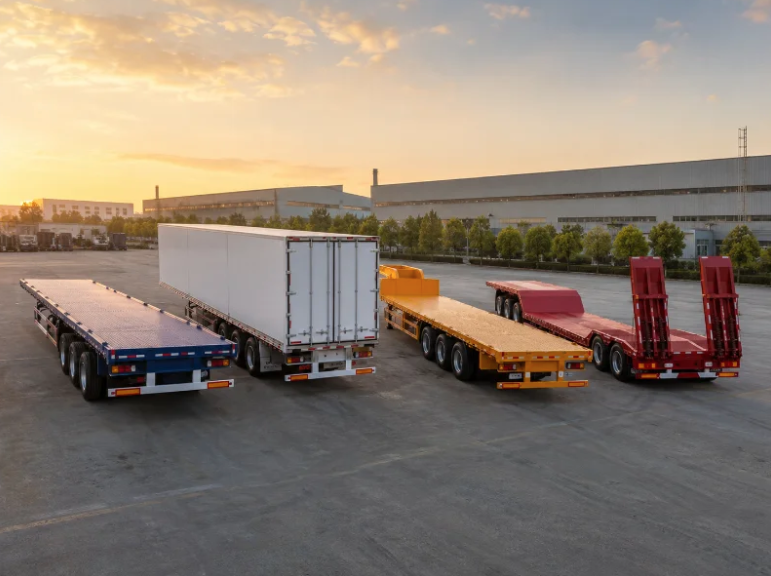
An open, level deck with no sides or roof. Best for steel, timber, building materials, and anything loaded from the side or top by crane or forklift. Maximum versatility for open loads; minimal weather protection.
Drop deck (step deck)
A flatbed with a lower rear deck, giving extra height clearance for taller loads while staying within legal limits. Ideal when your cargo is a little too tall for a flatbed.
See also: Modern Advancements in Metal Bending Technology
Lowboy (float / low loader)
A very low deck between the gooseneck and axles, built for heavy, tall machinery like excavators and dozers. The go-to for oversized, heavy plant.
Curtain-sider (tautliner)
A flatbed with a frame and sliding curtain sides. Combines the weather protection of an enclosed trailer with easy side loading — popular for palletised and general freight.
Tipper (end or side)
A trailer that hydraulically raises to dump its load. Essential for bulk materials like sand, gravel, soil, and aggregate. Side tippers offer stable, fast unloading; end tippers suit tighter spaces.
Tanker
A cylindrical trailer for liquids and bulk powders — fuel, water, chemicals, or food-grade products. Specialised, with strict compliance requirements.
Skeletal (skel)
A minimal frame designed to carry shipping containers, locking to the container’s corners. The standard choice for intermodal container transport.
How to choose the right one
Work back from your loads:
- What do you carry most? Match the trailer to your bread-and-butter freight, not the rare exception.
- How is it loaded and unloaded? Side, rear, top, crane, forklift, or tipping — this often decides the type on its own.
- Does it need protection from the weather? That points to curtain-siders or enclosed options.
- How heavy and how tall? Weight and height push you toward drop decks or lowboys.
- What are your local mass and dimension limits? Axle configuration must keep you compliant.
The bottom line
The right semi trailer comes down to what you haul, how it’s loaded, and your weight and height needs. Most operators end up with a couple of types to cover their core work. Get the match right and every load runs smoother.
If you’re weighing up options, it helps to see the range in one place: https://westerntrucksales.com.au/trailers