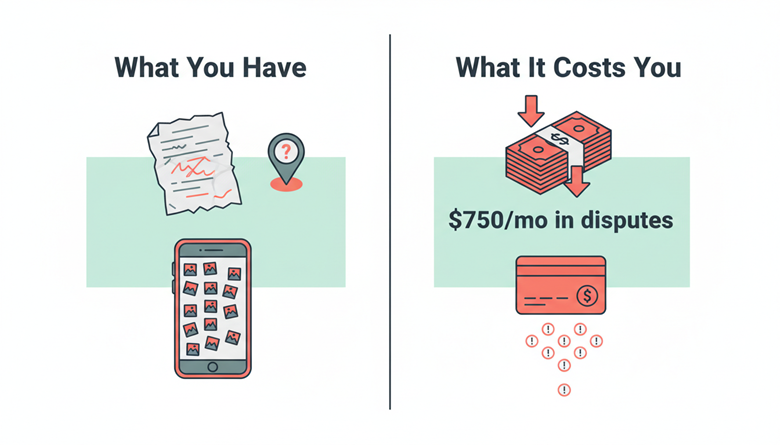
A customer emails: “I never got my package.” Your driver swears it was dropped off. You have no photo, no signature, no timestamp. The refund comes out of your margin.
This post breaks down why most proof of delivery systems fall short and what to look for in one that actually holds up.
What Most Tools Get Wrong
Generic delivery tracking tells you a package left the warehouse. It might even show a pin on a map. But when a customer disputes a delivery, a GPS dot proves nothing.
Paper-based proof of delivery logs get lost, damaged, or never filled out. Drivers skip signatures when they are rushing through a 40-stop route. Photos end up in random camera rolls with no link to the order.
The result: you eat the cost of redelivery or a chargeback. Multiply that across dozens of disputes per month and the losses stack fast.
If your proof of delivery cannot survive a customer dispute, it is not proof. It is paperwork.
See also: Soundbars: Transform Your Home Audio Experience
What a Good Proof of Delivery Tool Actually Does
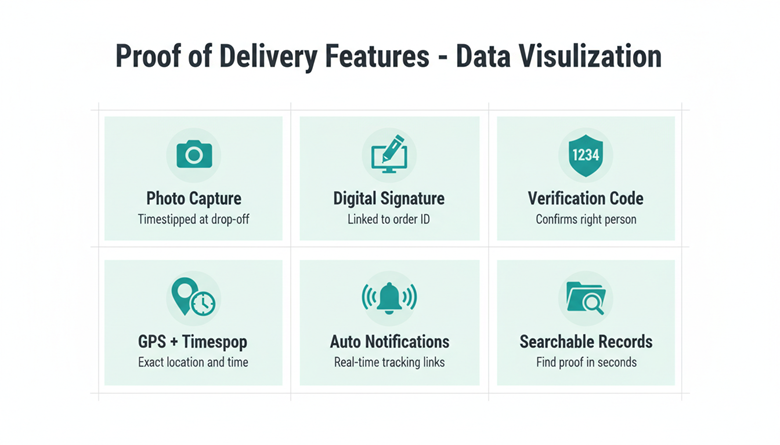
Photo Capture at the Drop-Off Point
The driver takes a photo at delivery. It attaches to the order automatically with a timestamp. No manual uploads. No digging through camera rolls. Without this, your “proof” is just a driver’s word against a customer’s.
Digital Signature Collection
Signatures collected on the driver’s phone link directly to the order record. Paper signature pads get lost. Screenshots get questioned. A digital signature tied to an order ID and timestamp is far harder to dispute.
Verification Codes for the Customer
A 4-digit code sent to the customer before delivery. The driver enters it on arrival. This confirms the right person received the package. It eliminates “it was left with someone else” claims entirely.
GPS Stamp with Timestamp
Every delivery event tagged with exact coordinates and time. When a customer says “nobody came to my address,” you pull up the GPS log. The data speaks for itself.
Automated Customer Notifications
Your customer gets a tracking link the moment the driver is en route. They see real-time progress. Fewer “where is my order” calls. Fewer false disputes from customers who simply did not know delivery was attempted. The right delivery software handles this without your team touching a button.
Searchable Digital Records
Every photo, signature, GPS stamp, and verification code stored in one place. Searchable by order number, date, or customer name. When a dispute lands in your inbox, you pull the proof in seconds — not hours.
Habits That Make Proof of Delivery Stick
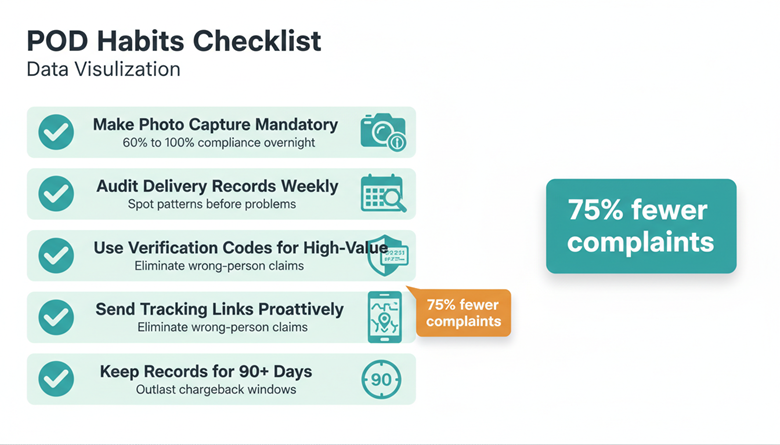
Make photo capture mandatory, not optional. If drivers can skip it, they will. Set your system so an order cannot be marked complete without a photo. Compliance goes from 60% to near 100% overnight.
Audit delivery records weekly. Spot patterns before they become problems. A driver consistently missing signatures is a training issue, not a technology issue.
Use verification codes for high-value orders. Not every $12 delivery needs a 4-digit code. But anything above your chargeback threshold should require one. This is where strong delivery software pays for itself fastest.
Send tracking links proactively. Customers who can see their delivery in real time file **75% fewer** “where is my package” complaints. That is less support volume and fewer false disputes.
Keep records for at least 90 days. Chargeback windows vary by payment processor. If your proof expires before the dispute window closes, you lose by default.
Your Competitors Already Fixed This
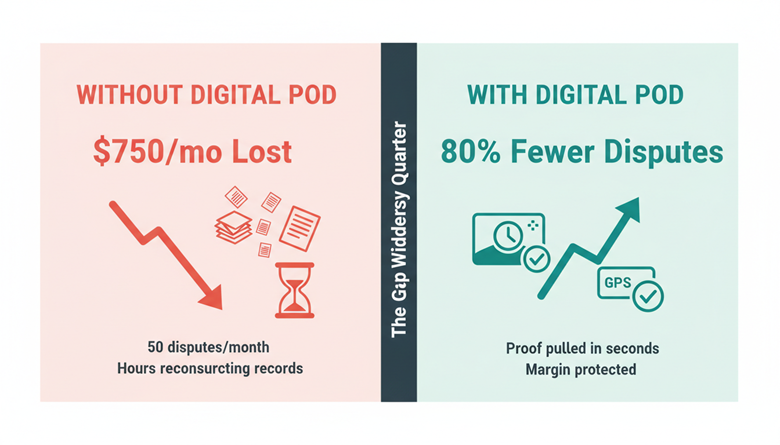
Delivery teams that digitized their proof of delivery report recovering thousands per month in previously lost dispute costs. The math is simple: if you lose 750 gone. Timestamped photos and GPS logs cut dispute losses by 80% or more.
Meanwhile, teams still relying on paper logs or driver memory spend hours each week reconstructing delivery records. That is operations time burned on defense instead of growth.
The gap between teams with airtight delivery proof and those without widens every quarter. Each unresolved dispute is margin your competitors keep and you do not.