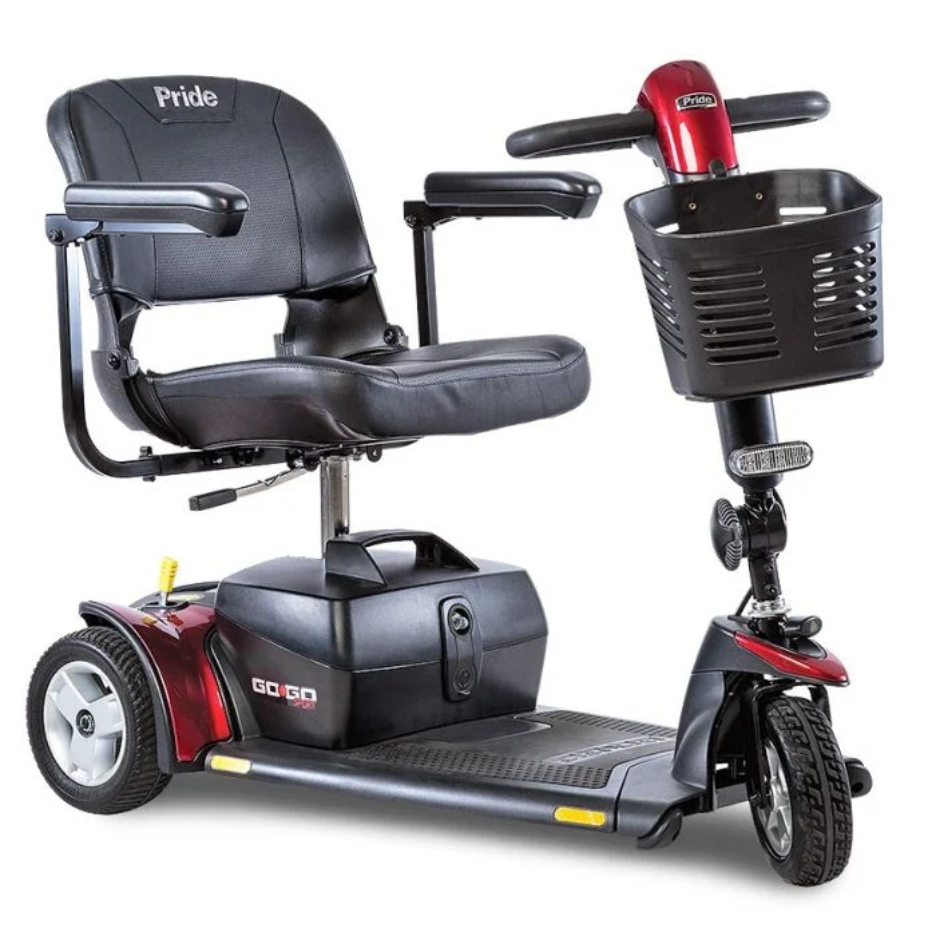
To most people, the change to a mobility scooter means regaining independence. It is all about walking around the world with pride.
Although the idea of a three-wheel vehicle may prompt some people to question its balance compared to four-wheel models, modern technology has transformed 3-wheel electric mobility scooters into a premium option in terms of stability and control.
The 3-wheel mobility scooters use a tripod design, unlike two-wheel vehicles that need a certain amount of momentum or balance to remain upright. The design offers a unique combination of robustness and excellent maneuverability, making it highly effective in both indoor and outdoor areas, including paved areas.
The following are the key components that ensure the construction of 3-wheel electric scooters prioritizes maximum safety, stability, and rider control.
1. The Geometry of Control
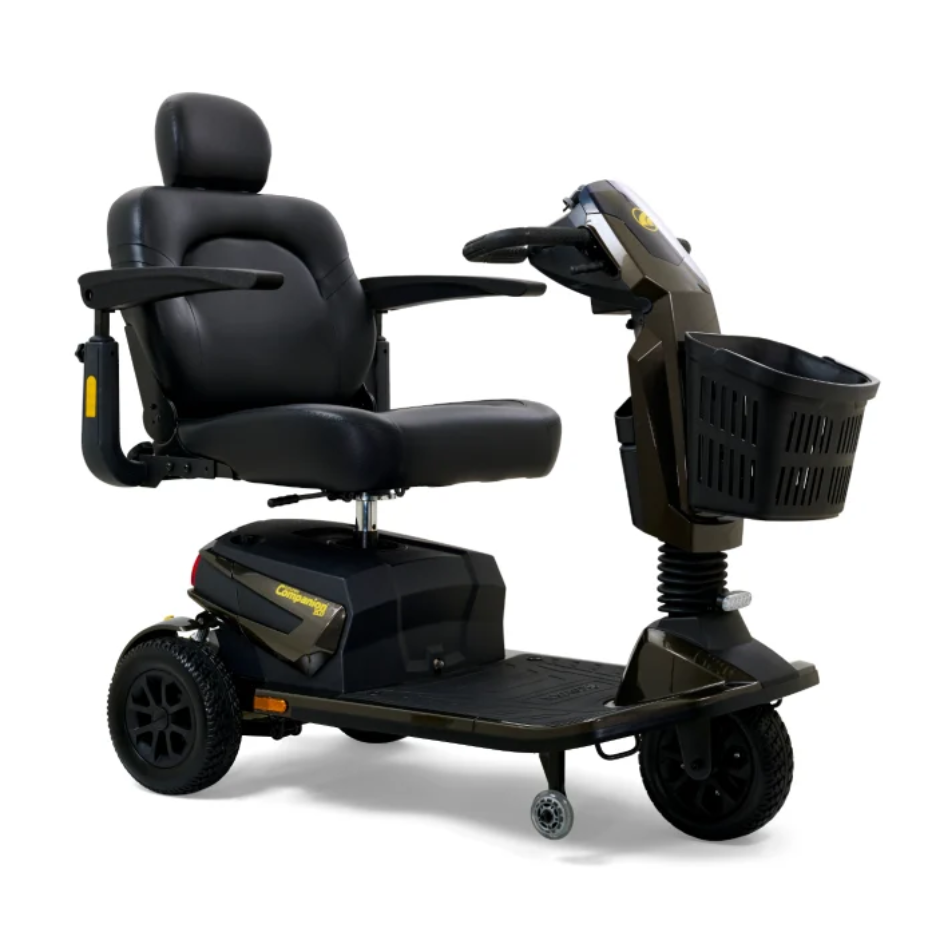
The distinct control aspect of a 3 wheel electric scooter is its ability to turn. Control involves navigating through narrow and tricky corridors, such as those found in grocery stores and aisles, small hallways, and crowded elevators.
The Single Front Wheel Advantage
These scooters possess one wheel in the front (two closely spaced wheels in the hybrid ones) and two driving wheels at the rear.
- Sharper Turns: The single front wheel makes sharper turns because no front axle crosses across the width of the vehicle (as in the case with 4-wheelers).
- Zero-Point Potential: Some 3-wheel electric scooters are capable of spinning 360 degrees on their own axis. You could get into an elevator, turn around, and get out facing forward. There is no hazardous blind reversing.
- Indoor Precision: When you ride your scooter inside your house, you can use it with this design as you can go around your furniture and even through door frames. A 4-wheel model would get stuck.
2. Ergonomic Steering for Maximum Authority
When the rider is tired, control is lost. Contemporary 3-wheel scooters are responding to this by providing a sophisticated design of the tiller that lessens the physical exertion needed to steer.
The Delta Tiller Advantage
A Delta Tiller is found on many of the best 3-wheel models. In contrast to regular handlebars (which require a tight grip and a long arm), the Delta Tiller is circular, rectangular, or a separate D-shape.
- Resting Leverage: Riders can also place their wrists on the handle when steering, as opposed to holding onto it. This stabilizes the hands and prevents the steering from wobbling due to arm fatigue.
- Ambidextrous Operation: These tillers typically feature two throttles, allowing for left-handed and right-handed operation. You can use the right-hand lever to move forward and the left-hand lever to move backward (or vice versa). This ensures that, despite a rider being weak in one hand, they still have complete control over the vehicle.
- Adjustable Pitch: The tillers can be adjusted, and the controls can be added to the rider. This is to ensure that the rider is sitting back with the seat (the most stable position) and not leaning forward to access the bars, and this would lead to destabilization of the center of gravity.
3. Intelligent Braking Systems
Braking in a regular bicycle or a car is an active process – you have to press some pedal or squeeze some lever.
When you panic and take no action, the vehicle continues to move. 3-wheel electric mobility scooters feature electromagnetic braking, and the equation of safety is fundamentally changed.
- Automatic Engagement: When the rider releases the throttle lever (wiggles/paddles), the brakes engage. It does not require any reaction time to locate a brake handle.
- Gradient Control: This system provides unparalleled stability on hilly slopes. By releasing the throttle on a slope, the scooter will not roll backward; the electromagnetic brake will maintain the motor shaft in a fixed position until the throttle is pressed again.
- Panic Safety: When one is dealing with a panic situation, the instinctive thing to do is to release. In these scooters, letting go is what allows the machine to come to a smooth and safe landing.
See also: Modern Advancements in Metal Bending Technology
4. Counteracting the Physics of Tipping
Due to a widespread misconception, there is a belief that 3-wheelers are inherently “tippy.” Being not heavier than 4-wheelers, their manufacturers design specific countermeasures to lower and secure the Center of Gravity (CoG).
Anti-Tip Wheels
When you examine the back of nearly any good 3-wheeled scooter, you will find two small, in most cases, ignored wheels projecting off the back frame.
- The Safety Net: These are anti-tip wheels. They do not even touch the ground when they are riding normally. Nevertheless, when a rider moves too fast up a steep hill, such wheels will grip the surface, and the scooter cannot tip backward.
- Curbs and Thresholds: On a raised threshold or small curb, the center of gravity changes. The anti-tippers serve as a secondary support aid, keeping the scooter steady even with the front wheel raised.
Battery Placement and Deck Height
Weight distribution brings out stability.
- Low Center of Gravity: The batteries and the motor form the heaviest part of an electric scooter. In 3-wheelers, they are located underneath the seat and may be only a few inches above the ground. This serves as an anchor, drawing the center of gravity of the scooter.
- The Conclusion: Although the base of the scooter is triangular (hypothetically less stable than a square base), the weight distribution is so low that it is difficult to tip the scooter in the usual manner of use.
5. Legroom and Rider Positioning
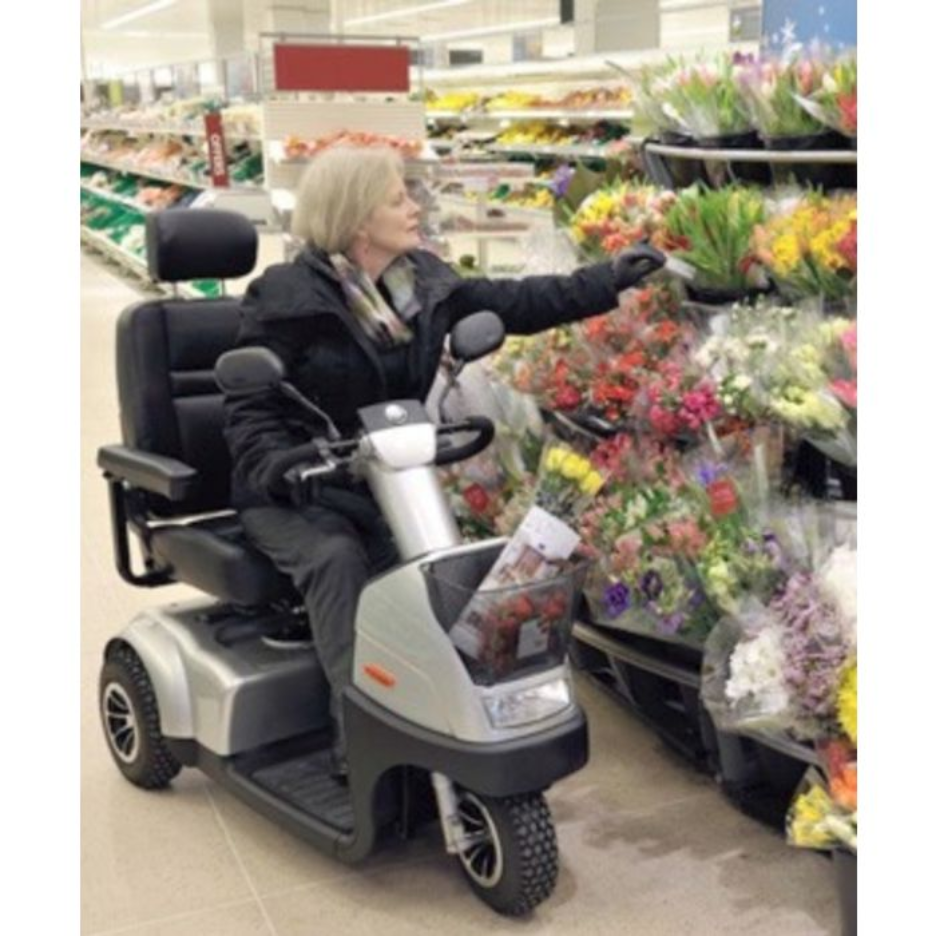
Stability pertains to the rider themself. An unstable rider is cramped or unable to find a comfortable riding position.
- Extended Legroom: The 3-wheel scooters offer significantly more legroom, as they lack wheel wells that cover the front two wheels.
- Stability: This enables the taller riders to stretch their legs out and put their feet on the non-slip deck. The ability to stabilize oneself using the feet is another source of physical security during turning or stopping.
- Swivel Seats: Most models have 360-degree swivel seats, which lock in between 90-degree intervals. This will enable the rider to safely step off the scooter to the side, rather than attempting to step over the tiller, thereby minimizing the risk of falls when mounting and dismounting.
Conclusion
The 3-wheel electric scooter is an excellent work of practical mobility design. These vehicles provide a safe and free ride by incorporating a small turning radius, a low center of gravity, and an intelligent braking system.
Moreover, the 3-wheel scooter offers the right balance between agility and stability for people who want to navigate the narrow paths of a house as easily as the aisles of a supermarket. So, get yours today.