The gaps are the working part, not the tines
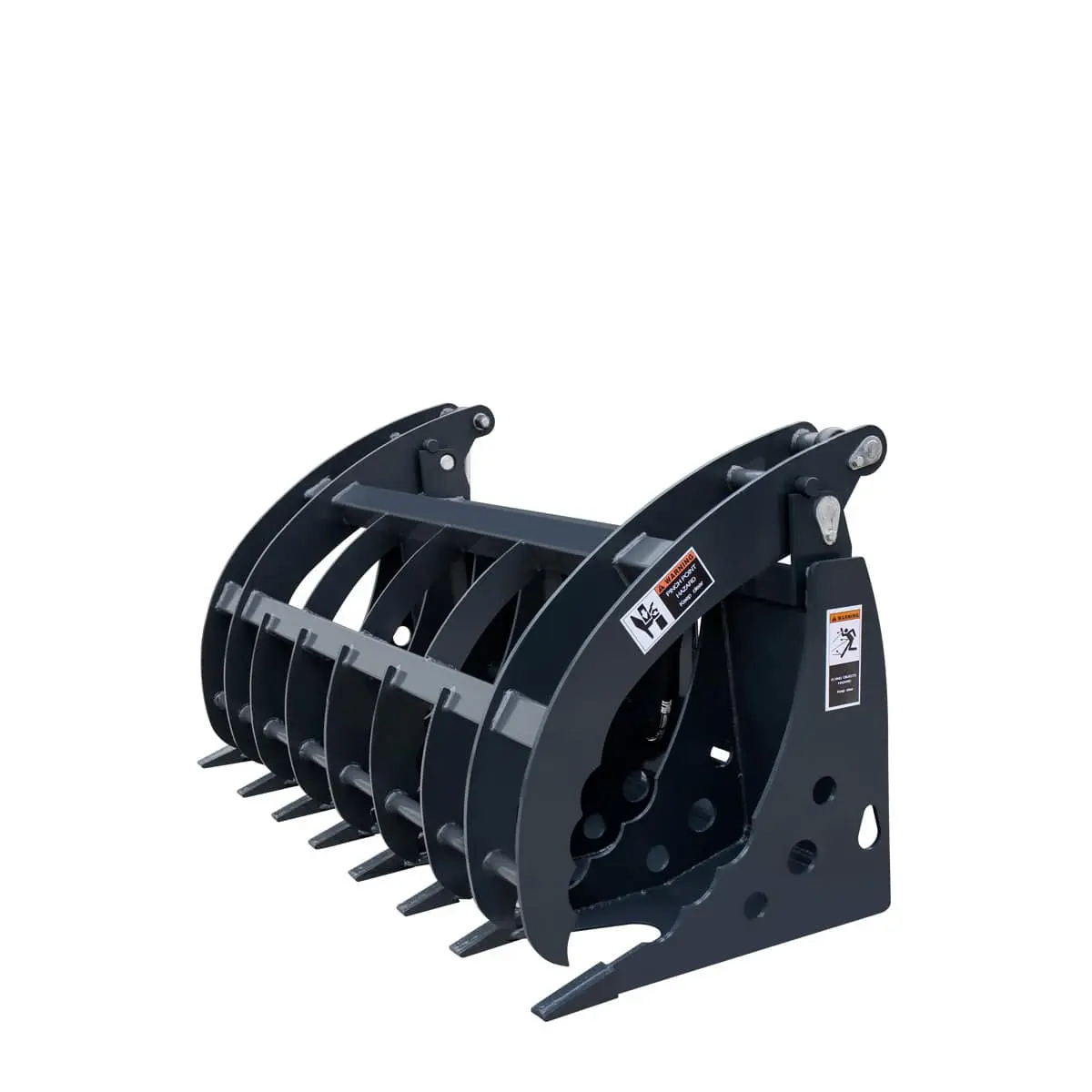
Canadian clearing work runs from late summer until the ground freezes, and the attachment doing it is chosen on one specification. A root rake grapple is a coarse sieve before it is anything else, and the openings between its tines decide the outcome of every pass.
A bucket takes everything in front of it and a root rake grapple does not. A rake takes only what is too large to fall through, which means the tine gap is not a detail of the design but a statement about what the operator considers worth removing.
Root rake grapple tine spacing sets the smallest thing you keep
Nine inches passes soil, sod, small stone, and short broken material, while holding roots, stumps, limbs, and anything long enough to bridge two tines. That is a deliberate cut point aimed at woody debris rather than at general cleanup.
See also: Modern Advancements in Metal Bending Technology
How to clear brush without losing topsoil is the whole reason this exists
The productive layer on most Canadian ground is a few inches deep and took a very long time to arrive. A bucket clearing brush lifts that layer along with the debris, and it leaves the site with subsoil at the surface and a bill for replacement.
Spaced tines let the soil fall back where it came from as the load lifts. The material that leaves the site is close to pure debris, and the ground behind the machine is still capable of growing something without being amended first.
The upper jaw is what makes it a grapple rather than a rake
A rake alone gathers and pushes. Closing a jaw over the top turns the same load into something that can be lifted, carried across a paddock, and placed in a pile or a truck, which removes the pushing pass that a plain rake makes necessary.
Fifty four inches of opening decides how big a bite is worth taking
The jaw opening on a root rake grapple is the practical limit on the diameter of a stump or the size of a bundle the attachment can close on. Anything larger has to be broken down first, and trying to close on it simply holds the jaw open and drops the load partway to the pile.
Attachments divide by what they let through
•Bucket: takes everything including the topsoil
•Root rake: soil falls through, debris stays
•Grapple bucket: carries loads, keeps the soil too
Where the spacing helps and where it works against you
•Strength: debris leaves and the soil stays put
•Strength: one attachment gathers and carries
•Limit: small material passes straight through
•Limit: no use for loose or granular loads
Weighed against a bucket, a 72 inch root rake grapple costs speed on bulk material and returns a cleared site that still has its growing layer. A contractor near Belleville switched after replacing topsoil on two jobs and now keeps the bucket for gravel alone.
Clearing is being judged on what is left behind
Landowners increasingly ask what condition the ground will be in once the brush is gone rather than only how quickly it can be removed, which has moved attachments that separate debris from soil ahead of the ones that simply move everything.
That change in how work is judged is why the machinery attachments TMG Industrial supplies are specified by tine spacing and jaw opening rather than by width and weight alone.