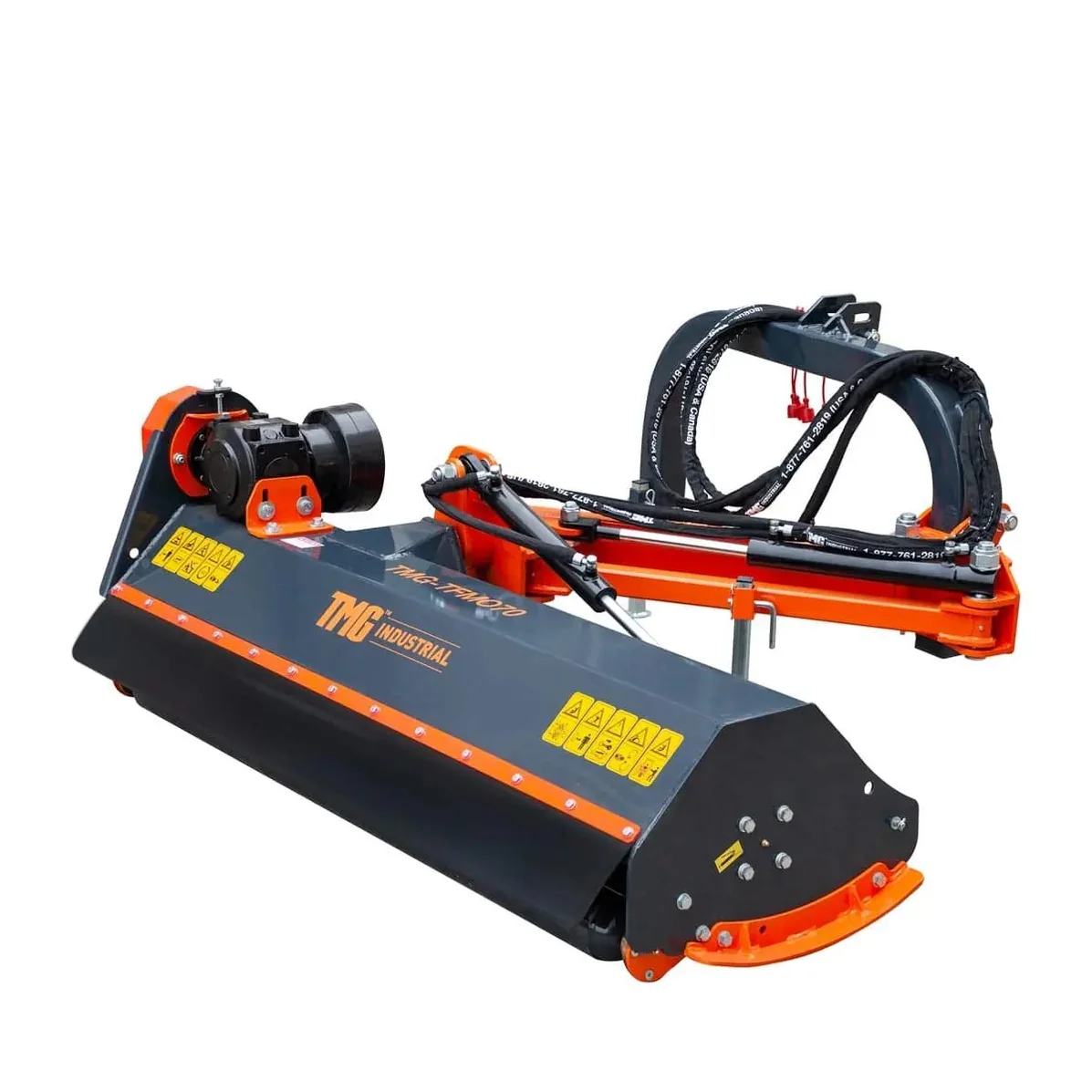
Why a tractor flail mower is the safer tool for the steep edge of a table drainSpring growth in the table drain is next summer’s fuel
By mid-September across southern Australia, the grass along fence lines, table drains and dam walls is growing faster than at any other time of year. Many shires set firebreak and fuel-reduction deadlines ahead of the fire danger period, and what grows on those banks now becomes dry fuel by December. A tractor flail mower is the usual tool for the awkward ground, and the reason has more to do with what its knives do after they strike something than with how they cut.
A hinged knife gives way where a rigid blade would not
A flail rotor carries rows of small knives, each hanging loose from its own shackle. Spinning holds them straight, but when one strikes a stone or a star picket it swings back and lets the obstacle pass instead of transferring the full blow to the rotor.
Drain banks are exactly where hidden obstacles collect. Rocks washed down by winter rain, old fencing wire and broken culvert pipe sit under the grass, and a machine that yields on contact is far less likely to launch them. The same hinged design is why a flail mulcher can take on saplings without shattering its rotor.
Rotor direction decides where the debris goes
The rotor turns so that cut material is carried up into the hood, chopped again as it travels around, and dropped behind the machine. Anything the knives do hit is mostly driven into the inside of the housing rather than out across the road.
That containment is why roadside crews favour flails near traffic, walkers and parked vehicles, where a thrown stone matters far more than a slightly slower pass. A tractor flail mower for banks also leaves a fine, even mulch that breaks down quickly, rather than the long clumps that dry into a ready-made fire bed.
See also: Modern Advancements in Metal Bending Technology
Why an offset tractor flail mower reaches ground a slasher cannot
A rotary slasher cuts on a flat deck, so it needs flat ground beneath it. The head of a ditch bank machine angles on its mounting to lie parallel with the slope, which keeps the rotor cutting evenly down into the drain and up the far batter.
- Rotary slasher: flat ground, fast, throws debris
- Flail mower: tilting head, contained, fine finish
- Flail mulcher: heavy knives, brush and saplings
- Sickle bar: clean cut, poor with stones
The tilting head is the deciding difference on drain work. A slasher asked to cut a batter rides on one edge of its deck, scalps the high side and leaves the low side standing, while a tilted rotor keeps the same height across the whole face.
Spring decides how the dry months go
Mowing banks while growth is soft takes far less power and leaves less fuel than cutting the same ground once it has hardened off in late spring. Two light passes with a tractor flail mower during the growing season usually achieve more than one heavy cut in November, and batters too steep for any tractor are the place to bring in a dedicated slope mower.
Before starting, walk the bank to mark culverts, pickets and soft edges, because the hydraulic arm lets the tractor stay on firm ground only if the operator knows where firm ground ends. TMG Industrial lists offset flail mowers by the tractor horsepower range they suit, which is the first check before the working width.