Real estate design has never been more demanding. As projects grow in scale and complexity—spanning mixed-use developments, adaptive reuse conversions, and urban infill sites—the pressure on designers to communicate spatial ideas with precision has intensified. Traditional methods like 2D blueprints and basic 3D renderings often fall short, leaving clients struggling to grasp proportions, material relationships, and how a finished space will actually feel. Miscommunication at this stage leads to costly revisions, delayed timelines, and eroded trust between design teams and stakeholders.
3D LiDAR scanners are emerging as a transformative force in addressing these visualization challenges. By capturing millions of precise spatial data points in seconds, this technology creates extraordinarily detailed digital representations of existing sites and proposed designs. For architects, interior designers, and urban planners working in real estate, 3D LiDAR scanning offers a bridge between abstract concepts and tangible reality—enabling immersive walkthroughs, pixel-perfect accuracy, and confident decision-making long before construction begins. What follows is an exploration of how this technology is reshaping every stage of design visualization.
The Evolution and Importance of Design Visualization in Real Estate
For decades, architectural communication relied on hand-drafted elevations and floor plans—effective for trained professionals but often opaque to clients and investors. The shift toward computer-aided design in the 1990s introduced basic 3D modeling, yet these early digital representations lacked the spatial fidelity needed to convey how light, proportion, and materiality would interact in a finished building. As real estate projects became more ambitious, stakeholders began demanding more than static renderings; they wanted to experience proposed spaces before committing capital.
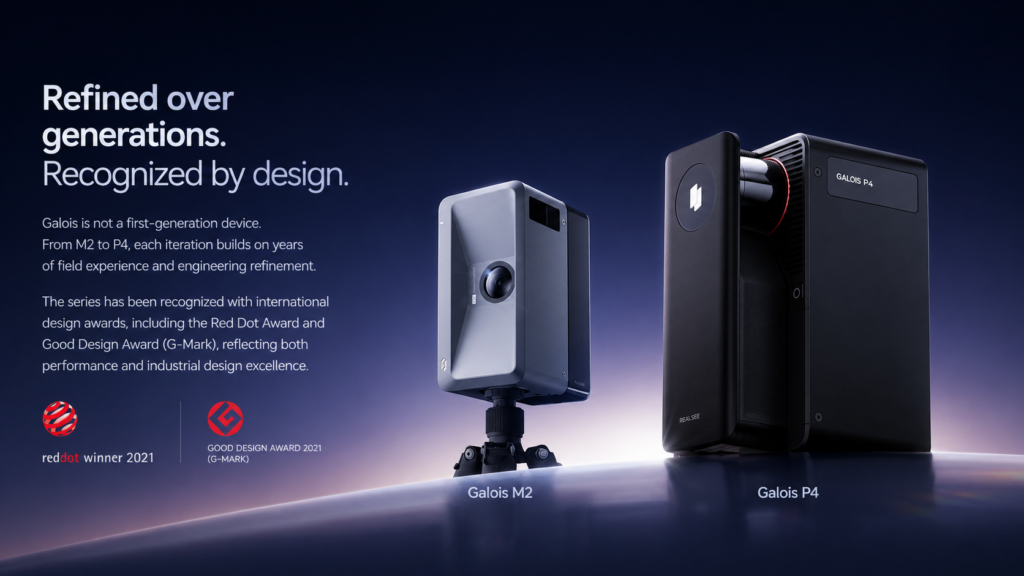
This demand accelerated through the 2010s as virtual reality, photorealistic rendering engines, and interactive walkthroughs entered mainstream practice. Urban planners needed to demonstrate how new developments would integrate with existing streetscapes. Interior designers required tools that could communicate furniture scale, ceiling heights, and sightlines with absolute certainty. The common thread across these disciplines was a growing intolerance for ambiguity—clients expected immersive, accurate previews that eliminated guesswork. Designers who could deliver this level of clarity won projects; those who couldn’t risked losing relevance. This environment created fertile ground for technologies capable of capturing physical reality with unprecedented precision and translating it directly into compelling visual narratives.
Understanding 3D LiDAR Scanner Technology for Real Estate
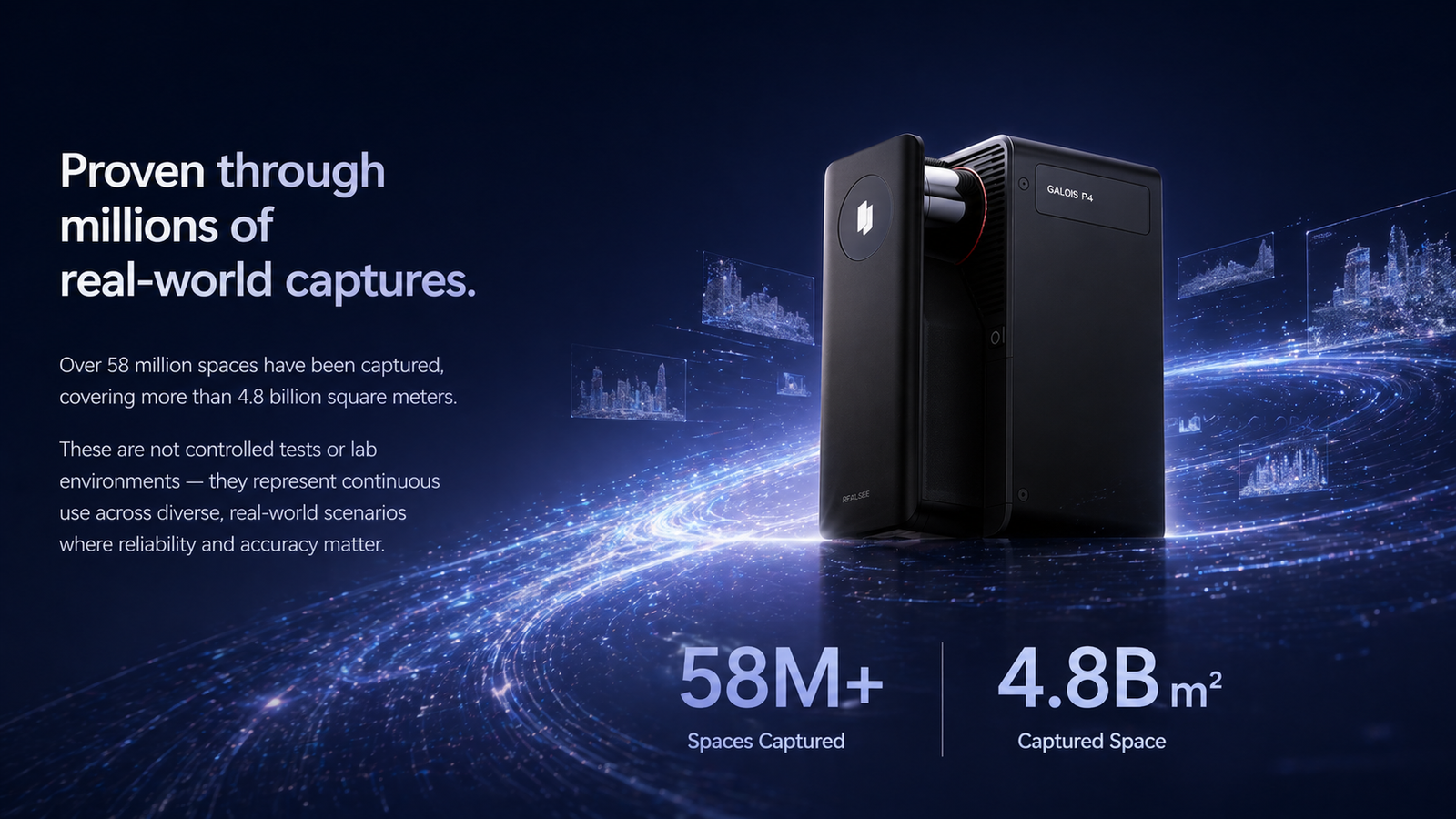
At its core, 3D LiDAR scanning works by emitting rapid laser pulses—often hundreds of thousands per second—that bounce off surrounding surfaces and return to the scanner’s sensor. By measuring the precise time each pulse takes to travel back, the device calculates exact distances to every point it contacts. The result is a dense “point cloud”: a three-dimensional constellation of millions of individually measured coordinates that collectively form a geometrically faithful digital replica of the scanned environment.
For real estate professionals, this capability translates into immediate practical value. When scanning an existing building slated for renovation, a 3D LiDAR scanner for real estate captures every wall angle, ceiling undulation, window recess, and structural irregularity—details that manual measurement inevitably misses. Site analysis becomes far more reliable when terrain contours, neighboring structures, and utility access points are documented with millimeter-level precision rather than approximated from outdated surveys. As-built documentation, historically one of the most error-prone phases of design, transforms into a near-automatic process. The point cloud serves as a dimensionally accurate foundation upon which architects and designers can overlay proposed interventions, ensuring that new design elements align perfectly with physical reality rather than idealized assumptions about what exists on site.
Key Features of 3D LiDAR Scanners for Enhanced Visualization
Modern 3D LiDAR scanners offer a suite of advanced capabilities that directly address the visualization demands facing real estate designers. Beyond raw spatial measurement, these features enable richer, more communicative design outputs that resonate with clients and collaborators alike.
VR Clarity: Creating Immersive and Realistic Virtual Environments
The density and accuracy of LiDAR-generated point clouds provide the geometric backbone for exceptionally clear virtual reality experiences. When designers import this data into VR platforms, clients can walk through proposed interiors and exteriors with a sense of spatial truthfulness that polygon-based modeling alone cannot achieve. Every ceiling height, corridor width, and window proportion reflects measured reality, so stakeholders make decisions based on genuine spatial perception rather than artistic interpretation.
8x Lossless Zoom: Inspecting Details Without Compromise
Design reviews often hinge on small-scale elements—a countertop edge profile, the alignment of cabinetry with structural columns, or the clearance around mechanical equipment. With lossless zoom capabilities reaching eight times magnification, designers and clients can drill into specific zones of a scanned model without encountering pixelation or data degradation. This means fine-tuning decisions happen within the digital model itself, reducing the need for repeated site visits to verify dimensions.
Capturing Microscopic Structures for Precision Design
Beyond broad geometry, advanced LiDAR systems detect subtle surface characteristics—hairline cracks in masonry, slight warping in timber framing, or the texture grain of stone cladding. For renovation and preservation projects, this granularity allows designers to model interventions that account for imperfections in existing structures, preventing costly surprises during construction when new elements must interface with aged materials.
Synchronized Capture: Efficient Data Collection Across Sites
Large-scale real estate developments often span multiple buildings or extensive outdoor areas. Synchronized capture functionality allows data collection from numerous scan positions simultaneously, producing comprehensive datasets where every angle aligns into a single coherent model. This eliminates registration gaps and ensures that site-wide visualization maintains consistent accuracy from one end of a development to the other.
Achieving Design Excellence Through Accurate 3D Models
Collectively, these features empower designers to produce visualization deliverables that are both creatively ambitious and dimensionally trustworthy. When VR clarity, zoom fidelity, microscopic detail, and synchronized coverage converge in a single workflow, the resulting 3D models become powerful communication tools. Clients gain confidence in proposed designs, approval cycles shorten, and design teams spend less time defending spatial assumptions—freeing creative energy for the work that actually elevates a project.
Practical Solutions: Implementing 3D LiDAR Scanners in Design Workflows
Adopting 3D LiDAR scanning technology requires more than purchasing hardware—it demands a deliberate integration strategy that aligns with existing design processes. For architects, interior designers, and urban planners working in real estate, the following steps provide a practical framework for embedding this technology into daily practice and extracting maximum visualization value from every scan.
Step 1: Assessing Project Requirements and Goals
Not every project demands the same level of scanning investment. Begin by evaluating three factors: physical complexity, client expectations, and downstream deliverables. A straightforward new-build on a flat site with a technically literate client may benefit from targeted scanning of adjacent structures for context modeling. Conversely, an adaptive reuse project involving a century-old warehouse with undocumented structural modifications demands comprehensive interior and exterior scanning to establish a reliable design baseline. Consider whether your final deliverables will include VR walkthroughs, detailed renovation drawings, or urban context models—each requires different scan densities and coverage strategies. Establishing these parameters early prevents over-scanning simple projects or under-capturing complex ones, keeping budgets and timelines aligned with actual visualization needs.
Step 2: Selecting the Right 3D LiDAR Scanner and Tools
Scanner selection should follow directly from your project assessment. Terrestrial tripod-mounted scanners excel in interior environments where high point density and color fidelity matter—ideal for residential renovations or commercial interior redesigns where material textures and spatial proportions drive design decisions. Mobile handheld or wearable scanners trade some precision for speed and accessibility, making them well-suited for large-scale site surveys, multi-building campuses, or outdoor terrain mapping where covering ground efficiently outweighs capturing every surface crack. Evaluate scan range, point capture rate, and integrated photography capabilities against your specific deliverable requirements. Also consider the software ecosystem each scanner supports—seamless data export to your preferred design platforms eliminates conversion bottlenecks that can stall visualization workflows.
Step 3: Integrating Data with Design Software for Seamless Visualization
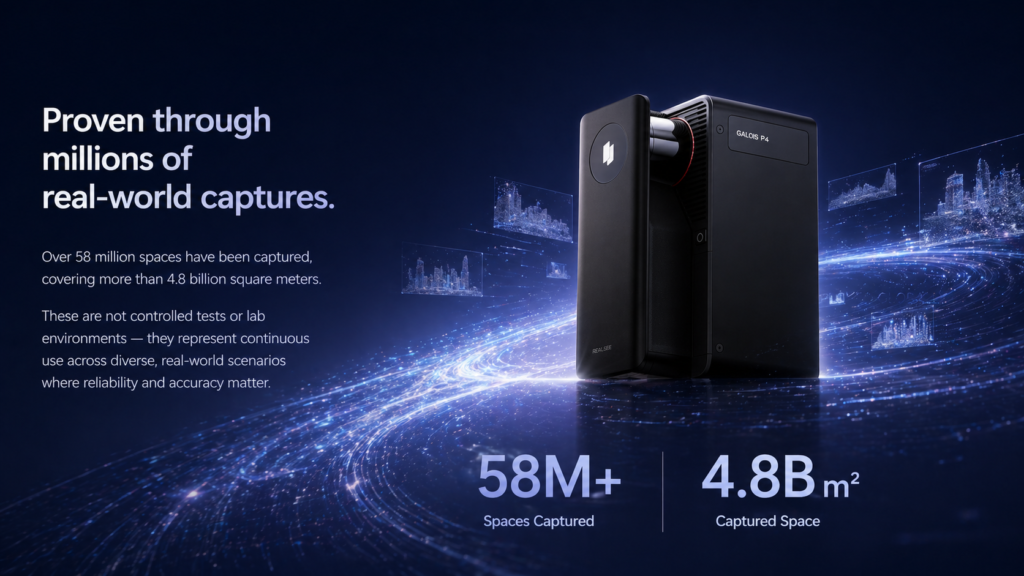
Raw point cloud data becomes design-ready through a structured import and processing pipeline. Most professional platforms—including Autodesk Revit, AutoCAD, SketchUp, and Rhino—now accept point cloud formats directly or through lightweight plugins. PropTech companies like Realsee have also developed spatial data platforms that streamline the transition from raw scan data to interactive 3D environments, making it easier for teams to collaborate on visualization deliverables without extensive manual processing. Start by cleaning the dataset: remove noise points caused by reflective surfaces or moving objects during capture, then register multiple scan positions into a unified coordinate system. From there, model proposed design elements directly within or atop the point cloud, using measured geometry as your constraint system rather than assumed dimensions. This approach ensures that new walls align with existing structural grids, proposed furniture fits actual room proportions, and facade interventions respect true building geometry. For teams working in BIM environments, point clouds can inform intelligent object placement, automatically flagging conflicts between proposed elements and documented conditions.
Step 4: Presenting Projects Effectively to Stakeholders
The visualization power of LiDAR data reaches its full potential during client-facing presentations. Rather than showing static renderings disconnected from site reality, walk stakeholders through a hybrid model where scanned existing conditions blend seamlessly with proposed design interventions. Use VR headsets to place clients inside the point cloud, letting them experience current spatial conditions before transitioning into the designed future state—this before-and-after immersion builds immediate comprehension and emotional connection. For board presentations or investor meetings where VR isn’t practical, extract high-resolution sectional views, animated flythroughs, and annotated detail close-ups directly from the scan data. Leverage the lossless zoom capability to address specific stakeholder concerns in real time during review sessions, drilling into contested areas without losing clarity. When clients can see exactly how a proposed intervention relates to measured reality, approval confidence rises and revision cycles contract significantly.
3D LiDAR Scanning as the New Standard for Real Estate Design Communication
3D LiDAR scanners are fundamentally reshaping how real estate design visualization operates—not as an incremental improvement, but as a paradigm shift in how spatial ideas are communicated, evaluated, and approved. The technology bridges the persistent gap between designer intent and stakeholder comprehension by grounding every visual deliverable in measured physical reality. Accuracy eliminates the guesswork that historically plagued design presentations, immersive VR experiences replace flat renderings with genuine spatial understanding, and efficient capture workflows compress timelines that once stretched across weeks of manual documentation.
For architects, interior designers, and urban planners competing in an increasingly demanding market, adopting 3D LiDAR scanning is no longer a differentiator—it is rapidly becoming a baseline expectation. Clients who have experienced point-cloud-driven presentations will not willingly return to ambiguous renderings disconnected from site conditions. As the technology continues advancing toward faster capture speeds, higher point densities, and deeper integration with AI-driven design tools, professionals who embed LiDAR into their workflows today position themselves at the forefront of an industry where visualization quality directly determines project success.