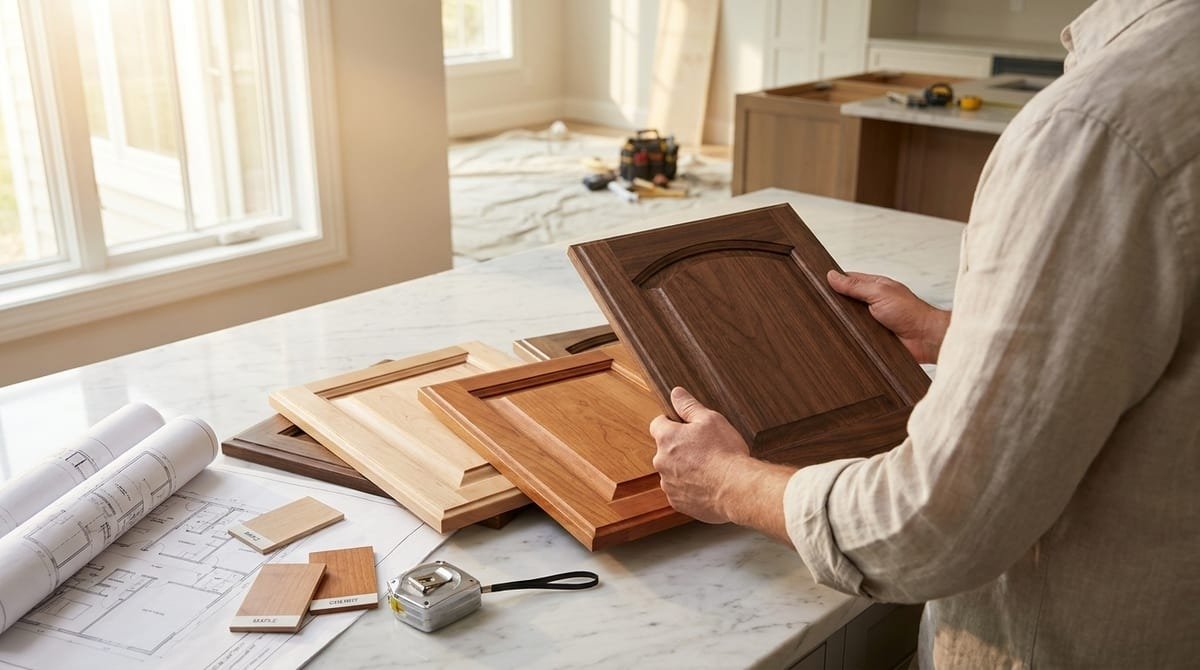
Choosing kitchen cabinets for a renovation is one of the most consequential decisions a homeowner can make. Cabinets define the visual character of the space, account for a significant portion of the budget, and need to hold up under daily use for 15 to 20 years. For Ontario homeowners, factory-direct suppliers like Morsun Kitchen Cabinets in Richmond Hill have made it significantly easier to access quality construction at competitive pricing — but knowing what to actually look for in a cabinet remains essential before any purchase decision.
Why box construction matters more than the door
Most homeowners focus on door style and finish when they start shopping for cabinets, and that is understandable. The doors are the most visible element. But the box, the structural carcass behind the door, is what determines how long the cabinet holds up in a kitchen environment.
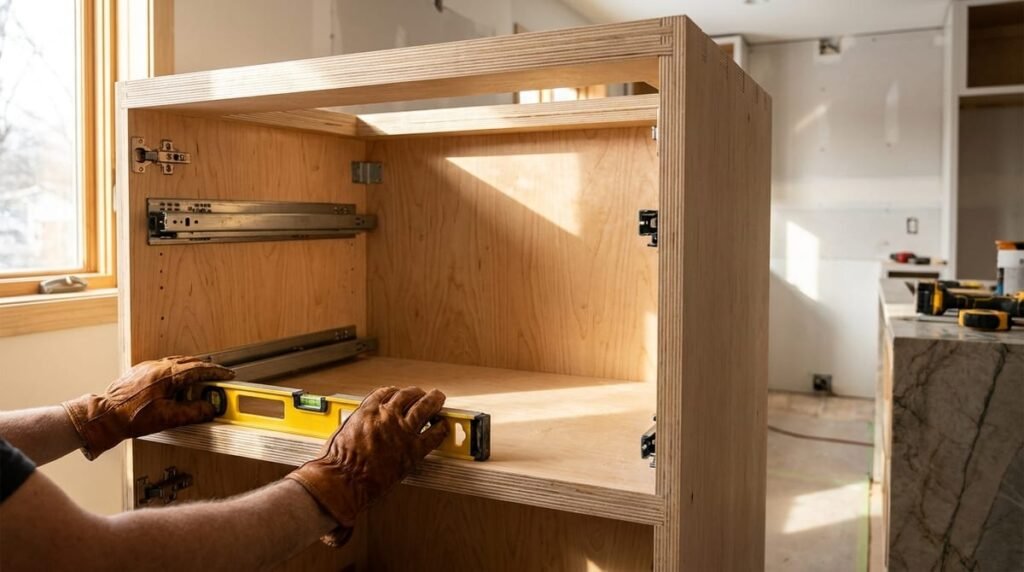
Two materials are commonly used for cabinet boxes. Plywood is manufactured by bonding thin wood layers together with alternating grain directions, which creates a panel that is strong, dimensionally stable, and highly resistant to moisture. It holds screws reliably over years of use, which matters for hinges, drawer slides, and shelf pins. Particleboard is made from compressed wood chips and resin. It is cheaper to produce, but it absorbs moisture readily, swells at exposed edges, and loses its grip on screws over time. In a kitchen where the area around the sink and dishwasher experiences regular moisture exposure, this difference becomes significant within a few years of use.
For a renovation where you are investing real money, plywood box construction is the right foundation.
Drawer construction reveals overall quality
Drawers take more mechanical stress than any other cabinet component. They are opened and closed dozens of times daily under significant weight. The joint at the drawer corners tells you a great deal about how seriously a manufacturer approaches construction quality.
Dovetail joints are the industry benchmark. The interlocking geometry creates a joint that is structurally secure under normal use and designed to last. Stapled or dowel construction is a cost shortcut that loosens over time, particularly under heavier loads. In addition to the joint type, look for soft-close undermount drawer glides. These provide smooth, controlled closing action, reduce stress on the cabinet box, and eliminate the rattling that side-mounted alternatives develop over time.
Door styles and finishes worth knowing
Shaker style doors feature a clean profile with a recessed centre panel. They are the most versatile option available, working equally well in modern, transitional, and traditional kitchens, and are among the easiest to clean. Flat panel (slab) doors offer a minimalist, contemporary look suited to open-plan spaces, though they tend to show fingerprints more readily, making a matte finish a practical choice. Raised panel doors work well in heritage or classically styled homes.
For finishes, thermally fused laminate and painted MDF are both common and capable of excellent results. What matters most is the quality of the application, particularly how edges are sealed, as this is where lower-quality products tend to fail first.
The factory-direct advantage
Most homeowners purchase cabinets through a showroom, a big-box retailer, or a contractor who adds a markup to the wholesale price. In each case, one or more intermediaries between the manufacturer and the buyer add cost without adding product value. Factory-direct purchasing removes that layer entirely.
Morsun Kitchen Cabinets in Richmond Hill — referenced above — is one such example for Ontario homeowners: plywood box construction, dovetail drawer joints, and soft-close hardware at pricing that consistently undercuts equivalent quality through retail channels, backed by a free 3D kitchen design service.
RTA cabinets: a practical option for budget-conscious renovators
Ready-to-assemble (RTA) cabinets are shipped flat-packed and assembled on-site, which reduces shipping costs meaningfully. The best RTA lines now offer the same plywood box construction and soft-close hardware found in premium fully assembled products. If you are comfortable with basic tools and have time to allocate to assembly, RTA cabinets represent a meaningful saving that can be reinvested elsewhere in the renovation.
See also: Innovative Residential Design Features for Your Home
Making your renovation budget work harder
A few practical guidelines for cabinet purchasing: prioritize box construction over door style, because you can repaint or replace doors, but replacing the box means starting the kitchen over. Get soft-close hardware confirmed in writing before ordering, as it is sometimes listed as an upgrade rather than included as standard on lower-cost cabinet lines. Use the supplier’s design service if one is offered, as a 3D rendered view reveals layout problems before they become costly corrections. Build accurate delivery timelines into your renovation schedule from the start, as custom and semi-custom products can take 8 to 12 weeks. And account for accessories like filler strips, crown moulding, and interior organizers in your budget estimate from the beginning, as they are frequently priced separately.
A kitchen renovation is a long-term investment. The cabinet decisions you make today will shape how the space looks, how it functions, and what return you see when you eventually sell. Getting those decisions right starts with understanding what quality actually means in this product category.