Mattress Recycle replacement raises a practical question: what do you do with the old one? You can avoid landfill space and long-lasting environmental harm by choosing donation, retailer take-back, or certified recycling programs that separate foam, metal, and fabric for reuse or proper disposal.
In post Mattress Recycling, If you want the least environmental impact, arrange donation or a mattress recycling service so usable materials are recovered instead of filling a landfill. Expect details on how recycling works, local program options, and quick steps to prepare your mattress for pickup.
Environmental Impact of Mattress Waste
Mattress waste consumes large volumes of landfill space, releases harmful substances as components break down, and contains recoverable materials that can reduce demand for virgin resources when properly processed.
Landfill Space and Pollution
Mattresses are bulky; a single standard mattress can occupy about 30–40 cubic feet.
When you dispose of mattresses in landfills, they quickly consume limited tipping space and drive up municipal disposal costs.
Their bulky shape also complicates compaction and landfill layering, which reduces landfill efficiency.
Because mattresses resist compacting, they create voids that accelerate landfill expansion and require more cells sooner.
Mattresses can also trap and transport pests and bodily fluids into waste streams if not contained.
Improper disposal at informal sites leads to local litter, odor complaints, and greater municipal cleanup burdens.
Toxic Chemicals and Material Breakdown
Mattresses commonly contain flame retardants, adhesives, polyurethanes, and synthetic fabrics.
As these materials age, they can fragment and mobilize chemicals into landfill leachate and dust.
You may encounter persistent organic compounds such as certain brominated flame retardants that resist degradation.
Those compounds can travel off-site in leachate or settle in surrounding soils, posing ecological and human-exposure risks.
Metal springs and some treated fabrics can corrode, producing particulates and altering leachate chemistry.
Proper landfill liners and leachate treatment mitigate risk, but prevention through diversion reduces the potential sources.
Energy and Resource Recovery
Up to roughly 70–75% of a mattress by weight can be recycled into usable materials like steel, foam, textile fibers, and wood substitutes.
Recovering steel springs returns high-value material that requires less energy to reuse than to melt new steel from ore.
Recycling polyurethane foam into carpet underlay, carpet padding, or rebond products saves energy and reduces virgin petrochemical demand.
Reclaimed textiles can be processed into insulation, wiping cloths, or composite fillers, lowering the need for new fibers.
If you opt for mechanical separation, expect variable yields depending on mattress type and contamination level.
Improving collection logistics and product design increases material recovery, reduces energy consumption, and lowers greenhouse gas emissions compared with landfill disposal.
Processes and Solutions for Responsible Disposal
You can choose certified drop-off centers, retailer haul-away, or municipal transfer stations that sort mattresses for recycling. Understanding how materials are separated, regulated, and reprocessed helps you pick the fastest, lowest-cost, and most sustainable option.
Facility Collection and Sorting Methods
Many recycling facilities accept mattresses via scheduled pickups, retailer haul-away, or direct drop-off. At the gate, staff log mattress type and condition; soft-surface inspection determines if donation is possible or if full recycling is needed.
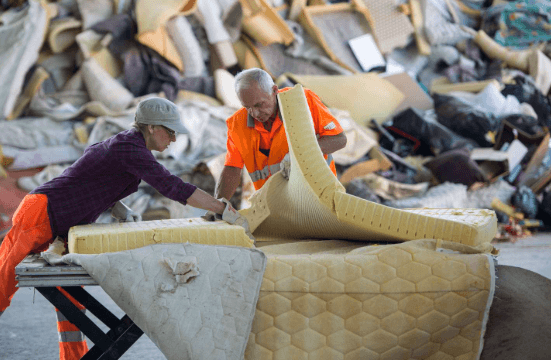
Sorting typically begins with manual removal of bedding and fabrics. Workers cut open the mattress to separate foam, springs, wood, and textiles. Facilities often use conveyors and staging areas to group like materials for downstream processing.
You should expect contamination checks for mold, pests, or excessive soiling; contaminated items go to disposal rather than recycling. Some centers offer pre-sorting guidelines so you can remove pillowtops or encasements to speed processing and reduce fees.
Material Separation and Reuse
After sorting, facilities separate materials into main streams: metal springs, polyurethane and memory foam, textiles, and wood or fiberboard. Metal is pulled with magnets and sent to scrap recyclers; steel and coils can be melted and reused in manufacturing.
Foams undergo shredding or densification. High-quality foam may be rebonded into carpet underlay, insulation, or packaging. Lower-grade foam can be pyrolyzed or processed into fuel in jurisdictions that allow energy recovery.
Textiles and natural fibers are baled and sold to upholstery, automotive, or industrial-wiping markets. Clean cotton and wool may be composted or re-spun. Wood frames are chipped for mulch or biomass. Each material stream carries different resale values that affect whether a mattress is economically recycled.
Industry Regulations and Certifications
You must follow regional waste and product stewardship rules that govern mattress handling, transport, and material disposition. Many provinces and states require licensed haulers for bulk mattress transport and have specific landfill bans or diversion targets for mattresses.
Look for certifications and program membership like R2, eSteward (for electronics-adjacent processing), or local stewardship programs that publish diversion rates. Certified recyclers maintain chain-of-custody records and comply with worker-safety standards for dust and chemical exposures.
Retailers and recyclers often post diversion metrics and certificates; request documentation when you arrange pickup. Proper manifests and receipts protect you from liability and prove compliance with municipal disposal ordinances.
See also: Customized Technology Strategies for Business Success in Bakersfield, CA
Innovations in Recycling Technology
Mechanical disassembly has improved with automated cutters, conveyor-fed separation, and optical sorting for textiles. These systems reduce manual labor and increase throughput, lowering per-unit recycling costs.
Chemical recycling and solvent processes can reclaim polyurethane components into feedstock for new foams. Advanced thermal treatments, including controlled pyrolysis, recover oils and gases for industrial use while minimizing emissions when paired with proper controls.
Circular-design trends encourage mattress manufacturers to use modular components and mono-materials to simplify future separation. You can favor retailers that offer take-back programs tied to specific recyclable designs to maximize the chance your mattress enters a full-material recovery stream.