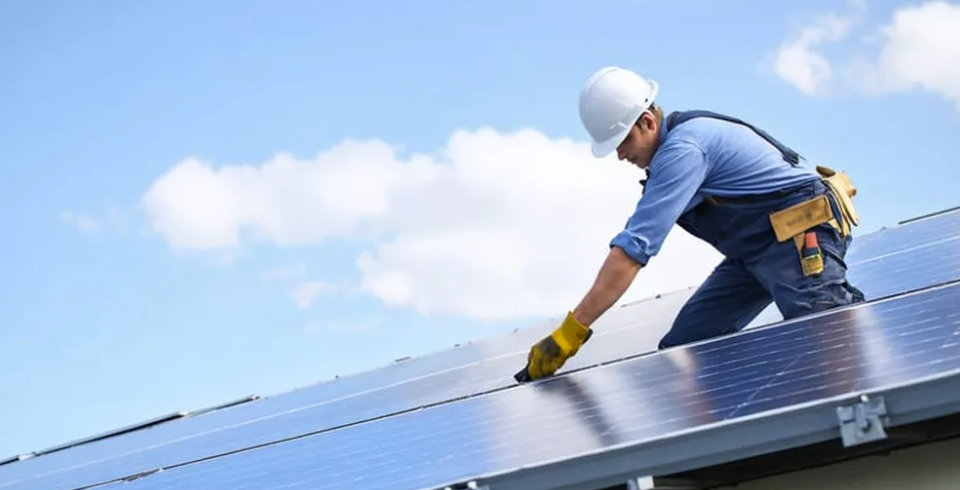
Across Southeast Asia, rooftop solar installations have surged by more than 35% year-over-year, driven by falling panel costs, improved inverter technology, and increasingly favorable government incentives. Thailand, in particular, has emerged as a regional leader in distributed solar generation, with both residential and commercial sectors accelerating their transition away from grid dependency. A closer look at the numbers reveals not only where the market stands today but also where it is heading in the next five years.
Residential Solar Rooftop Growth by the Numbers
Data from the Thailand Energy Regulatory Commission shows that residential โซล่ารูฟท็อป installations exceeded 1.2 GW of cumulative capacity by mid-2026, a milestone that was not projected to arrive until 2028 under earlier forecasts. Several factors have contributed to this acceleration:
- Average system costs have declined approximately 18% since 2023, making rooftop solar accessible to a broader segment of homeowners
- Net metering and feed-in tariff policies have improved the payback period to an average of 5.2 years for a standard 5 kW residential system
- Consumer awareness campaigns and energy price volatility have shifted public perception from curiosity to urgency
- Battery storage attachment rates have climbed to 22%, up from just 8% in 2024, enabling greater self-consumption
These trends suggest that the residential segment is no longer a niche market. Instead, it represents a substantial and growing share of Thailand’s renewable energy mix, with projections indicating a potential doubling of installed capacity by 2029.
See also: Modern Advancements in Metal Bending Technology
Commercial and Industrial Facilities: The ROI Equation
For factories, warehouses, and commercial buildings, the financial case for rooftop solar has become even more compelling. Industrial electricity tariffs in Thailand typically range from 3.5 to 4.8 THB per unit, making self-generated solar power a significant cost-reduction strategy. Facilities that have undertaken ติดตั้งโซล่าร์โรงงาน report average electricity bill reductions of 30% to 45%, depending on system size, roof orientation, and consumption patterns.
Key data points from commercial installations across Thailand reveal:
- Systems sized between 100 kW and 1 MW achieve levelized costs of energy (LCOE) between 1.8 and 2.3 THB per kWh, well below grid prices
- Peak demand shaving through solar-plus-storage configurations has reduced demand charges by up to 25% for manufacturing plants operating daytime shifts
- Corporate sustainability mandates from international buyers are creating additional non-financial incentives for factory operators to adopt solar
The commercial segment’s growth trajectory mirrors patterns observed in mature solar markets such as Australia and Germany, where industrial rooftop installations eventually outpaced residential volumes by a factor of three to one.
Technology Advancements Driving Performance Gains
Hardware improvements have played a critical role in making solar rooftop systems more efficient and reliable. Modern inverter platforms now incorporate module-level power optimization, which research from the International Renewable Energy Agency (IRENA) indicates can improve total system output by 5% to 25% compared to traditional string inverter setups, particularly on rooftops with partial shading or mixed panel orientations.
Companies such as SolarEdge have been at the forefront of this optimization technology, offering intelligent inverter solutions that enable real-time monitoring and per-panel performance tracking. This granular visibility into system performance allows installers and building operators to identify underperforming modules quickly, reducing maintenance costs and maximizing energy yield over the system’s 25-year lifespan.
Additional technology trends shaping the market include:
- Bifacial panel adoption increasing energy harvest by 10% to 15% on reflective rooftop surfaces
- AI-driven predictive maintenance algorithms reducing unplanned downtime by up to 40%
- Integrated energy management systems that coordinate solar generation, battery storage, and grid interaction automatically
Regional Policy Frameworks and Their Impact on Adoption
Government policy remains one of the strongest determinants of solar adoption rates. Thailand’s revised Power Development Plan allocates 9 GW of new solar capacity through 2037, with rooftop installations accounting for a significant portion. The introduction of simplified permitting processes for systems under 200 kW has removed a major bureaucratic barrier that previously discouraged small and medium enterprises from pursuing โซล่ารูฟ installations.
Comparative analysis across ASEAN nations reveals that countries with clear, stable policy frameworks see two to three times higher adoption rates than those with uncertain or frequently changing regulations. Vietnam’s boom-and-bust cycle in solar policy offers a cautionary tale, while Thailand’s more measured approach has produced steadier, more sustainable growth.
Financial Models and Emerging Ownership Structures
The way businesses and homeowners finance solar installations has evolved considerably. Traditional outright purchase remains the most common model, but several alternatives are gaining traction:
- Power Purchase Agreements (PPAs) allow commercial tenants to benefit from solar without capital expenditure, with third-party developers owning and maintaining the system
- Solar leasing programs have expanded to cover residential customers, reducing the upfront cost barrier to near zero
- Green bonds and sustainability-linked loans offer preferential interest rates for solar investments, with Thai commercial banks now actively promoting these products
- Community solar models are emerging in suburban developments, enabling shared access to rooftop generation for multi-unit residential buildings
These financing innovations are expected to unlock additional market segments that have been priced out of traditional ownership models, particularly among lower-income households and small businesses with limited capital reserves.
Conclusion
The data paints a clear picture: solar rooftop technology has moved decisively beyond the early-adopter phase in Thailand and across the broader Southeast Asian market. With installation costs continuing to decline, inverter and storage technologies improving steadily, and policy frameworks maturing to support distributed generation, the conditions for sustained growth are firmly in place. For homeowners evaluating energy independence and for industrial operators seeking to control electricity costs, the economic fundamentals have never been more favorable. The next phase of growth will likely be defined not by whether solar makes financial sense, but by how quickly infrastructure, supply chains, and workforce capacity can scale to meet accelerating demand.
To explore solar energy solutions, system specifications, and the latest developments in rooftop solar technology, visit: https://www.solaredge.com/th/