One of the most common hesitations people have before getting porcelain veneers isn’t the cost or the appearance, it’s a more basic worry: what actually happens to the real tooth underneath once a veneer is placed? Because veneers require removing a thin layer of enamel to make room for the porcelain shell, the process is often described as irreversible, which understandably makes some people pause before committing to it.
The honest answer involves more nuance than a simple yes or no, and the details matter more than most people realize going in.
What Actually Gets Removed
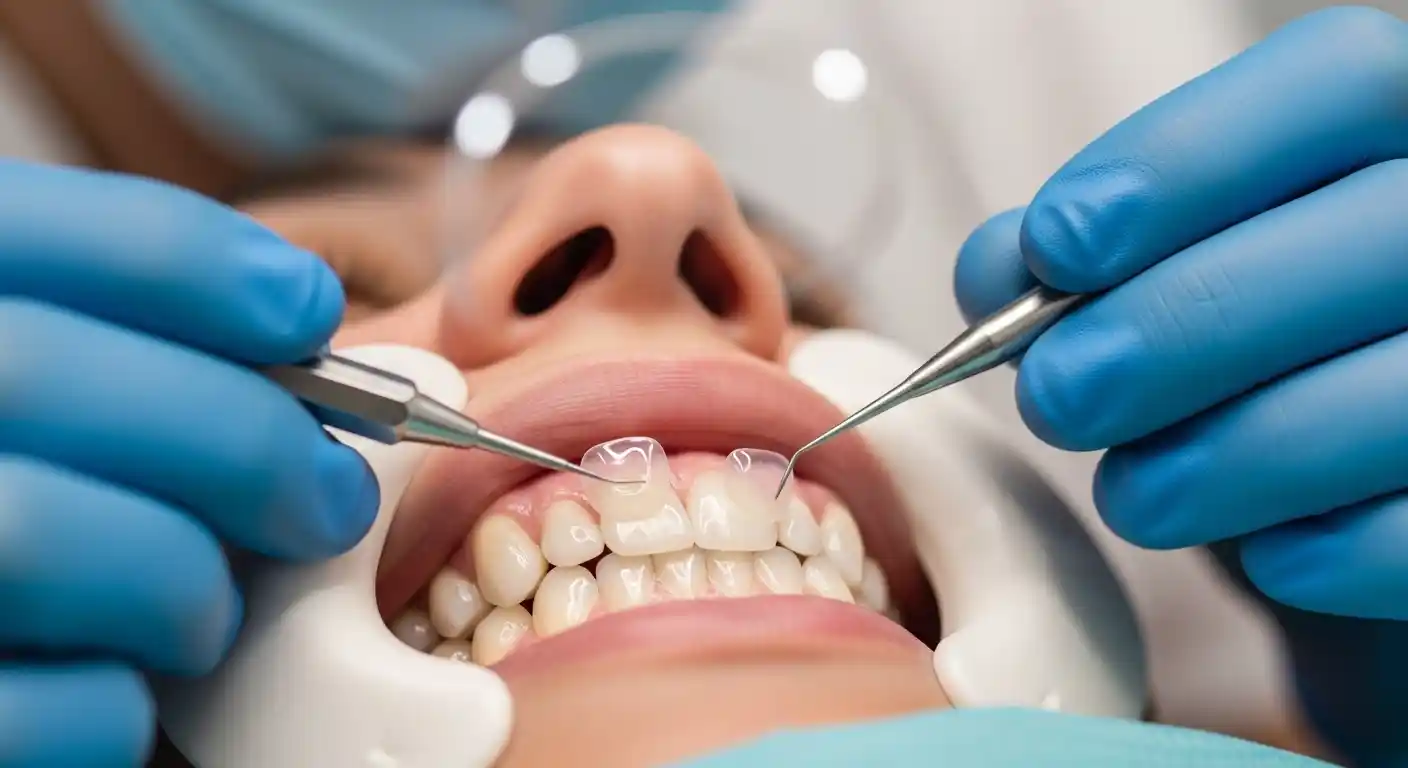
To place a traditional porcelain veneer, a dentist removes a thin layer of enamel from the front surface of the tooth, typically well under a millimeter in most cases, to create room for the veneer and help it bond properly. This step is what makes veneers different from options like dental bonding, which don’t require removing existing tooth structure. Once that enamel is removed, it doesn’t grow back, which is the basis for calling the procedure irreversible: the tooth underneath a veneer will always need some form of covering going forward, even if a veneer is eventually replaced or removed.
That said, “irreversible” doesn’t mean “damaging” in the way many people initially assume. The distinction that actually determines long-term outcomes isn’t whether enamel is removed, it’s how much, and where the veneer ends up bonding as a result.
Why the Amount of Enamel Removed Matters So Much
This is where the clinical research becomes genuinely useful rather than just reassuring. A large-scale retrospective study following 672 veneers over as long as 15 years found that survival rates differed meaningfully depending on how much of the underlying dentin, the layer beneath enamel, was exposed during preparation. Veneers bonded almost entirely to enamel had an estimated survival rate of 96.7 percent, compared to 95.3 percent when a moderate amount of dentin was exposed, and 93.9 percent when more than 30 percent of the bonding surface involved dentin rather than enamel. The difference might look small on paper, but it reflects a consistent pattern across multiple long-term studies: veneers bonded primarily to enamel simply hold up better than those that end up bonded to dentin.
A separate, frequently cited 21-year study of feldspathic porcelain veneers, where preparation was deliberately kept conservative and at least 80 percent enamel-bonded, found a 96 percent survival rate at both 10 and 20 years. That’s a remarkably durable result for a cosmetic dental procedure, and it directly reflects the value of a conservative, enamel-preserving approach rather than aggressive tooth reduction.
So Is It “Damage,” or Isn’t It?
The most accurate way to frame it: veneers involve a permanent, deliberate modification to the tooth’s surface, but when done conservatively and bonded primarily to enamel, that modification doesn’t compromise the tooth’s long-term health or function in any meaningful way for the vast majority of patients. The tooth is structurally different afterward, permanently, but not weaker or more vulnerable in a way that shows up in decades of clinical outcome data, provided the preparation stayed conservative.
Where problems do show up, they tend to cluster around cases where more aggressive preparation was used, exposing significant dentin, often because the underlying tooth had existing issues, like heavy staining, unusual shape, or prior dental work, that required more material removal to achieve the desired cosmetic result. In those cases, survival rates drop, not because veneers themselves are less durable, but because the bonding foundation is less ideal.
See also: The Strategic Role of Corporate Gifts in Business Relationships
What This Means for Anyone Considering Veneers
The practical takeaway isn’t that veneers are risk-free or that enamel removal is inconsequential. It’s that the amount of enamel removed, and by extension, how conservatively a dentist approaches the preparation, is one of the biggest predictors of how long veneers will actually last and how well the underlying tooth holds up over time. This is part of why a thorough evaluation and a clear conversation about how much natural tooth structure will realistically need to be removed matters more than simply comparing price quotes between providers.
For anyone weighing whether veneers make sense for their specific teeth, an experienced provider offering porcelain veneers in Westwood can walk through what a conservative, enamel-preserving preparation would look like for a particular case, which is a more useful starting point than assuming all veneer preparations are equally invasive.
The Bottom Line
Porcelain veneers do involve a permanent change to the tooth underneath, and that part of the process is genuinely irreversible. But decades of clinical outcome data show that when preparation stays conservative and bonding happens mostly to enamel rather than dentin, veneers perform remarkably well over the long term, with survival rates in the mid-90s even after 20 years. The real variable to ask about isn’t whether enamel removal happens, it’s how much, since that single factor is what separates veneers that last decades from ones that run into problems well before then.