You can hear the boiler running in the basement. It’s humming, maybe clicking, clearly doing something. But upstairs, the radiators are barely warm and the baseboard heaters feel lukewarm at best. You’re wearing a sweater indoors and wondering what exactly that machine down there is up to.
It’s one of the most frustrating heating problems out there. If the boiler weren’t running at all, at least the issue would be obvious. Instead, the system seems to be working while the house stays chilly, leaving homeowners confused and cold.
The truth is that a boiler producing heat is only part of the story. That heat still has to travel through pipes and reach every room. When something interrupts that trip, the house can stay cold even while the boiler works overtime. The trick is finding where it stops.
Why Boiler Problems Aren’t Always Obvious
Boiler systems have lots of moving parts, and not all of them are in the boiler itself. Homeowners searching for the best boiler repair Boulder CO has to offer often discover that the problem lies somewhere else in the system entirely.
Circulation issues are common. If heated water isn’t moving through the pipes properly, it never reaches the radiators. Controls and pressure problems can cause similar symptoms. Thermostats, zone controls, and pressure settings all affect how the system behaves.
Air in the system and heat transfer issues can complicate things further. Trapped air can block water flow, while buildup or other issues can reduce how effectively heat transfers. Each problem can produce similar symptoms, which is why guessing often leads to the wrong fix. Patience and the right tools help.
How a Boiler Actually Heats a Home
Most residential boilers use hydronic heating, which means they heat water rather than air. The boiler warms water, often using gas or another fuel source, and that heated water becomes the vehicle for delivering warmth throughout the house.
A circulation pump moves the hot water through a network of pipes. The water travels to radiators, baseboard heaters, or in-floor heating systems in each room. As it passes through, it releases heat into the space, warming the room gradually and evenly.
After giving off its heat, the cooler water returns to the boiler to be heated again. It’s a continuous loop. When everything works properly, hydronic heating can feel comfortable and steady. But when any part of the loop fails, the whole system can struggle. It’s elegant when it works.
The Hidden Problems That Can Prevent Heat From Reaching Rooms
A failing circulation pump is a classic culprit. If the pump stops working or weakens, hot water can’t move effectively through the system. The boiler may keep heating water, but it never makes it to the rooms that need it.
Trapped air is another common issue. Air pockets in pipes or radiators can block water flow, leaving some radiators cold at the top or not heating at all. Gurgling sounds can be a clue that air is present in the system.
Malfunctioning zone valves and thermostat issues round out the list. Zone valves control which areas receive heated water. If one sticks closed, part of the house stays cold. Faulty thermostats may not call for heat correctly. Other possible causes include pressure problems or control failures. Each one needs a different fix.
See also: How Art Transforms Home Improvement: From Ordinary Spaces to Inspiring Homes
Why Accurate Diagnosis Matters More Than Replacing Random Parts
It’s tempting to start swapping parts when the house is cold. Maybe it’s the pump? Maybe it’s the thermostat? But replacing components without knowing the actual cause can waste money and still leave the problem unsolved.
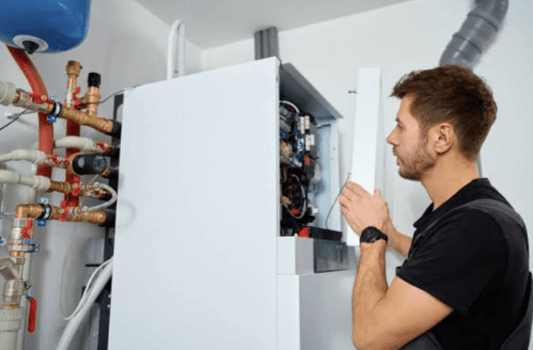
Professional testing helps cut through the guesswork. Technicians can evaluate system pressure, which needs to stay within the range specified for that system. Pressure that’s too low or too high can affect circulation and safety.
Temperature measurements tell more of the story. Comparing supply and return water temperatures can reveal whether heat is moving through the system properly. By identifying the underlying cause, technicians can make targeted repairs that actually restore heat instead of chasing symptoms.
Conclusion
A boiler can run all day and still leave rooms cold. That’s because heat production is only one part of a hydronic system. Water has to circulate through pipes and radiators, guided by pumps, valves, and controls. The boiler is only the starting point.
Circulation pump failures, trapped air, stuck zone valves, thermostat issues, and pressure problems can all keep heat from reaching where it’s needed. Each can look similar, which is why accurate diagnosis matters so much. Guessing rarely ends well.
A working boiler isn’t necessarily a working heating system. Effective heating depends on the entire system operating correctly, from the boiler to the last radiator in the farthest room. Warm rooms are the real measure of success.